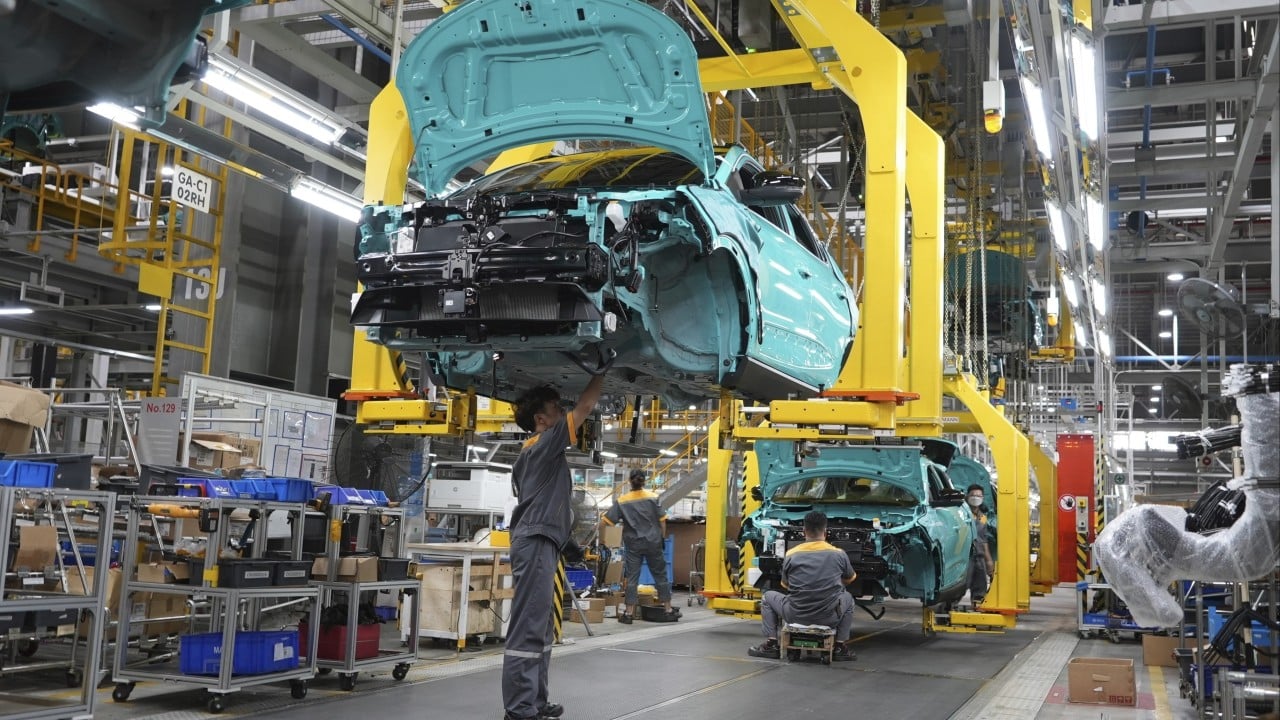
Boeing's decision to cut 5% of its commercial plane workforce sounds like just another corporate belt-tightening headline. Most financial news outlets treat it that way, reducing thousands of aerospace jobs to a quick blip on a stock ticker. That's a massive misreading of what's actually happening inside the world's largest aerospace manufacturer.
When Boeing cuts 5% of its commercial airplane staff, it isn't trimming fat from a bloated org chart. It's reacting to years of compounding production bottlenecks, regulatory caps from the Federal Aviation Administration, and a cash burn problem that won't go away on its own. If you track aviation, supply chains, or industrial stocks, understanding the mechanics behind this layoff matters far more than the headline percentage.
The Real Math Behind Boeing's 5% Commercial Workforce Cut
Let's look at the actual numbers first. Boeing Commercial Airplanes (BCA) employs roughly 60,000 to 65,000 people depending on the exact reporting quarter, sitting inside a parent company of around 170,000 workers globally. A 5% reduction inside the commercial division translates to roughly 3,000 to 3,250 positions.
On paper, 5% looks modest compared to the 10% company-wide workforce reduction CEO Kelly Ortberg announced back in late 2024. Why does this specific 5% commercial cut sting differently? Because BCA is the financial engine of the entire company.
When you slash headcount in defense or global services, you're adjusting to contract cycles. When you cut inside Commercial Airplanes—specifically across engineering, manufacturing support, and administrative layers in Puget Sound and South Carolina—you're admitting that airplane delivery rates aren't going to rebound as fast as Wall Street hoped.
Why Now Instead of Earlier
Boeing's commercial backlog sits above 5,400 airplanes. Normally, a backlog that big forces a manufacturer to hire aggressively, not hand out pink slips.
Here's the catch. You can't collect final delivery payments on jets you aren't allowed to build at full speed. Following the January 2024 Alaska Airlines Flight 1282 door-plug blowout, the FAA capped 737 MAX production at 38 jets per month. Even when Boeing pushes toward that ceiling, supplier shortages—particularly fuselages from Spirit AeroSystems and engines from CFM International—keep actual monthly rollouts uneven.
Paying full-scale overhead for a factory footprint built to pump out 50+ narrowbodies a month while only delivering 30 to 38 is financial suicide. Boeing burned through over $14 billion in operating cash flow during 2024 alone. Cutting 5% of commercial staff is an admission that fixed costs have to match actual factory output, not fantasy projections.
Where the Cuts Actually Hit Inside Commercial Airplanes
A common misconception is that Boeing is firing the mechanics turning wrenches on the 737 MAX or 787 Dreamliner assembly lines. They aren't.
If Boeing laid off certified airframe and powerplant technicians right now, it would take two years to rehire and retrain them once FAA restrictions ease. Instead, these 5% cuts target specific layers of the commercial division:
- Middle management and administrative bloat: Over the last decade, Boeing added layers of program managers between shop-floor leads and executive leadership. Flattening that hierarchy saves money without slowing down fuselage assembly.
- Non-critical engineering support: While core safety and certification engineers on the 777X and 737 MAX 7/10 remain protected, engineers tied to stalled derivative studies or redundant internal tooling face heavy reductions.
- Supply chain coordination teams: With Boeing moving to reacquire Spirit AeroSystems, overlapping procurement and supplier-oversight roles are getting consolidated.
I've watched aerospace suppliers go through this exact cycle after every major aviation downturn. First, they freeze external hiring. Second, they cut contractors. Third, they target salaried overhead inside the commercial unit while desperately trying to keep unionized machinists on the floor.
The IAM Strike Aftermath and Labor Friction
You can't talk about Boeing's commercial workforce without talking about the International Association of Machinists and Aerospace Workers (IAM) District 751.
Remember the seven-week strike in late 2024? Roughly 33,000 Pacific Northwest machinists walked off the job, halting production on the 737, 767, and 777 lines. Boeing eventually settled by agreeing to a 38% wage increase spread over four years, alongside restored bonuses and higher 401(k) contributions.
Do the math on that contract. Labor costs per airplane jumped overnight.
When unionized shop-floor wages rise by nearly 40%, that money has to come from somewhere. Boeing can't immediately hike prices on jets already sitting in its order book—those contracts were signed years ago with strict escalation caps. So management looks at non-union salaried staff, engineering support, and corporate functions inside Commercial Airplanes to offset the spike in direct manufacturing payroll.
It creates an ugly dynamic on the factory floor. Machinists keep their raises, while the engineers and planners who schedule their parts get laid off. Morale drops, institutional knowledge walks out the door, and the people left behind have to cover two jobs instead of one.
What Competitors Like Airbus Are Doing Differently
While Boeing trims 5% of its commercial workforce to stop the financial bleeding, Airbus is fighting the exact opposite battle.
Airbus is actively hiring thousands of workers across Toulouse, Hamburg, and Mobile, Alabama, trying to push A320neo family production toward 75 aircraft per month. The European rival owns roughly 60% of the global narrowbody market share right now, largely because airlines got tired of waiting for Boeing delivery slots.
Does that mean Airbus has zero problems? Hardly. Airbus faces the exact same engine bottlenecks from Pratt & Whitney and supplier delays on cabin interiors. The difference is structural. Airbus didn't spend a decade prioritizing share buybacks over engineering investment, nor did it suffer a regulatory production cap triggered by quality-control failures.
Boeing's 5% cut widens the operational gap between the two duopoly giants. Every experienced commercial aviation planner Boeing lets go is a potential hire for Airbus, Embraer, or major Tier-1 defense contractors like Northrop Grumman and Lockheed Martin.
Hidden Risks for Airlines and Travelers
Most passengers assume corporate layoffs in Seattle or Charleston have nothing to do with their upcoming flight. That assumption falls apart pretty quickly when you trace how aircraft delays ripple through airline schedules.
- Delayed fleet replacements: Airlines like Southwest, United, and Ryanair built their 2025 through 2027 route maps around promised 737 MAX deliveries. Slower internal engineering sign-offs at Boeing mean fewer jets delivered on time.
- Higher ticket prices on constrained routes: When airlines can't get new fuel-efficient planes, they keep older, gas-guzzling jets flying longer or cut marginal routes altogether. Less seat capacity equals higher fares.
- Slower certification for the MAX 7, MAX 10, and 777X: All three programs are already years behind schedule. Even if Boeing protects core certification staff, trimming adjacent commercial support slows down paperwork, flight-test logistics, and FAA documentation reviews.
Southwest Airlines already had to overhaul its hiring and capacity plans because Boeing couldn't deliver the 737 MAX 7 on schedule. A leaner commercial division at Boeing makes rapid catch-up deliveries even less likely.
How to Read Boeing's Next Moves If You're Watching the Stock or Industry
If you're an investor, an aerospace supplier, or an industry professional trying to figure out whether this 5% cut fixes Boeing's commercial unit, ignore the press releases and watch three concrete metrics over the next two quarters:
- Monthly 737 MAX delivery numbers vs. production numbers: Watch the gap between jets rolled out of Renton and jets actually handed over to airline customers. Inventory sitting on tarmac ramps in Washington doesn't generate cash.
- FAA audit findings and cap adjustments: Until the FAA formally lifts the 38-per-month production cap on the 737, Boeing Commercial Airplanes cannot generate the free cash flow needed to pay down its $50+ billion debt load.
- Voluntary attrition rates among senior engineers: Layoffs are one thing. Voluntary resignations by senior Level 4 and Level 5 engineers who don't want to survive another restructuring are the real red flag.
Track Boeing's monthly orders and deliveries report published on its investor relations site during the second week of every month, and cross-reference those figures against FAA safety oversight updates rather than relying on Wall Street price targets.