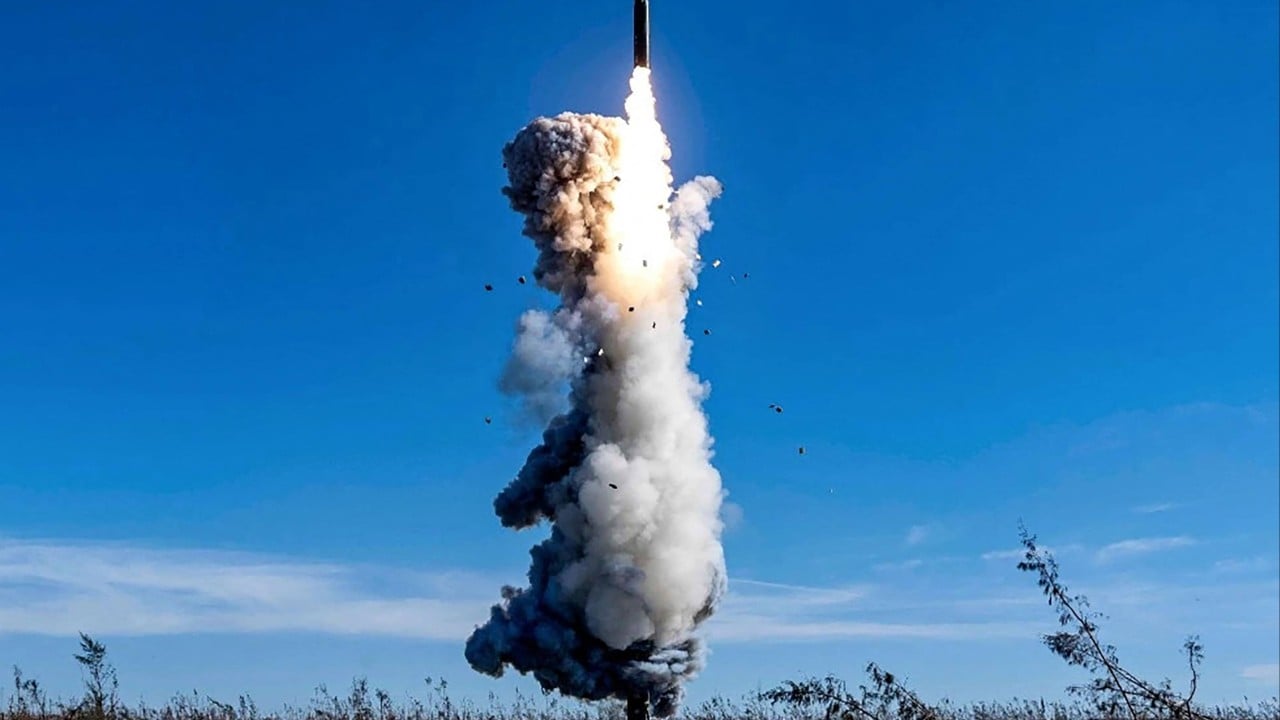
Washington and its Pacific allies are demanding a twenty-four-hour advance warning before any future Chinese missile tests, an ultimatum that exposes a profound misunderstanding of modern strategic competition.
When Beijing launched an intercontinental ballistic missile into the Pacific Ocean in late September, it marked the first time in decades that China tested a weapon of this magnitude into international waters without a prior splashdown notice to regional neighbors. The test triggered immediate diplomatic fury from Australia, New Zealand, Japan, and the United States. Officials in Washington immediately argued that such notifications are standard international practice to prevent miscalculation, de-escalate tension, and ensure maritime safety.
Yet, demanding twenty-four hours of notice from an adversary that views strategic ambiguity as a core deterrent is an exercise in diplomatic theater. China does not operate under Western norms of transparency, nor does it share Washington's desire for predictable escalation ladders. By asking Beijing to broadcast its military timelines in advance, Western diplomats are attempting to impose rules of the road on a competitor actively writing a different manual.
The Mechanics of Strategic Ambiguity
Transparency in military testing serves a specific purpose. It prevents a routine test from being misread as a first strike. During the Cold War, Washington and Moscow established rigorous notification protocols through the Strategic Arms Reduction Treaties and various bilateral agreements. These measures reduced the risk of accidental nuclear war by ensuring neither side woke up to an unexplained radar signature and panicked.
China views these legacy arms control frameworks with deep suspicion. For Beijing, advance notification strips away the very uncertainty that protects its nuclear deterrent.
Consider the geography. China's land-based nuclear forces are increasingly mobile, relying on heavy transporter-erector-launchers moving through tunnel networks and rugged terrain. A missile test is not merely an engineering benchmark; it is a live-fire validation of command-and-control readiness under realistic conditions. If Beijing were to telegraph a long-range missile launch twenty-four hours in advance, it would give American and allied intelligence assets an open invitation to map radar frequencies, position electronic intelligence vessels, and track telemetry profiles with absolute precision.
No military leadership facing a peer competitor hands over its data collection window voluntarily. The demand for a twenty-four-hour warning asks China to voluntarily degrade its own operational security.
The Alliance Dilemma in the Indo-Pacific
The friction over missile testing highlights a deeper structural vulnerability within the Western coalition. The Pacific is vast, and allied capitals view security through vastly different lenses.
For Australia and New Zealand, unannounced missile splashes in the South Pacific represent an unacceptable disruption to commercial shipping lanes and regional stability. Canberra views the ocean as its backyard, a maritime commons that requires multilateral stewardship. When a Chinese DF-31AG missile lands unannounced near French Polynesia, the political fallout in Oceania is swift. Leaders face domestic pressure to project strength and demand accountability from Beijing.
Washington, meanwhile, analyzes the test through the prism of global deterrence. Pentagon planners are less concerned about the commercial fishing boats in the splashdown zone and more focused on the telemetry of the missile itself. Did the warhead feature maneuverable re-entry vehicles? Did it test depressed trajectories designed to evade mid-course interceptors?
This divergence creates daylight that Beijing can exploit. China does not need to fracture the alliance directly; the inherent tension between regional economic interests and global strategic competition does the work for them. When Australia demands predictability and the United States demands military advantage, Beijing can simply ignore both.
The Limits of Diplomatic Protests
Diplomacy in the missile age often resembles a high-stakes poker game where one player refuses to look at the cards. Strong statements and demarches issued in foreign ministries carry little weight when the underlying military balance is shifting.
International maritime law provides broad freedoms for high-seas testing, provided proper safety notices are issued to mariners and aviators through channels like the International Maritime Organization. China did issue a notice to mariners, just not a bespoke, bilateral warning to its geopolitical rivals. By sticking to the letter of international maritime notification while violating the unwritten norms of superpower etiquette, Beijing executed a deliberate diplomatic maneuver.
It signaled a refusal to participate in Western-led security management. It told Washington that Pacific security is no longer an American monopoly.
+------------------------+---------------------------------+-----------------------------------+
| Strategic Actor        | View on Advance Notice          | Objective in Testing              |
+------------------------+---------------------------------+-----------------------------------+
| United States & Allies | Mandatory for de-escalation     | Predictability, safety, tracking  |
| China                  | Optional, undermines deterrence | Operational security, signaling   |
+------------------------+---------------------------------+-----------------------------------+
When diplomats demand a twenty-four-hour heads-up, they are asking for a courtesy that implies a shared framework of trust. That trust does not exist. Expecting Beijing to comply is not just naive; it misunderstands the fundamental nature of the contest currently unfolding across the Indo-Pacific.
Beyond the Warning Window
The obsession with twenty-four-hour warnings misses the forest for the trees. The real story is not that China failed to warn the United States, but that the United States is struggling to adapt to a strategic environment where it can no longer dictate the baseline rules of engagement.
As long as the technological arms race accelerates, missile tests will become more frequent, more complex, and intentionally more opaque. Hypersonic glide vehicles, maneuverable warheads, and fractional orbital bombardment systems are designed specifically to defeat early-warning architectures. Asking an adversary to announce the test of a weapon engineered to bypass your defenses is an absurdity.
Washington must move past the reflex of issuing diplomatic reprimands that go unheeded. The twenty-four-hour warning demand will not be met. Until Western defense planners accept that Beijing plays by its own rules, policy statements will remain toothless declarations in an ocean shifting beneath their feet