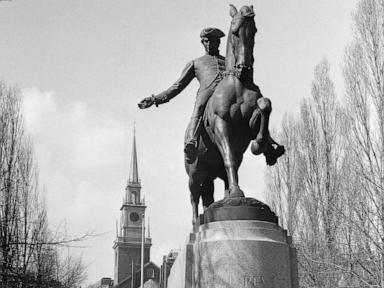
The image of Paul Revere galloping through the dark of night is etched into the American brain. We see the lone rider, the sweating horse, and the desperate cry of "The British are coming!" across the Massachusetts countryside. It's a foundational myth. But if you head out to the streets of Boston and its surrounding suburbs this week, you won't see a midnight shadow. Instead, you'll see a colonial reenactor navigating potholes, dodging delivery trucks, and following a flashing police cruiser in the middle of a Monday morning.
It sounds ridiculous. In many ways, it is. But the shift from a midnight ride to a midday commute says a lot about how we handle history in 2026. This isn't just a scheduling conflict. It's a collision between 18th-century heroics and 21st-century logistics. The National Park Service and local historical societies have to balance "historical accuracy" against the reality that most people are asleep at 2:00 AM and horses don't mix well with modern suburban traffic without a siren out front.
The logistics of a daylight revolution
Most people don't realize that the actual ride on April 18, 1775, wasn't a parade. It was a covert intelligence mission. Revere wasn't looking for an audience. He was trying to avoid the British patrols that were already crawling all over the Neck. Fast forward to today, and the goal has flipped 180 degrees. The point of the reenactment is for people to actually see it.
Organizers moved the bulk of the public events to Patriots' Day—a holiday celebrated in Massachusetts and Maine—which often means a mid-morning start. Putting a horse on the road in Medford or Arlington at 11:00 AM on a Monday is a nightmare. You've got commuters, buses, and distracted drivers on their phones. The police escort isn't just for show. It's a hard requirement for public safety.
I've talked to reenactors who find the whole thing a bit jarring. You’re wearing hand-stitched wool breeches and a tricorne hat, feeling the weight of the moment, and then you hear the "whoop-whoop" of a Ford Explorer Interceptor behind you. It breaks the fourth wall. But without that escort, the ride wouldn't happen. Town councils aren't exactly keen on letting a horse loose on main arteries without a literal motorcade to protect the animal and the rider.
What the history books usually get wrong
While we’re watching this sanitized, daylight version of the ride, it’s worth checking our facts on what actually happened. Henry Wadsworth Longfellow’s poem did a number on the truth. First off, Revere never yelled "The British are coming!" That would’ve been a terrible way to keep a secret. Most of the colonists still considered themselves British at that point. He likely said "The Regulars are coming out" or "The King’s men are on the move."
The daylight reenactment actually highlights something the midnight myth obscures: the terrain. When you see the rider moving through the modern landscape, you realize how short the distances were but how difficult the navigation felt. Revere wasn't the only rider, either. William Dawes took a different route, and Samuel Prescott joined them later. Revere didn't even finish the ride to Concord; he was captured by a British patrol. Prescott was the one who actually made it through.
The horse is the real star of the show
If you go to see the ride, pay attention to the horse. Usually, these are Morgan horses or sturdy crossbreeds capable of handling asphalt. Riding a horse on pavement is nothing like riding on the dirt paths of 1775. It’s hard on their joints and incredibly slippery.
The riders have to be expert horsemen to keep their mounts calm with sirens, cheering crowds, and the occasional car horn. It takes months of desensitization training. They expose the horses to flapping flags and loud noises just so they don't bolt when a kid drops a balloon. Honestly, the rider has the easy job. The horse is doing the heavy lifting of maintaining the illusion while a suburban world screams around it.
Why we still bother with the spectacle
You might ask why we don't just watch a documentary. Why put a guy in a costume on a busy road with a police escort?
It’s about the physical presence of history. There’s something visceral about the sound of hooves on the ground. Even if it's high noon and there's a cop car in the way, that rhythmic drumming of the gallop connects you to 1775 in a way a textbook can't. It reminds us that these were real people taking massive risks. They weren't statues; they were guys with nervous systems and sweating horses.
The shift to daylight also makes it an educational tool for kids. You can't get a thousand school children out at midnight on a Tuesday. By bringing the "midnight" ride into the light, it becomes a community touchstone. It’s a bit messy, it’s a bit weird, and it’s definitely not "accurate" in the strictest sense, but it keeps the story alive in the local psyche.
How to actually see the ride without the crowds
If you want to catch the reenactment this year, don't just stand at the Old North Church with everyone else. That’s where the tourists go. Instead, pick a spot along the route in Arlington or Lexington.
Check the local town schedules for Patriots' Day. The timing is usually staggered. You can see the departure from the North End, then hop on the T or drive ahead to a quieter stretch of the route. Look for the spots where the road narrows—that’s where you get the best sense of what the original ride felt like before the strip malls moved in.
Wear comfortable shoes and don't expect a high-speed chase. Because of the police escort and the safety protocols, the pace is often a controlled canter or even a fast trot. It’s a marathon, not a sprint.
Bring a copy of the actual historical account—not the poem. Read Revere’s own deposition while you wait for the sirens to appear. It’s a far more interesting story of a guy who was nearly caught multiple times, had his horse confiscated, and had to walk back to Lexington to save some important papers from a trunk. That’s the grit of the American Revolution that gets lost in the midday sunshine.
Get to your spot at least thirty minutes early. The police will close the roads down shortly before the rider arrives. Once those roads go quiet—even for just a few minutes—the modern world fades away. Then, the sirens start, the hooves hit the pavement, and for a split second, you're back in a time when the world was about to catch fire. It’s a weird, beautiful, clunky tribute to a night that changed everything.