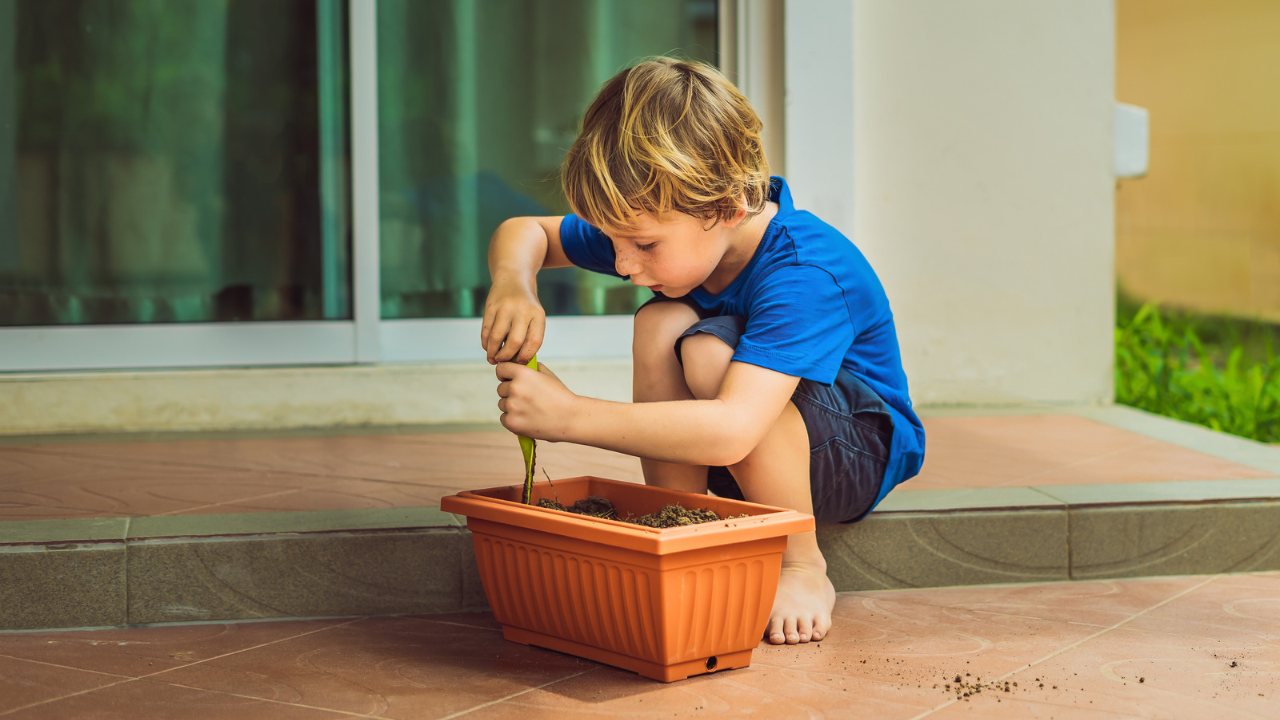
Most adults treat kids' business ideas like cute little school projects that will fizzle out by next Tuesday.
They're dead wrong.
Look at what happened when 9-year-old Richard Andino started out with nothing more than two simple planter boxes. While plenty of adults spend months debating business plans, designing logos, and buying expensive software before making a single dime, Richard just planted seeds, tended his crops, and started selling fresh vegetables. He turned two basic wooden boxes into a thriving neighborhood veggie business.
And honestly? His approach exposes the biggest lie in modern entrepreneurship. You don't need venture capital, a massive backyard, or an MBA to build something profitable. You just need a high-demand product, tiny overhead, and the willingness to actually show up and do the work.
If you're looking at Richard Andino's veggie business and wondering how a fourth-grader pulled this off—or how you can help your own kid build something real—let's break down the actual mechanics behind micro-farming, local food economics, and youth entrepreneurship.
Why Richard Andino's Two Planter Boxes Worked So Well
When people hear about a 9-year-old turning two planter boxes into a real business, they usually focus on the "aww" factor. Neighbors love supporting a hardworking kid. That's true. Cute gets you your first three customers.
Cute doesn't get you repeat buyers.
Freshness does. Grocery store produce often travels an average of 1,500 miles before it hits the shelf, losing nutrients and flavor every single day it sits in a refrigerated truck. When Richard harvests vegetables right out of his planter boxes and sells them locally, his customers are getting food picked hours earlier. You can taste that difference immediately.
Here's why the two-planter-box model is such a brilliant starting point for any young entrepreneur:
- Almost zero startup risk. Two raised beds or planter boxes cost very little to build or buy compared to mowing lawns (which requires gas, maintenance, and heavy machinery) or running a tech service.
- Built-in scarcity. You can't overproduce with two boxes. When supply is tight and the produce looks great, neighbors buy fast because they know it'll be gone by afternoon.
- Tangible math. A kid can physically see the cost of a $3 seed packet turn into $30 worth of harvested greens or tomatoes. Abstract spreadsheets don't teach profit margins nearly as well as holding cash in your hand from dirt you watered yourself.
I've seen dozens of youth business attempts fail because parents overcomplicate them. They turn a simple idea into a stressful chore by forcing the kid to track complex metrics or scale before they're ready. Richard kept it constrained. Two boxes. Manageable space. Real results.
The Real Economics of Small-Space Veggie Growing
Can two planter boxes actually generate meaningful money? Yes, if you grow the right things.
If a kid plants pumpkins or watermelon in two small boxes, they're going to wait four months to harvest maybe three fruits and make fifteen bucks. That's a terrible return on square footage. Smart small-space growers—whether they're 9 years old or 49 years old—focus on high-yield, fast-turnaround crops.
As an illustrative example of how small-space math works, take a standard 4-foot by 4-foot planter box. That's 16 square feet of growing space. If you dedicate that space to "cut-and-come-again" crops like loose-leaf lettuce, arugula, or basil, you aren't harvesting once. You're trimming the outer leaves every week while the center keeps producing for months. A single well-managed 16-square-foot bed of specialty greens and herbs can easily yield 2 to 3 pounds of produce per week during peak season. At farmers' market prices of $4 to $6 per half-pound bag, one box brings in $16 to $36 a week.
Two boxes? You're looking at $30 to $70 a week in revenue from a patio or small yard.
For a 9-year-old, making $50 a week is huge. That's $200 a month—more than enough to buy their own bike, save for a major goal, and reinvest in soil, compost, and better seeds.
High-Value Crops vs. Space Wasters
If you're helping a young grower pick what goes into their planter boxes, skip the romantic stuff and stick to what actually pays the bills.
Winners for small boxes:
- Cherry tomatoes: One healthy indeterminate cherry tomato plant in a cage can produce hundreds of fruits over a summer. Neighbors snack on them like candy.
- Radishes: They go from seed to harvest in 25 to 30 days. Kids have short attention spans, so getting a cash payout in under a month keeps them hooked.
- Fresh herbs (Basil, Cilantro, Mint): Grocery stores charge $3 for a tiny plastic clamshell of wilted herbs. Fresh-cut bunches sell effortlessly.
- Bush beans: Compact, heavy producers that don't take over the whole yard.
Space wasters to avoid:
- Corn: Needs wind pollination in large blocks and gives you one or two ears per stalk.
- Broccoli and Cauliflower: Takes up massive space for months just to give you one single head.
- Melons and Winter Squash: Vines will swallow two planter boxes whole before you see a single ripe fruit.
What Parents Get Wrong About Kids and Entrepreneurship
Let's be brutally honest here. Most parents accidentally sabotage their kids' businesses because they can't stand watching them struggle or make a sloppy mistake.
You see it all the time. A kid wants to sell veggies or lemonade, and suddenly Mom is up at midnight designing a Canva logo while Dad is building an elaborate cedar stand with custom lighting. Stop doing that. When you take over the hard parts, you steal the exact lessons the kid needs to learn.
If your kid forgets to water the planter boxes during a July heatwave and the lettuce bolts and turns bitter, let them deal with the consequences. Don't sneak out with the hose at 10 PM to save their crop. Losing a harvest teaches responsibility faster than a thousand lectures ever will.
On the flip side, kids do need guardrails around safety, food handling, and local rules. You shouldn't just shove a 9-year-old out to the sidewalk without a plan. Your job as the parent is to act like a quiet board advisor, not the CEO.
- Let them handle the money. Give them a physical cash box or pouch. Make them count out the change when a neighbor hands them a $20 bill for $6 worth of vegetables. Mental math gets sharp real quick when your own money is on the line.
- Require expense payback. If you front $40 for potting soil and seeds, have them pay you back out of their first profits. Giving them free supplies teaches them that revenue equals profit, which is a terrible habit in the real world.
- Coach the pitch, don't deliver it. Kids get shy when adults walk up. Practice a simple, polite opener at the kitchen table: "Hi, I grew these tomatoes and basil in my planter boxes this morning. Would you like to buy a bag for four dollars?" Once they say it five times, the fear disappears.
Navigating Local Rules for Homegrown Produce
Before setting up a stand at the end of the driveway, it helps to know where the legal lines are. Nobody wants a city code inspector shutting down a 9-year-old's veggie stand.
Thankfully, selling raw, uncut fruits and vegetables is one of the easiest things to do legally in the United States. Under most state agricultural and cottage food guidelines, whole, unprocessed produce—meaning you picked it, rinsed off the dirt, and didn't chop, cook, or pickle it—is heavily protected or exempt from commercial kitchen licensing.
The moment you slice those tomatoes to make salsa or bake those zucchini into bread, you cross into cottage food territory, which comes with stricter labeling and kitchen inspection rules. Keep it raw and whole.
Still, check two quick things in your specific town:
- HOA rules: Homeowners associations can be notoriously picky about signage and front-yard stands. Setting up a small table on a Saturday morning is usually fine, whereas leaving a permanent plywood billboard on the lawn will get you a nasty letter.
- Sidewalk obstruction: Make sure the table sits on your actual driveway or property line, not blocking the public pedestrian walkway.
According to organizations like the USDA Farmers Market Promotion Program and youth groups such as 4-H, direct-to-consumer local food sales have grown steadily because communities actively want closer connections to where their food comes from. A kid selling backyard produce fits right into that demand.
How to Start a Two-Box Veggie Business This Weekend
You don't need to wait until spring to get moving, and you definitely don't need to spend hundreds of dollars at a garden center. If you want to replicate the kind of momentum Richard Andino built with his two planter boxes, keep your launch small, fast, and practical.
Start by picking two sunny spots that get at least six hours of direct sunlight a day. Buy or build two basic raised planters—around 4x4 feet or 2x6 feet—and fill them with a solid mix of topsoil and compost. Cheap, heavy dirt from the back of the yard will compact in a container and choke the roots, so don't skimp on decent soil.
Plant half the space with fast-growing radishes and baby greens so you have something ready to sell in 30 days. Plant the other half with heavy hitters like cherry tomatoes, peppers, or bush beans that will carry sales through the rest of the season.
When the first harvest is ready, skip fancy marketing. Take a clear photo of the fresh-picked veggies in a basket, post it in your neighborhood Facebook group or Nextdoor feed with a simple pickup time on Saturday morning, and let your kid run the table. Keep prices simple—round dollar amounts like $3, $4, or $5 so nobody is fumbling with quarters.
Put the seeds in the dirt this week, let the kid do the watering, and watch what happens when they hand a neighbor food they grew themselves.


