Midnight smells like cold coffee and old paper in the basement laboratory of a university tucked away in the pine forests of the East Coast.
Tariq adjusts the microscope lens. His eyes burn. He has been staring at cell cultures for six hours, trying to trace the microscopic tendrils of a degenerative disease that has already taken his grandfather's memory. Around him, the room hums with the steady, reassuring breath of incubator fans. It is quiet. It is focused. It is safe.
Then his phone lights up on the bench.
An email from the international students office. A subject line with too many capital letters. A reminder that his entire life's work in this country could be reduced to an expiration date stamped by a bureaucrat who has never set foot in a biology lab.
For decades, the system operated on a simple, fragile promise known as duration of status. If you studied hard, maintained your grades, and paid your tuition, you stayed. You were not a ticking clock. You were a participant in a grand, quiet exchange of intellect. Universities in the United States became the magnetic north for the world's brightest minds not merely because of endowments or particle accelerators, but because they offered a rare commodity: psychological permission to dream without constantly watching your back.
Then came the proposal.
A stroke of executive penmanship designed to rewrite the architecture of academic migration. The Department of Homeland Security pushed forward a rule that would detonate the old social contract. Instead of duration of status, international students, researchers, and exchange visitors would face a hard ceiling of four years. For undergraduate degrees, that might barely fit. For a doctoral candidate mapping quantum computing, or a medical researcher chasing a vaccine, four years is barely enough time to secure funding, let alone complete a dissertation and yield breakthrough results.
Imagine trying to paint a masterpiece while someone stands behind you with a stopwatch, whispering that the canvas will be confiscated when the hand hits the hour.
Science does not care about election cycles. Curiosity has no calendar. Discovery unfolds in fits and starts, through failed experiments, dead ends, and accidental epiphanies that happen when a researcher least expects them. When you introduce a mandatory four-year boundary to academic pursuits that routinely take five, six, or seven years, you do not just create administrative friction. You break the fragile engine of innovation.
Consider what happened behind closed doors during the drafting of that policy. The panic was immediate and palpable. Universities whispered among themselves. Graduate student unions mobilized. Lawsuits were drafted before the ink on the Federal Register had even dried. Because everyone in the ecosystem knew a bitter truth: top-tier talent is mobile. If you make it miserable, bureaucratic, and terrifying for a brilliant mind from Mumbai, Seoul, or Berlin to land in an American university, they will simply buy a ticket to Toronto, Berlin, or Melbourne instead.
And that is precisely what a federal court stepped in to halt.
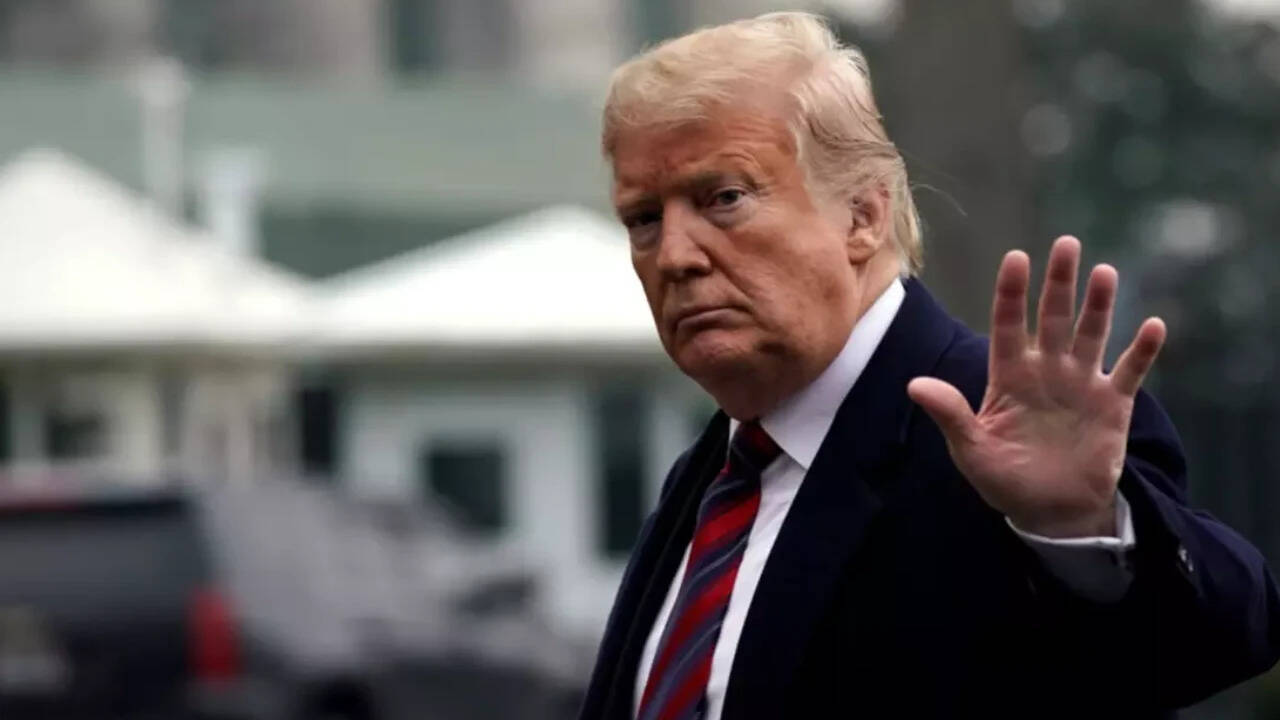
In a landmark decision that sent a quiet wave of relief across campuses nationwide, a federal judge blocked the Trump administration's four-year visa rule. The court recognized what the architects of the rule chose to ignore: that slamming arbitrary administrative shutters on thousands of scholars would cause irreparable harm not just to individual ambitions, but to the nation's scientific and economic standing.
The injunction offered a reprieve. But it did not erase the chill.
Ask any foreign-born researcher working in a laboratory today, and they will tell you that the paper wall is still there. It just wears a different disguise. They feel it every time they book a flight home to visit ailing parents, wondering if consular delays will lock them out of their own experiments. They feel it when they apply for grants, knowing their eligibility might be tangled in bureaucratic tape.
A nation thrives not by drawing circles in the dust to keep people out, but by drawing a larger circle that invites the world in to build something better.
Tariq closes his eyes for a moment, listening to the incubator hum. The microscope waits. The cells wait. The disease does not pause for immigration policy, and neither does human curiosity. As long as laboratories keep their doors open to whoever carries the best question, the light stays on. And in that light, the artificial borders drawn on paper begin to fade away into nothing at all.