Ankit sits in a cramped apartment in Columbus, the blue light of a laptop screen reflecting off his glasses. Outside, the Ohio wind rattles the windowpane, a cold reminder that he is thousands of miles from the humid, spice-laden air of Hyderabad. He is twenty-four. He has a Master’s degree in Data Science from a public university that most people in his home country couldn't find on a map. He also has a ticking clock.
In the world of American immigration, that clock is called the H-1B visa. For decades, it has been the golden ticket, the high-stakes lottery that determines whether a brilliant mind stays to build the American economy or packs a suitcase and heads for the exit. But lately, the bridge between these two worlds is swaying.
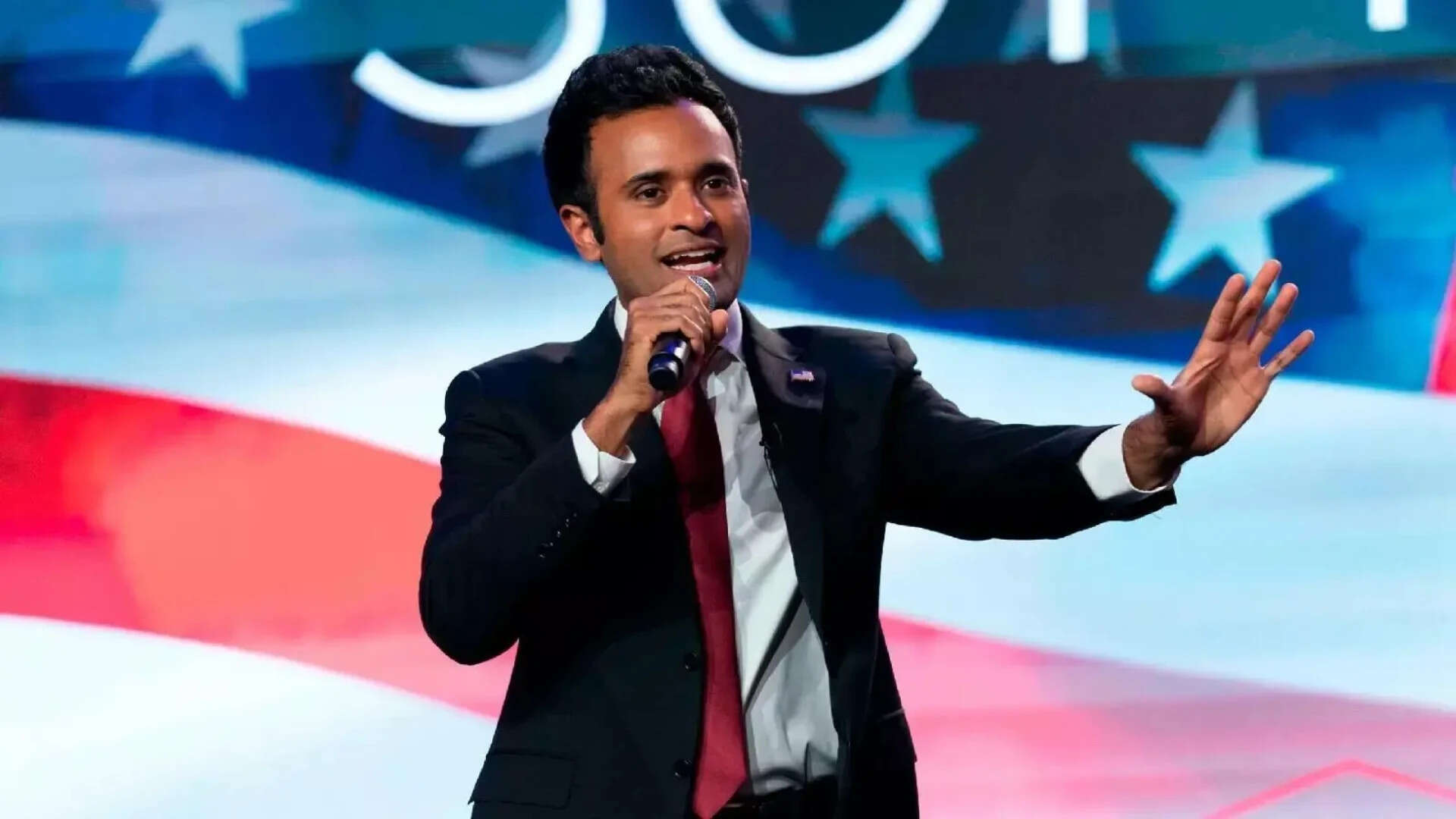
Vivek Ramaswamy, the entrepreneur turned political firebrand now tasked with streamlining the American government, has set his sights on the very institutions that brought Ankit here. He calls them "fragmented." He sees a system where mid-tier universities in the American heartland have become, in his view, "visa mills"—entities that prioritize tuition checks over academic prestige, effectively selling a path to residency under the guise of higher education.
The Architect and the Aspirant
To understand the friction, you have to look at the two different versions of the American Dream currently colliding in Ohio.
On one side, you have the reformers. Ramaswamy’s argument isn't just about border security; it is about value. He looks at the spreadsheets and sees a misalignment. When a state university system is fractured into a dozen different satellite campuses, each with its own administrative overhead and its own international recruiting arm, he sees waste. More importantly, he sees a loophole. By his logic, if these programs are watered down to serve as a backdoor for labor, they aren't just failing the students—they are failing the American taxpayer and the integrity of the H-1B program itself.
Then there is the other side. The human side.
For a student like Ankit, that "fragmented" university was a lifeline. It wasn't Harvard. It wasn't Stanford. But it offered a curriculum that allowed him to work in a lab, pay his taxes, and dream of a life where he could contribute to the tech corridor growing in the Midwest. When politicians talk about "cracking down" on these institutions, they aren't just talking about closing buildings. They are talking about pulling the rug out from under thousands of people who followed the rules, paid the fees, and bet their entire futures on a promise.
The Mechanics of the Friction
The H-1B visa is capped at 85,000 spots a year. Every April, the digital drum rolls, and a lottery decides who stays. It is a brutal, mathematical reality.
Over the last decade, the number of applicants has skyrocketed, driven largely by the massive influx of international students graduating from U.S. colleges. Ramaswamy’s critique centers on the idea that many of these students are being funneled through programs that exist primarily to provide "Optional Practical Training" (OPT) extensions—a legal way to work in the U.S. while technically still being a "student."
Consider the hypothetical case of "State Tech U," a fictional stand-in for the dozens of satellite campuses under scrutiny. State Tech U might have a declining enrollment of local students. To keep the lights on, they ramp up their international recruiting. They offer a Master's in "Information Systems" that is light on theory but heavy on the paperwork required to get a work permit.
To a reformer, this is a scam. To the university, it is survival. To the student, it is the only door left open.
The Ohio Battleground
Why Ohio? Because Ohio is where the old economy is trying to become the new one.
The state has spent billions trying to attract companies like Intel and Google. They need engineers. They need coders. They need the very people the H-1B program was designed to attract. However, the political tension arises when the local population feels that these jobs are being "outsourced" from within—that the university system is helping foreign nationals skip the line while the cost of living for locals rises.
Ramaswamy’s proposal to consolidate these "fragmented" universities isn't just an accounting move. It’s an ideological stake in the ground. By forcing smaller campuses to merge or shut down, he aims to raise the "quality floor." The theory is simple: if the university is harder to get into, the visa that follows it is more prestigious. It becomes a filter for excellence rather than a net for anyone with forty thousand dollars in tuition money.
The Invisible Stakes
But filters have a way of clogging.
When you tighten the requirements, you don't just filter out the "low quality" applicants. You often filter out the scrappy, the underprivileged, and the dreamers who don't have the pedigree of an Ivy League background but have the work ethic of a thousand suns.
There is a quiet irony in the fact that many of the people pushing for these crackdowns are themselves the children of immigrants or immigrants who found success through the very systems they now wish to dismantle. They argue that they are "protecting" the system for the truly elite. But who gets to define elite? Is it the person with the most expensive degree, or the person who builds the next great software company in a basement in Cincinnati?
The risk of this crackdown is a "brain drain" in reverse.
If the path through a mid-tier Ohio university becomes too treacherous or politically unstable, the Ankits of the world stop coming to Columbus. They go to Toronto. They go to Berlin. They go to Sydney. And they take their skills, their tax dollars, and their future innovations with them. The bridge doesn't just sway; it breaks.
The Cost of Efficiency
Efficiency is a cold goddess.
Consolidating a university system looks great on a balance sheet. It removes redundant deans, slashes administrative costs, and creates a unified brand. It satisfies the demand for a leaner, more "American-first" educational model. But a university is more than its payroll. It is an ecosystem.
In many small Ohio towns, the local university is the largest employer. It is the reason there is a decent coffee shop on Main Street or a diverse grocery store in the suburbs. When you "optimize" these institutions out of existence to fix a perceived flaw in the immigration system, you leave a hole in the community that numbers can't fill.
The debate over H-1Bs and university fragmentation is, at its core, a debate about what kind of country the United States wants to be. Is it a fortress, guarded by high walls and even higher barriers to entry, where only the "best of the best" are permitted to enter? Or is it a workshop, where the doors are open to those willing to learn, work, and build, even if they start at a satellite campus in a town nobody has heard of?
The Silent Night in Columbus
Ankit closes his laptop. The results of the latest policy shift aren't out yet, but the rumors are enough to keep him awake. He thinks about his parents back in Hyderabad, who took out a second mortgage to send him here. He thinks about his job at a local logistics firm, where he spent the last six months optimizing delivery routes that save the company millions.
He is exactly what the proponents of the H-1B say they want: a high-skilled worker contributing to the American economy. Yet, because of the name of the school on his diploma and the changing winds in Washington, he feels like a ghost in the machine.
The policy papers call it "streamlining." The politicians call it "reform." The universities call it "survival."
For the person holding the passport, it feels like waiting for a storm to decide if your house is worth saving.
The wind in Ohio doesn't care about visas. It just blows. And as the lights go out in apartments across the state, thousands of people are left wondering if the bridge they crossed is about to vanish behind them, leaving them stranded between the life they left and the one they aren't sure they’re allowed to keep.
Somewhere in a government office, a red pen moves across a map of Ohio, circling campuses and crossing out budgets. Each line drawn is a career redirected; each circle erased is a community changed. The data points are clear, the logic is firm, and the efficiency is undeniable, but the human heart doesn't beat in spreadsheets.
Would you like me to analyze the specific economic impact reports of the proposed Ohio university consolidations for you?