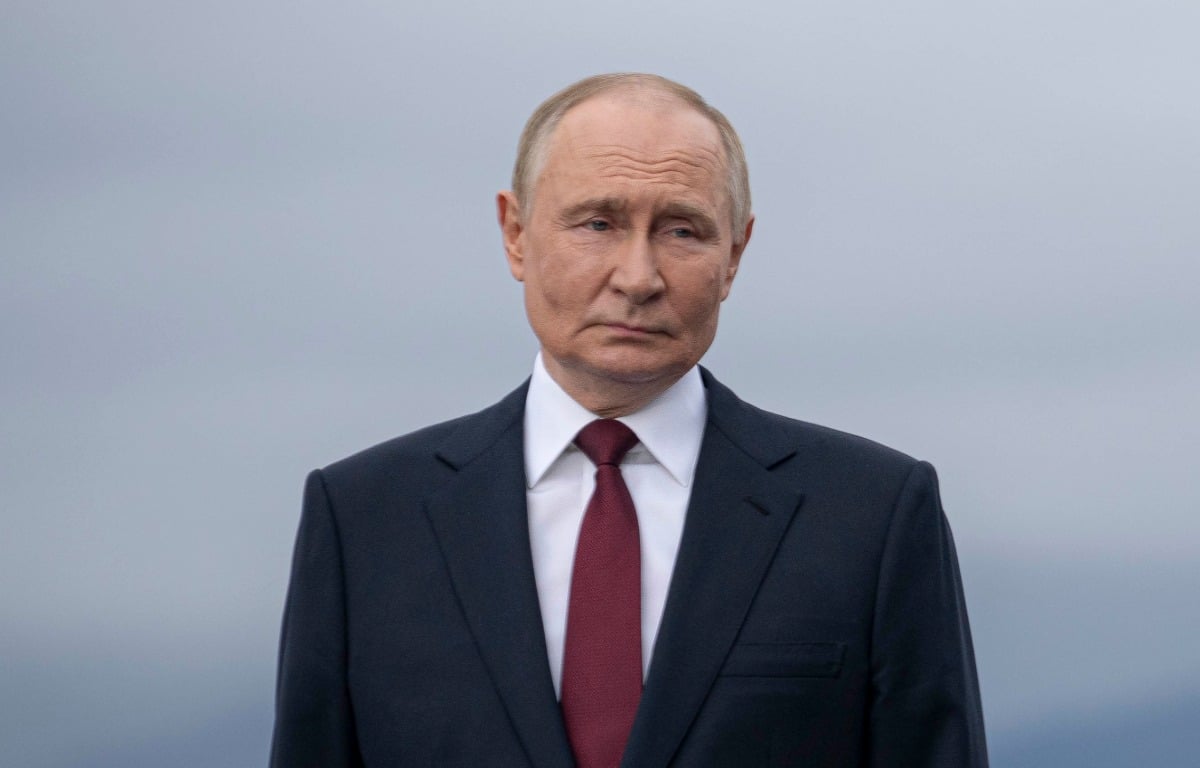
Russian President Vladimir Putin signed another executive order adjusting the authorized personnel strength of the Russian Armed Forces, pushing total paper end-strength past 2.4 million people, with active-duty military service members climbing past 1.53 million. Headlines around the world treat these figures as raw proof of an unstoppable mobilization machine.
They are missing the forest for the trees.
An administrative stroke of a pen does not manufacture trained infantrymen, functional battalion command structures, or modern armored vehicles out of thin air. For years, Moscow has used numerical adjustments on paper to signal strategic endurance to Western capitals. The math tells a much darker story about logistical strain, demographic decline, and the quiet desperation of a military bureaucracy trying to mask structural shortfalls with bureaucratic inflation.
The Mechanics of Paper Expansion
Authorized end-strength is not the same as boots on the ground.
When the Kremlin issues a decree expanding the armed forces, it alters the ceiling of what is legally permitted, not the immediate headcount. These expansions fold in civilian support staff, logistical components, specialized construction units, and administrative overhead. The latest iteration specifically cites the formation of new military construction units as justification for swelling the ranks by another 25,000 active service members.
Building fortifications requires bodies. Digging trench networks across hundreds of miles of contested terrain demands manual labor on an industrial scale.
Yet, confusing a construction battalion with a frontline mechanized brigade is a dangerous analytical error. Moscow is attempting to institutionalize a permanent militarized workforce to handle the crushing physical burden of fortification and repair. Concurrently, the state avoids calling a politically toxic second wave of full national mobilization by constantly shifting administrative definitions.
The Economics of Attrition
Financial incentives drive the modern Russian recruitment apparatus.
Signing bonuses have skyrocketed across multiple regions, turning military service into the highest-paying occupation available to working-class men in economically depressed provinces. This model relies entirely on petrodollar revenues and liquid state reserves.
The strategy creates a distinct economic distortion. Small towns lose factory workers, truck drivers, and local technicians to front-line contracts, while regional budgets strain under the weight of compensation payouts to injured soldiers and the families of the dead.
As casualty clearing rates fluctuate, the outflow of experienced fighters often outpaces the influx of fresh contract recruits. Expanding the authorized ceiling on paper does nothing to solve the regional recruitment fatigue currently plaguing remote districts where the pool of willing volunteers has noticeably thinned.
Conscription Realities and Hidden Deployments
The legal framework governing Russian military service has undergone quiet, radical transformation.
The shift toward year-round conscription mechanisms has streamlined the pipeline of young men moving through induction centers. Officially, statutory law forbids sending raw conscripts across international borders into active combat zones.
Practice frequently diverges from statute. Investigative reporting and frontline accounts consistently demonstrate intense psychological and administrative pressure applied to young conscripts to transition into professional contract soldiers shortly after donning the uniform. Once that contract is signed, legal protections dissolve, and they become expendable assets in high-attrition meat-grinder tactics along the eastern front.
This administrative sleight-of-hand allows the Ministry of Defense to feed the front lines without officially declaring a fresh public draft that might spark urban protests in Moscow or St. Petersburg.
Strategic Signalling to Western Capitals
Every numerical bump serves a dual-purpose diplomatic function.
By telegraphing an army heading toward two and a half million personnel, the Kremlin aims to convince foreign ministries that time is exclusively on Russia's side. The messaging is calculated: Do not bother supporting a protracted defense, because our manpower pool is effectively infinite.
Western intelligence agencies understand the bluff. A larger aggregate size dilutes the proportion of elite, highly trained professional units that formed the backbone of the military prior to 2022. Modern warfare is less about mass infantry waves and more about electronic warfare resilience, counter-battery radar coverage, secure communication nodes, and integrated air defense. Filling ranks with hastily trained personnel assigned to construction or low-tier infantry roles degrades the overall technological efficiency of the force.
Quantity has a quality of its own, according to historical military doctrine. When quantity lacks modern optics, secure radios, and experienced junior officers, it simply becomes a larger target for precision munitions.
The Breaking Point
The fundamental constraint on Russian military power is not legislative imagination, but demographic reality.
Russia entered this conflict facing long-term population decline and low birth rates. Every thousand men pulled from the civilian workforce into the military machine leaves an unrecoverable void in civil infrastructure, manufacturing, and engineering sectors.
Decrees mandating millions of personnel are public relations exercises wrapped in military terminology. They project an aura of infinite strength while papering over the grinding, attritional reality eating away at the core of the state's institutional capacity.
The armed forces are expanding on paper because they are contracting in capability. Every new quota represents another patch on a garment wearing thin at the seams, stretched past the point of structural integrity.


