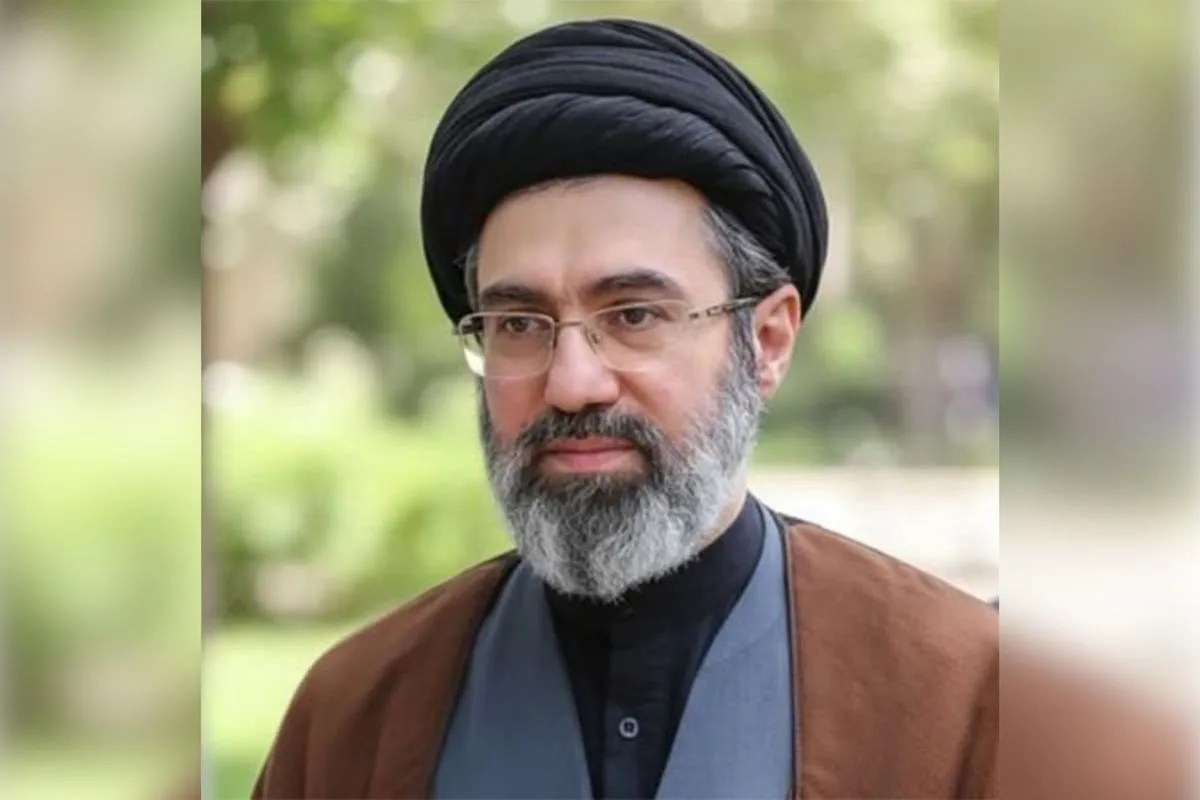
The media is doing what it always does. They are hyperventilating over a ghost.
If you read the mainstream coverage lately, you would think the Iranian succession is hanging by a thread because Mojtaba Khamenei hasn't waved at a camera crew recently. Headlines scream that he assumed power and immediately vanished, treating his absence as proof of a health crisis, an internal coup, or an impending collapse of the establishment. It is lazy, superficial analysis pushed by commentators who confuse visibility with power.
Let us dismantle this nonsense immediately.
Mojtaba Khamenei staying out of the public eye is not a sign of weakness or medical emergency. It is a masterclass in autocratic survival. In Tehran's corridors of power, loud is weak and quiet is lethal.
The Visibility Fallacy
Western political analysts suffer from a chronic addiction to optics. They assume that if a leader is not shaking hands on television, giving fiery speeches, or posting on social media, something must be fundamentally wrong. This view ignores how authoritarian governance actually operates.
Think about how supreme power functions in a clerical oligarchy. The office of the Supreme Leader does not derive its legitimacy from a nightly news segment or a public approval rating. It relies on a dense, opaque web of patronage, security apparatuses, and clerical loyalty that operates far beneath the surface of public observation.
When Ali Khamenei spent decades consolidating his position, he mastered the art of shadow governance. Mojtaba has been trained in the exact same school. For over twenty years, he has operated as the invisible engine behind the office, managing the Islamic Revolutionary Guard Corps ties, financial conglomerates, and intelligence networks without ever holding a formal, elected government portfolio.
Why would a man who spent his entire career exercising immense power from the shadows suddenly crave the cheap dopamine hit of public rallies just because he inherited the title? He would not. Stepping back from the cameras is the most rational defensive maneuver available.
Why Hiding is a Weapon
Let us look at the structural reality. An open, highly visible leader invites friction, assassination planning, and constant factional lobbying. Every public appearance creates a surface area for protest, security breaches, and diplomatic signaling that opponents can exploit.
By retreating into total opacity, Mojtaba achieves three things instantly:
- Information Asymmetry: When the outside world has no idea where you are or what your health status is, analysts waste millions of dollars of intelligence bandwidth chasing phantoms. You control the narrative simply by refusing to provide one.
- Insulation from Domestic Anger: Iran faces deep economic friction, inflation, and public fury. A smart ruler does not plaster his face across state TV while the currency tanks. Let the bureaucratic apparatus take the hits while the apex predator remains unseen.
- Consolidation Without Compromise: Public appearances require compromise. They require handshakes with rivals, photo ops with factions you despise, and diplomatic tightropes. Silence forces everyone else to come to you on your terms.
The mainstream narrative treats his disappearance as a mystery. It is not a mystery. It is a fortress.
The Anatomy of an Institutional Machine
People often ask why the transition of power in Iran generates so much anxiety if the system is so stable. The answer lies in a fundamental misunderstanding of what the Supreme Leader actually is.
He is not a CEO of a corporation who needs to pitch to shareholders quarterly. He is the institutional anchor of a revolutionary state. The machinery that keeps the system running—the Basij, the bonyads, the intelligence directorates—does not care if the man at the top gives a Sunday address. They care about resource allocation, protection from regime change, and the continuity of privilege.
Mojtaba controls these levers because he spent the past two decades building them. To imagine that a sudden lack of public sightings means he is incapacitated is like looking at the foundation of a skyscraper, seeing no workers on the roof for an afternoon, and declaring the building is collapsing.
I have watched commentators blow massive budgets on Kremlinology and Tehran-ology, building intricate theories based on who stood next to whom at a Friday prayer sermon. It is astrology for foreign policy nerds. Real power is quiet. Real power leaves a paper trail of budgets, security appointments, and institutional purges, not viral video clips.
The Counter-Intuitive Truth
If you want to understand what is happening in Iran right now, stop looking at the news feeds asking where Mojtaba is. Ask instead who is getting quietly purged from the middle ranks of the security state. Ask who is being appointed to oversee provincial economic assets.
The silence from the top is deafening because it is designed to be. While everyone else is staring at an empty podium, the machinery of state is quietly locking into its new configuration.
Stop waiting for a speech. The speech is never coming, and that is precisely why you should be paying attention.