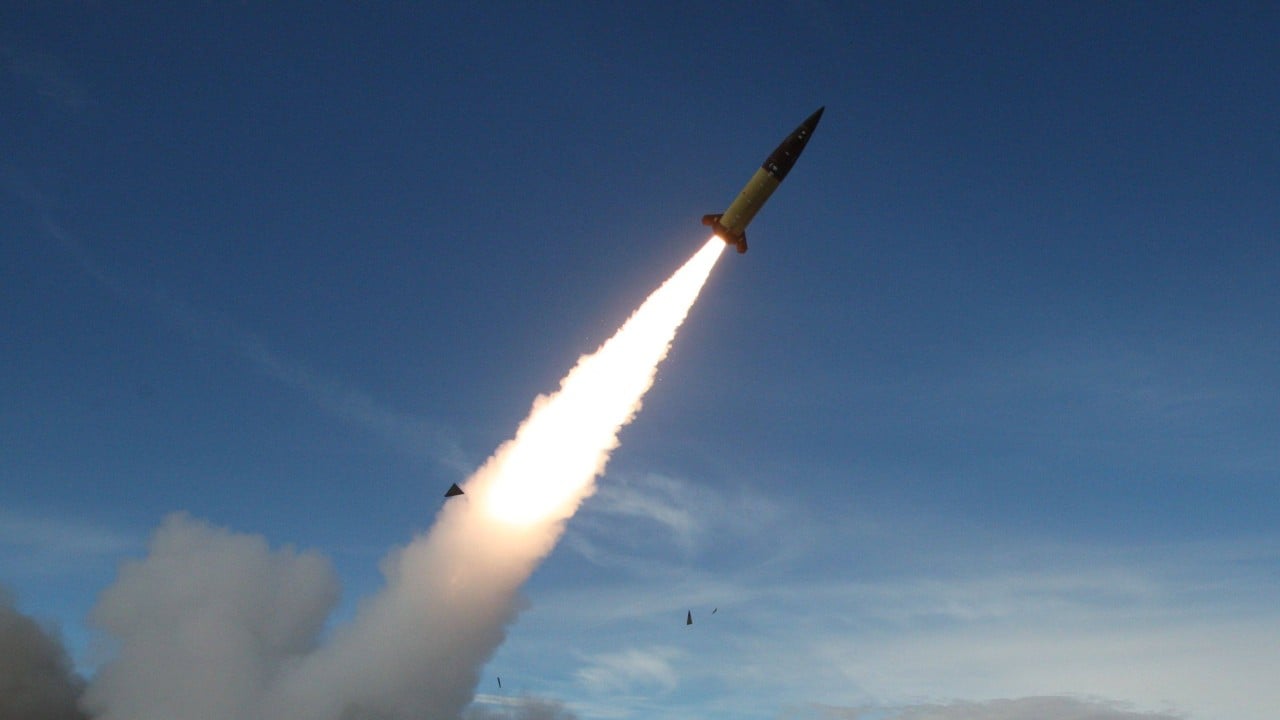
Every desk-bound strategist in Washington is currently hyperventilating over the exact same headline. The narrative being spoon-fed to the public is clean, terrifying, and fundamentally broken: the Pentagon is supposedly burning through its entire inventory of long-range precision munitions in Iran, leaving the cupboard bare for a hypothetical showdown elsewhere.
It is the kind of panic-inducing shorthand that wins cable news segments while completely misinterpreting how modern industrial defense logistics actually function.
I have watched defense budgets get carved up, watched supply chains stutter, and watched armchair analysts treat a calculated inventory burn rate like an existential corporate bankruptcy. The lazy consensus says we are running dry because our stockpiles are shrinking. That is not an analysis; that is innumeracy disguised as commentary.
Let us dismantle the panic.
The Stockpile Fallacy
The entire premise of the "we are out of missiles" panic rests on a static view of inventory. Analysts look at a theoretical warehousing ceiling, subtract a wave of strike data, and scream that the sky is falling.
That is not how an active defense industrial base works during a regional kinetic campaign.
When munitions leave a deck or a silo, they are not vanishing into a black hole of permanent scarcity. They are being replaced by production lines that operate on variable surge capacities. If you think the Department of Defense maintains a fixed box of missiles that only shrinks during a conflict, you have spent too much time reading press releases and zero time tracking subcontractor sub-assembly bottlenecks.
The real metric that matters is not the raw number of rounds sitting in a bunker on day zero. The metric that matters is the velocity of the replenishment pipeline and the elasticity of tactical demand.
[Static Inventory View] -> Panic over depletion
[Dynamic Production View] -> Reality of adaptive throughput
We are not fighting a prolonged world war of attrition that grinds down heavy armor factories over five years. We are executing high-tempo, precision-guided suppressive operations designed to shatter command nodes before an adversary can pivot. Precision munitions are consumed because they work, not because we do not know how to build more of them.
Precision Is Not a Luxury Good
The second major flaw in the mainstream commentary is the persistent hand-wringing over the unit cost of long-range strikes. Critics love to flash multi-million-dollar price tags on a single cruise missile or ballistic asset, comparing it to the cheap scrap metal flying the other way.
This comparison belongs in a freshman economics seminar, not a serious national security brief.
A high-end precision weapon is not a standalone retail purchase. It is an insurance policy against escalation. When you buy a precision strike package, you are paying to bypass the brutal, messy overhead of protracted urban combat, carrier group vulnerability, and mass troop deployment.
| Strike Strategy | Cost Per Round | Upstream Risk | Collateral Damage |
|---|---|---|---|
| Mass Iron Bombardment | Low | High (Pilot/Airframe Loss) | Catastrophic |
| Long-Range Precision | High | Near Zero (Standoff Range) | Minimal |
If you use ten cheap assets that miss their targets, you have not saved money. You have invited a counter-attack, multiplied your logistics footprint, and forced yourself into a second wave of strikes. Spending top dollar for a guaranteed kinetic effect on a specific GPS coordinate is the most cost-effective way to fight a modern regional adversary. The people complaining about the bill are looking at the grocery receipt while ignoring the cost of burning down the house.
The Myth of the Single-Theater Trap
Then there is the geographic anxiety. The chorus claims that every long-range asset spent neutralizing threats in the Middle East is a missile stolen from a potential flashpoint in the Pacific.
This argument relies on the assumption that military hardware is completely fungible and sits in one giant global pool. It is not.
Strategic command structures do not pull from a single global shelf when allocating strike packages. Assets deployed in theater are matched to specific operational requirements, regional maintenance hubs, and theater-specific supply chains. A shortage in one region does not automatically mean a systemic collapse across global defense readiness, nor does it mean our deterrence posture elsewhere relies on a static count of cruise missiles.
Deterrence is maintained through capability, resolve, and industrial mobilization capacity. An adversary watching a supply chain adapt in real time is far more deterred than one looking at a static snapshot of warehouse numbers from last quarter.
The Uncomfortable Truth About Defense Supply Chains
Let us be completely transparent about the downside of my perspective. The defense industrial base is not a friction-free machine. It has real vulnerabilities.
Finding rare earth elements, specialized microelectronics, and certified solid rocket motor propellant is difficult. Lead times for casting high-tolerance rocket motors can stretch past a year. When demand spikes abruptly, the bottlenecks are genuine, and the major defense primes cannot simply flip a switch to double output overnight without running into severe engineering constraints.
That is the trade-off. We prioritize agility and high-tech supremacy over massive warehouses filled with aging, un-updated hardware. It is a calculated risk. A warehouse full of 1990s-era cruise missiles is useless against modern integrated air defense systems anyway. You do not stockpile yesterday's software-limited munitions just to keep the inventory numbers looking pretty on a spreadsheet. You build what works right now, you use it when the stakes demand it, and you trust the engineering base to scale up the next iteration.
Stop treating munitions like non-renewable natural resources. They are manufactured goods produced by an adaptive, if occasionally clunky, industrial ecosystem. The panic is performative, the data is misunderstood, and the conclusions being drawn by the commentariat are entirely detached from the mechanical realities of modern power projection.
We are not running out of capability. We are watching a high-end system do exactly what it was engineered to do under pressure.

.png?itok=1mb05mKJ)

