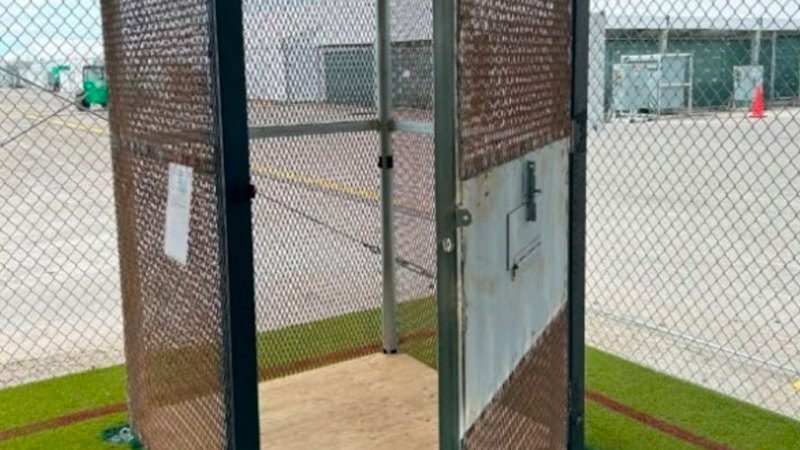
The headlines practically write themselves. Federal reports drop, media outlets foam at the mouth over metal cages, and the public locks into a predictable loop of moral panic. The narrative is frictionless: a facility nicknamed Alligator Alcatraz treats detainees like animals, and the outrage machine spins up another gear. Everyone nods along, satisfied with the moral clarity of the outrage.
It is also entirely missing the point. Don't miss our recent article on this related article.
Focusing exclusively on the physical hardware of containment—the metal bars, the chain-link, the harsh lighting—is a brilliant distraction. It allows administrative bureaucracies to stage a fake reform battle over architecture while the actual systemic corruption hums along uninterrupted. I have watched government contractors and oversight boards stage this exact theater for a decade. They argue about the dimensions of a cage while the legal machinery quietly shreds due process behind closed doors.
Let us define the actual terms of this disaster without the emotional static. To read more about the history of this, BBC News offers an informative breakdown.
Detention infrastructure in high-security or remote federal zones does not fail because the perimeter is harsh. It fails because opacity breeds impunity. When a facility is planted in an isolated geography, the lack of operational visibility transforms administrative negligence into standard operating procedure. The media wants you to believe that if you swap a metal cage for a drywall partition, the human rights violation stops. That is a fantasy designed to protect the people who sign the multi-million-dollar logistics contracts.
Look at the federal oversight reports that triggered this latest cycle. They read like forensic accounting exercises written by accountants who have never spent twenty-four hours inside a processing intake. They track linear footage, per-capita square footage, and climate control metrics. They treat human liberty like a commercial real estate audit.
The lazy consensus says the cruelty is an aberration caused by bad apples or poor architectural planning. History tells us the opposite. Facilities like this are built precisely to function outside the normal rules of civil transparency. Remote placement is not an accident of zoning; it is a feature of liability management.
Consider the logistical reality of remote federal detention. When transport logistics take hours and legal counsel is hundreds of miles away, accountability evaporates. The metal cage is a symptom of a lazy system that relies on physical restraint because it lacks the administrative competence to manage populations humanely or efficiently. Yet, critics swallow the bait. They demand better cages, warmer blankets, and softer flooring, as if making the holding pen more comfortable somehow fixes the underlying injustice of indefinite, unaccountable detention.
If you want to dismantle the system, stop arguing about the interior decorating of containment zones.
The real question nobody wants to ask is why the administrative state defaults to mass containment whenever border or security policies hit a logistical bottleneck. The answer is simple: captivity is easier to budget for than competence. Writing a check to a private security vendor requires zero imagination. Building an integrated, transparent processing system that respects civil liberties while maintaining order requires actual governance—a commodity in short supply across both sides of the aisle.
The public asks how federal auditors allowed these conditions to persist for months without immediate intervention. The answer is brutal: the auditors report to the same institutional apparatus that commissioned the facilities. Expecting an internal oversight body to dismantle its own operational footprint is like asking a corporation to audit its own tax evasion.
Stop looking at the bars. Start looking at the procurement contracts, the jurisdictional loopholes, and the deliberate erosion of judicial review that makes remote warehousing possible in the first place. Until we change the incentives, swapping out the metal for something softer just makes the machinery run quieter.