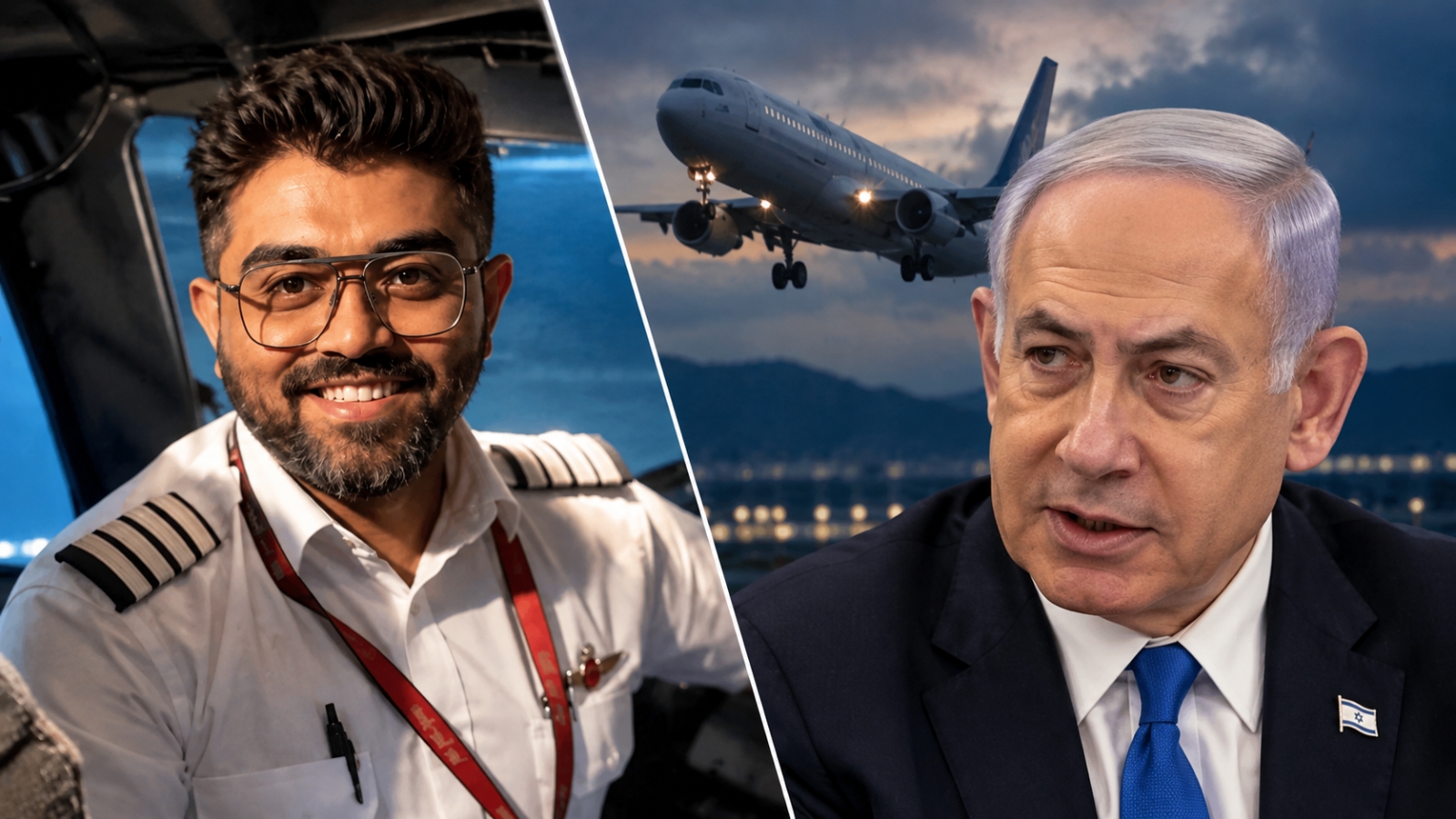
When an aviation incident escalates from an operational discrepancy to a passenger-filmed confrontation involving cabin crew and flight deck personnel, the failure point rarely lies in a single manual violation. Instead, it exposes a structural collapse in procedural clarity, chain of command enforcement, and crisis communication under public observation. The recent viral event involving a flydubai flight—where passengers actively intervened and questioned crew directives regarding a co-pilot—highlights the friction between regulatory protocol and crowd perception in real time.
Understanding this phenomenon requires stripping away the narrative noise of social media outrage. We must examine the underlying mechanics of aviation safety compliance, the legal boundaries of crew authority, and the systemic vulnerabilities that emerge when operational decisions are exposed to untrained observers.
The Architecture Of In-Flight Authority
Commercial aviation operates under a strict command hierarchy designed to mitigate ambiguity during high-stress scenarios. The Pilot in Command holds absolute authority over the aircraft, its occupants, and its crew, a mandate codified in international civil aviation conventions. This authority extends to delegation: the captain empowers cabin crew to enforce safety regulations, secure the cabin, and manage passenger behavior.
However, this authority rests on an implicit assumption of operational transparency and institutional trust. When passengers perceive that a crew member is acting outside standard safety norms—such as requesting assistance with a flight deck officer under unusual circumstances—the baseline of trust fractures.
[Operational Event]
       │
       ▼
[Perceived Deviation from Norms]
       │
       ▼
[Passenger Surveillance & Interruption]
       │
       ▼
[Erosion of Crew Authority & Escalation]
Passengers lack the operational context to distinguish between routine administrative actions, internal medical emergencies, fatigue management protocols, and security interventions. When a situation deviates from the predictable script of commercial air travel, observer anxiety triggers behavioral intervention. The bystander effect is inverted inside a confined aircraft cabin; anonymity disappears, and collective scrutiny converts passengers into an impromptu oversight committee.
The Cost Function Of Public Intervention
In traditional aviation safety models, communication flows unidirectionally from the flight deck through the cabin crew to the passengers. Information is managed to prevent panic and maintain operational focus. The proliferation of personal recording devices in the modern cabin introduces a continuous feedback loop that alters this economic and operational equation.
When passengers capture and broadcast operational friction, the airline faces immediate reputational liabilities coupled with internal compliance reviews. The cost function of this exposure involves three distinct variables:
- Reputational Friction: The velocity of digital dissemination outpaces corporate communications, forcing the carrier into a reactive posture.
- Regulatory Scrutiny: Civil aviation authorities mandate formal investigations whenever operational control or crew fitness is publicly called into question.
- Crew Cognitive Load: Flight crews must manage simultaneous operational threats and external observation, increasing the probability of error.
When passengers take it upon themselves to question or block crew instructions—as seen in the insistence that authority be deferred strictly to external law enforcement—they demonstrate a fundamental misunderstanding of aviation jurisdiction. Cabin crew are not police officers, nor are they required to function as such; their authority derives from operator procedures and safety mandates approved by regulatory bodies. Yet, if instructions are delivered with ambiguous phrasing or perceived urgency without context, the vacuum is filled by untrained civilian intuition.
Systemic Vulnerabilities In Crew-Passenger Interface
The incident points to structural vulnerabilities in how frontline personnel handle non-standard cabin events. Three primary failure modes typically drive these crises:
- Ambiguous Communication Protocols: When instructions lack clear operational rationales, passengers default to skepticism. While security protocols dictate that certain details cannot be shared, the delivery must project unyielding regulatory legitimacy rather than improvised confusion.
- Training Deficits in De-escalation: Standard cabin safety training heavily emphasizes evacuation, fire suppression, and medical response. De-escalating a mobilized, recording passenger demographic requires psychological management frameworks that traditionally receive less emphasis in curriculum design.
- Chain of Custody Confusion: If a flight deck crew member becomes incapacitated, fatigued, or subject to internal disciplinary removal while passengers are boarded, the handling mechanism must isolate the event from public view. Exposing administrative or medical personnel changes to the open cabin guarantees misinterpretation.
Strategic Correction For Air Carriers
Mitigating future occurrences of public insubordination and passenger-filmed intervention requires a complete redesign of the operational interface between crew and passengers during non-routine events.
Airlines must abandon the reliance on rigid, dismissive commands when dealing with operational anomalies. Instead, training regimens must incorporate dynamic situational awareness modules that prepare cabin managers to assert control over the cabin environment before visual documentation spirals into public relations crises.
Furthermore, flight deck procedures regarding crew movements and relief must be shielded from passenger observation points. Operational transparency stops where safety and security boundaries begin. When airlines fail to maintain this boundary, they surrender control of the narrative to the cabin floor, transforming a controllable internal adjustment into an uncontrolled public spectacle. The solution is not better public relations after the fact, but absolute operational compartmentalization before the aircraft pushes back from the gate.