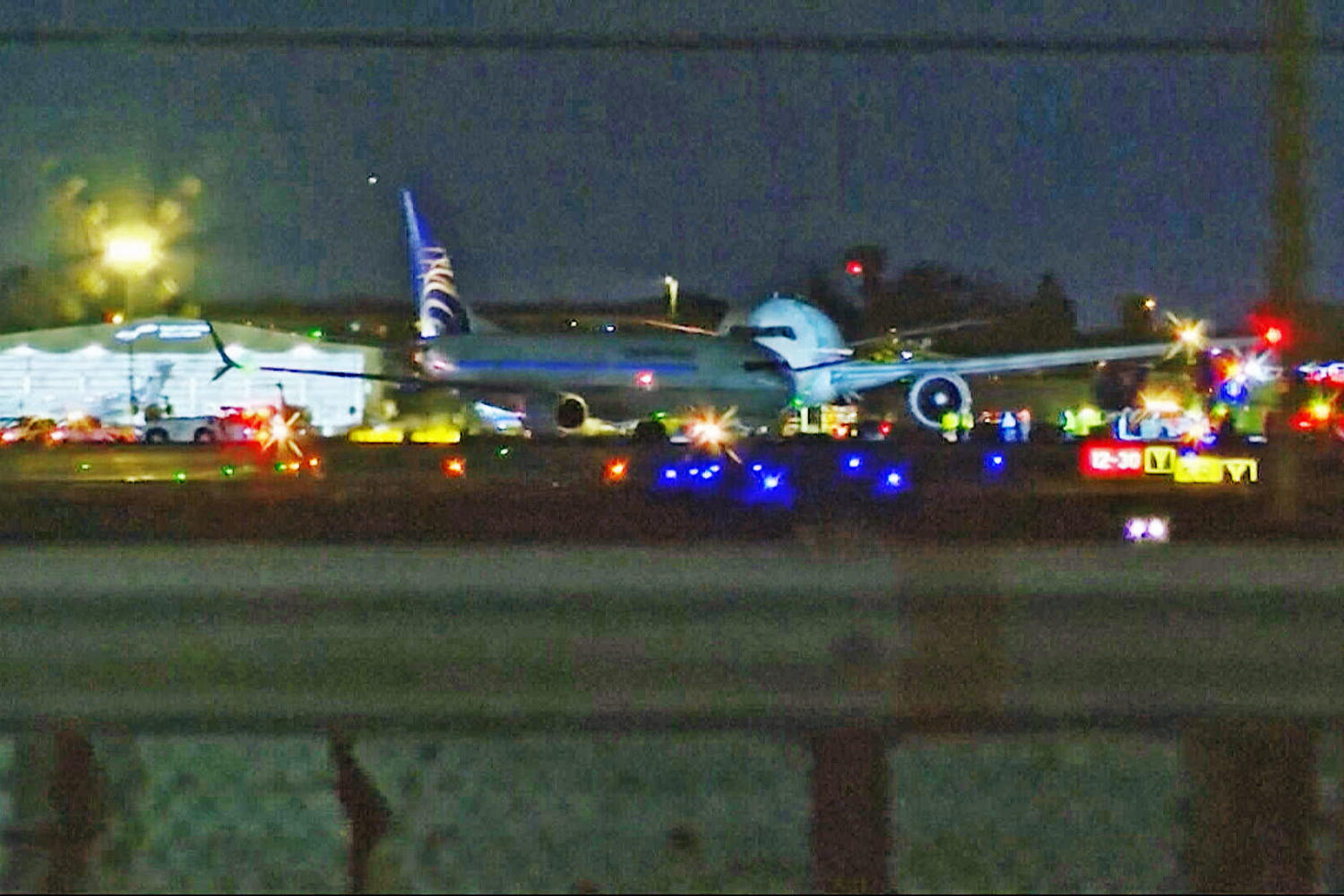
One box in rural Arkansas brought American aviation to a screeching halt on Friday, November 13, 2026.
You probably expect a nationwide air traffic meltdown to start with a sophisticated foreign cyberattack or a catastrophic power grid failure. It didn't. According to Transportation Secretary Sean Duffy and Federal Aviation Administration (FAA) officials, the chaos began with a routine telecommunications upgrade at a remote facility in El Dorado, Arkansas. A contractor was swapping out obsolete copper wiring for modern fiber-optic lines, and forty-five minutes after the work wrapped up, 17 of the country's 22 en route air traffic control centers started losing reliable radar feeds and pilot communications. Meanwhile, you can explore related developments here: The Forty Seconds After the Sirens Stop in Leeds.
The result was only the second nationwide ground stop since the terrorist attacks of September 11, 2001. Over 3,500 planes were already airborne when controllers pulled the emergency brake at 3:36 p.m. Eastern Time.
What Actually Happened Inside the FAA Network
Let's strip away the political finger-pointing and look at the technical chain reaction. For more than two decades, defense contractor L3Harris Technologies has owned and operated the telecommunications backbone that connects FAA towers, radar facilities, and en route centers. Much of that network still relies on aging Time-Division Multiplexing (
To keep those remote sites online, L3Harris technicians have been migrating circuits from analog copper to digital Internet Protocol (
Duffy pointed out during his briefings that this exact router installation had already been completed 68 times without a hitch. Number 69 broke the streak.
Once the new Juniper router went live in Arkansas, it began pinging the surrounding air traffic control network with over 1,000 connection attempts every four to five seconds. In network engineering, that kind of runaway broadcast storm acts like an accidental denial-of-service attack from inside the house. Because the legacy architecture lacks modern traffic isolation between remote nodes and core hubs, those junk connection requests cascaded across the country.
FAA Acting Chief Technology Officer Rebecca Guy confirmed that two sites were flooding the system at unsustainable rates. Downstream routers choked on the traffic. Radar data started arriving inconsistently at Terminal Radar Approach Control (
When controllers can't trust their screens or talk clearly to pilots, there is only one safe move. You stop launching planes and get everyone in the sky onto the pavement.
Why One Remote Box Took Down 17 En Route Centers
If you've ever managed enterprise IT infrastructure, your first question is obvious. Why wasn't a remote site in Arkansas sandboxed from the rest of the national airspace?
The answer comes down to thirty-year-old software and brittle network design. Most modern corporate networks use strict
The FAA's legacy telecommunications architecture wasn't built with that kind of resilience. As Duffy admitted when briefing lawmakers, the core software managing U.S. airspace dates back to the mid-1990s. Some facilities still rely on paper flight strips from the 1970s to hand off aircraft between sectors, and five FAA locations were still transitioning off floppy disks as recently as 2026.
When you graft modern IP routers onto a legacy backbone designed around point-to-point copper circuits, edge anomalies don't stay at the edge. Until engineers isolated the Arkansas hardware and manually disabled the specific broadcasting function across roughly 60 similar routers nationwide, the network remained vulnerable to the exact same loop.
Was It Contractor Error or a Hardware Defect
Right now, the Department of Transportation, the FAA, and the FBI are investigating two primary possibilities, and officials have been unusually candid about what they still don't know.
- Installation or configuration error: Technicians may have misconfigured a routing protocol or broadcast setting during the cutover from copper to fiber, causing the device to repeatedly poll neighboring nodes. Reporting later indicated the FAA had signed off on the router replacement work shortly before the outage hit, raising sharp questions about pre-cutover testing protocols.
- Faulty router hardware: The Juniper unit itself could have suffered a firmware or hardware malfunction right out of the box that triggered the connection flood.
Officials have largely ruled out a cyberattack or artificial intelligence interference. Duffy noted that the agency's new SMART traffic-management tool wasn't even plugged into the affected legacy network, and FAA Administrator Bryan Bedford stated investigators found zero evidence of malicious activity.
Still, the finger-pointing in Washington escalated fast. Duffy publicly questioned whether L3Harris suffered from "incompetence" and suggested the contractor needed to "hire better minds," floating the idea of bringing in competing vendors to finish the fiber rollout. L3Harris pushed back with a brief statement noting it takes the incident seriously, is cooperating with the investigation, and has already completed over 70 percent of the nationwide copper-to-fiber conversion.
Meanwhile, FAA Administrator Bryan Bedford struck a very different tone at a Washington forum, reminding critics that federal regulators own the ultimate outcome regardless of who turns the wrench. "I am the chief accountability officer," Bedford said. "I take full responsibility for it."
The Timing Question Nobody Wants to Defend
Here is the operational detail that baffles aviation and telecom veterans alike. Why was a live cutover happening at 2:50 p.m. on a Friday afternoon?
In commercial aviation, Friday afternoon is peak bank time. Thousands of business travelers, weekend commuters, and connecting hub flights are crammed into the sky simultaneously. In private-sector telecommunications, swapping core routing gear during peak Friday traffic without a redundant failover path would get an engineer fired before Monday morning.
When pressed by reporters on why the work wasn't scheduled overnight, Duffy explained that the FAA follows a tiered maintenance schedule. Major hub airports undergo telecom conversions late at night when traffic drops off, whereas small, remote sites get upgraded during standard daytime business hours.
That policy makes sense only if you assume a remote site cannot take down a major hub. November 13 proved that assumption wrong. A single uninsulated router in a small Arkansas town rippled straight into 17 en route centers, forcing airlines to cancel more than 5,000 flights on Saturday alone—with JetBlue scrapping 43 percent of its entire schedule—and leaving travelers stranded through Sunday. Duffy conceded that the agency will reevaluate when remote upgrades happen going forward.
The $50 Billion Fight Over Air Traffic Modernization
Beyond the technical postmortem, the ground stop immediately turned into political ammunition on Capitol Hill.
Prior to the Friday meltdown, Duffy had been lobbying Congress for $30 billion to overhaul the FAA's aging infrastructure. Within hours of lifting the ground stop at 8:15 p.m. Eastern Time, his price tag jumped to $50 billion in emergency funding, on top of a $12.5 billion down payment already tucked into recent budget legislation.
That sudden $20 billion jump drew immediate skepticism from lawmakers. During heated Capitol Hill meetings, reporters and senators pressed Duffy to itemize how the estimate grew overnight, while Democratic lawmakers pointed out that billions in previously appropriated FAA modernization funds remained unspent.
Both sides have a point, which is why the problem keeps dragging on.
- You can't buy air traffic gear off the shelf. As Duffy rightly noted, specialized radar systems, voice switches, and airspace software have to be custom-built by defense contractors after contracts are awarded, and federal procurement rules prohibit paying before delivery. Money appropriated today takes years to turn into installed hardware.
- Throwing money at an unsegmented network won't stop human error. Even with $50 billion, the FAA still has to finish migrating thousands of legacy circuits while keeping planes flying 24/7. Without strict change-management freezes during peak travel windows and automated storm-control filters on edge routers, the next routine upgrade carries the exact same systemic risk.
What You Should Do Before Your Next Flight
Duffy was blunt on Sunday when asked if he could guarantee another telecom meltdown wouldn't happen again. He couldn't. Until the remaining 30 percent of legacy copper circuits are retired and the core network architecture is replaced, travelers are flying on a system undergoing open-heart surgery.
If you are booking travel over the coming months, protect yourself against sudden FAA ground stops with a few practical habits:
- Book the first flight of the morning. Network cutovers at remote sites happen during daytime business hours, and cascading delays always compound as the day wears on. A 6:30 a.m. departure gets you in the air before afternoon maintenance windows open.
- Avoid tight connections on separate tickets. Under Department of Transportation rules, airlines owe you a cash refund if your flight is canceled and you choose not to travel, even when an FAA ground stop causes the disruption. However, if you book two legs on separate airlines and an airspace halt breaks your connection, the second carrier has zero obligation to rebook you for free.
- Keep airline apps installed with push notifications active. During the November 13 ground stop, over 8,000 flight operations resumed the moment the airspace reopened at 8:15 p.m., while thousands more rolled into Saturday cancellations. Rebooking inventory disappears within minutes of a ground stop announcement, and app self-service beats waiting in a two-hour terminal line every time.
- Use a travel credit card with trip delay insurance. Airlines rarely cover hotel rooms or meals for air traffic control outages because they classify FAA ground stops as outside carrier control. Coverage that kicks in after a six-hour delay covers the exact overnight hotel bills that hit thousands of flyers during the November 13 recovery.