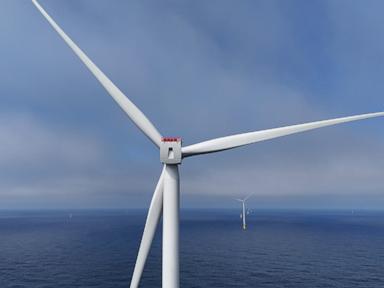
Federal authority over maritime resources does not operate in a vacuum insulated from state-level statutory mandates. When the executive branch deploys administrative mechanisms to liquidate multi-billion-dollar offshore wind leases, it triggers a chain reaction of legal, financial, and infrastructural failures across interconnected regional power markets. The multi-state litigation led by New York and California against the federal government over offshore wind cancellations is not merely a political dispute over energy sources. It is a structural conflict over capital allocation, statutory interpretation, and grid security.
The administration's strategy of utilizing lease buyouts and stop-work directives to pivot federal energy policy toward fossil fuels creates an unprecedented economic friction coefficient. By terminating approximately a dozen offshore leases for billions of dollars—including major projects tied to TotalEnergies, Invenergy, and Bluepoint Wind—federal regulators have introduced extreme policy volatility into a sector that depends entirely on long-term capital deployment predictability.
The Statutory Clash Under the Outer Continental Shelf Lands Act
The core legal mechanism driving the states' lawsuits centers on the boundaries of administrative discretion under the Outer Continental Shelf Lands Act (OCSLA), specifically Section 8(p). Congress enacted OCSLA to establish federal jurisdiction over the submerged lands of the outer continental shelf, and subsequent amendments explicitly authorized the Department of the Interior to grant leases, easements, or rights-of-way for renewable energy development.
State attorneys general argue that the executive branch's abrupt cancellation of these leases violates explicit statutory intent. Under the Administrative Procedure Act (APA), federal agencies cannot reverse established administrative actions without demonstrating a reasoned explanation supported by the underlying record. The buyout agreements—characterized by state officials as unauthorized settlements designed to redirect public funds toward preferred fuel sectors—fail the arbitrary and capricious standard.
The mechanism of cancellation operates through a dual approach:
- Direct financial buyouts of leaseholder rights using federal funds or reallocated accounts.
- Regulatory pauses, environmental re-evaluations, and national security claims designed to render existing permits operationally unviable.
When the Department of the Interior enters into agreements that pay private developers to abandon their lease obligations, it circumvents the formal rulemaking and leasing procedures mandated by federal statute. This creates a dangerous precedent where executive preference supersedes legislative statutory architecture.
The Cost Function of Regional Capacity Suppression
The economic fallout of these cancellations is measurable in lost megawatts and distorted wholesale electricity markets. In the New York Bight alone, the termination of projects such as Attentive Energy and Bluepoint Wind strips out gigawatts of planned generation capacity, directly degrading the region's ability to satisfy surging electricity demand driven by data centers, electrification, and urban growth.
To understand the macro-level impact, consider the energy supply equation for densely populated coastal load pockets:
$$Capacity_{net} = Baseline + Renewables + Storage - Intermittent_Drop$$
When offshore wind—characterized by high capacity factors relative to onshore wind and solar due to sustained maritime wind speeds—is systematically removed from the equation, grid operators face a capacity deficit. Regional transmission organizations must substitute this lost output with peaking generation assets, primarily natural gas turbines. However, gas turbine backlogs, rising fuel volatility, and stringent emissions caps prevent a smooth substitution.
The financial burden shifts directly to retail ratepayers. State officials have projected that truncating offshore wind pipelines will inflate electricity bills. This occurs through two distinct vectors:
- The immediate loss of contracted fixed-price clean energy, exposing utilities to spot-market fossil fuel price swings.
- The sunk cost inefficiency of stranded interconnection investments, transmission upgrades, and port developments that states financed in anticipation of offshore generation.
California faces a parallel structural deficit. Having committed more than a hundred million dollars in state funds to foster offshore wind infrastructure—particularly targeting deep-water floating wind technology required for Pacific coast bathymetry—the state sees its capital investments neutralized by federal obstructionism. The cancellation of leases off the Pacific coast denies California a crucial diversification vector in its energy portfolio, making its ambitious decarbonization timelines mathematically unattainable without severe reliability compromises.
The Chilling Effect on Infrastructure Capital Expenditure
Infrastructure finance operates on risk-adjusted return horizons that span decades. Institutional investors, pension funds, and multinational energy conglomerates price political risk into every asset class. When a presidential administration demonstrates the capability to invalidate existing federal leases and compensate developers to exit the market, it fundamentally alters the risk profile of the United States energy sector.
This creates a systemic contraction in capital availability:
- Contractual Uncertainty: Developers can no longer trust that a lease issued by the Bureau of Ocean Energy Management constitutes a stable property right.
- Financing Premiums: Debt financing costs rise because lenders price in the probability of future executive interference or protracted litigation.
- Global Capital Flight: International energy firms facing similar policy shifts in their home regions may reallocate capital toward European or Asian offshore markets where regulatory frameworks exhibit higher continuity.
The assertion by developers that they accepted buyouts because progress had stalled under regulatory hostility highlights a forced-choice dilemma engineered by the administration. When an agency weaponizes delay tactics, environmental reviews, and security pretexts to starve a project of progress, developers face a choice between indefinite legal purgatory with burning capital or accepting a government-backed buyout. State lawsuits categorize this dynamic as an administrative extortion racket designed to manufacture artificial compliance with fossil-fuel-centric energy policies.
Jurisdictional Fragmentation and State-Level Countermeasures
With federal permitting channels effectively frozen by executive fiat, energy policy has devolved into a multi-jurisdictional trench war. States are no longer acting merely as passive implementers of federal energy guidelines; they are functioning as sovereign litigants and regulatory counterweights.
The coalition of states—including New York, California, New Jersey, Connecticut, Maine, Massachusetts, Rhode Island, Vermont, and Delaware—is utilizing coordinated litigation to establish binding judicial precedents. Federal district courts have already demonstrated a willingness to push back against executive overreach in related clean energy contexts, such as the vacation of freezes on Outer Continental Shelf leasing and the restoration of programmatic funding.
However, litigation is a lagging indicator. Even if state attorneys general successfully secure preliminary injunctions or force the resumption of environmental reviews, the temporal delay inflicts severe operational damage. Vessels are reallocated to international projects, specialized supply chain manufacturing facilities are shuttered or redirected, and engineering talent migrates away from the domestic market.
The strategic response from state energy authorities involves pivoting toward long-term resilience planning that insulates regional procurement mechanisms from federal interference. States are doubling down on intra-state transmission corridors, state-level procurement mandates, and regional multi-state clean energy purchasing compacts. These measures attempt to create a decentralized protective shell around renewable assets, ensuring that even if federal leasing authority is hobbled, the contractual frameworks established under state utility commissions retain legal enforceability.
To maintain grid stability and protect consumers from pricing shocks while the litigation moves through the federal appellate courts, state energy offices must decouple their regional transmission planning from federal leasing dependencies. Prioritize the acceleration of onshore transmission upgrades and utility-scale energy storage integration to buffer against the immediate capacity shortfalls caused by offshore lease cancellations.


