The headlines are bleeding with the same predictable lament. They claim the Trump administration’s decision to halt two massive offshore wind projects involving Engie is a death knell for American renewables. They frame it as a purely partisan execution—a fossil fuel fossil smashing the gears of progress.
They are wrong.
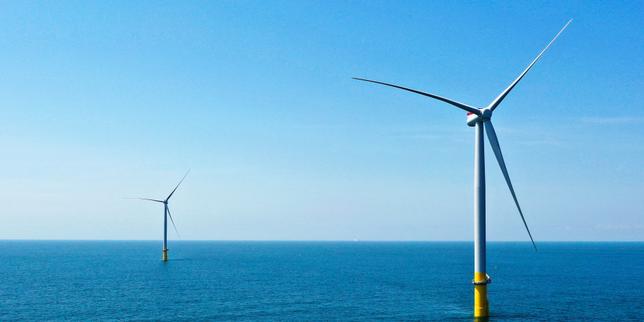
Stop mourning the bureaucratic delay and start looking at the spreadsheets. The narrative that political interference is the primary assassin of the SouthCoast Wind and New England Wind projects is a convenient fiction for developers who were already drowning. The administration didn't kill these projects; it merely turned off the life support on two zombies that were never going to survive the current economic reality.
The CapEx Trap the Industry Ignores
Mainstream reporting treats offshore wind like a plug-and-play solution that just needs a "green light" from Washington. In reality, offshore wind is the most capital-intensive, logistically fragile energy bet on the planet. I have spent years watching energy firms burn through billions because they mistake "political momentum" for "economic viability."
To understand why these projects stalled, you have to look at the Levelized Cost of Energy (LCOE).
$$LCOE = \frac{\sum_{t=1}^{n} \frac{I_t + M_t + F_t}{(1 + r)^t}}{\sum_{t=1}^{n} \frac{E_t}{(1 + r)^t}}$$
Where:
- $I_t$: Investment expenditures in year $t$
- $M_t$: Operations and maintenance expenditures in year $t$
- $F_t$: Fuel expenditures in year $t$ (zero for wind, but high for maintenance vessels)
- $E_t$: Electricity generation in year $t$
- $r$: Discount rate
- $n$: Expected lifetime of the system
When Engie and its partners signed their initial Power Purchase Agreements (PPAs), they calculated their $r$ (discount rate) and $I_t$ (investment) based on a world of near-zero interest rates and stable supply chains. That world is gone. Inflation didn't just "hit" the sector; it decimated the margins. The cost of steel, the scarcity of specialized turbine installation vessels (WTIVs), and the soaring cost of debt turned these "visionary" projects into financial anchors.
The administration’s intervention isn't the cause of the crisis; it’s the excuse the industry needed to walk away from contracts they could no longer afford to fulfill.
The Jones Act: The Elephant in the Atlantic
If you want to talk about what actually kills American offshore wind, stop looking at the White House and start looking at a 1920s maritime law. The Merchant Marine Act—commonly known as the Jones Act—requires that any goods shipped between U.S. ports be carried on ships built, owned, and operated by United States citizens.
There is a grand total of one Jones Act-compliant wind turbine installation vessel currently under construction in the U.S. that can handle the massive scale of 15MW+ turbines.
Developers are forced into a logistical circus:
- They use foreign ships to stay stationary at the site.
- They use smaller, American "feeder barges" to ferry components from the shore.
- Every transfer at sea increases the risk of damage, delays, and death.
This isn't an "administration" problem. This is a structural failure of American maritime policy that both parties refuse to touch. By the time a developer pays the "American-made" premium on logistics, the price per megawatt-hour is so high that the local utility—and the taxpayers—will eventually revolt. The Trump administration’s pause is a merciful delay for companies that haven't figured out how to move a 300-foot blade without bankrupting themselves.
Why "Green Energy" Enthusiasts Are Their Own Worst Enemies
The "lazy consensus" says that more subsidies and faster permits will fix everything. This is a delusion. Pumping more federal money into a broken supply chain is like trying to put out a fire with gasoline.
When the government fast-tracks massive offshore arrays, they create a demand spike for materials that don't exist in sufficient quantities. This drives prices higher, which leads to developers demanding more subsidies to cover the gap. It is a feedback loop of incompetence.
I’ve sat in rooms where executives talk about "social license" and "carbon offsets" while completely ignoring the fact that their supply chain relies on a handful of Chinese ports and European engineers. If you can't build it with local labor and local steel at a price that beats natural gas, you don't have a business—you have a charity project funded by the middle class.
The Myth of the "Clean" Ocean Floor
Let’s dismantle the environmentalist shield used to defend these projects. The standard argument is that any delay in wind development is a win for "Big Oil."
Think again.
The seabed floor off the coast of New England is not a blank canvas. It is a complex ecosystem and a primary corridor for the endangered North Atlantic right whale. The industrialization required to plant hundreds of steel towers—each requiring thousands of tons of concrete and specialized grout—is an ecological intervention on a massive scale.
When the administration calls for further "environmental review," the industry screams "obstructionism." But if a coal mine requested the same lack of oversight, those same activists would be at the gates with pitchforks. You cannot claim to save the planet by industrializing the ocean without a rigorous, skeptical vetting process that isn't rushed by a political calendar.
The Hard Truth About Engie and Its Peers
Engie is a sophisticated global player. They know how to read a balance sheet. They saw Orsted—the world leader in offshore wind—write off billions in the U.S. market and cancel projects in New Jersey. They saw BP and Equinor take massive impairments on their New York ventures.
For Engie, this administration-led "stop" is a gift. It allows them to exit or renegotiate under the guise of "political force majeure" rather than admitting to their shareholders that they miscalculated the cost of doing business in American waters by about 40%.
Stop Asking for Permitting Reform
The "People Also Ask" sections of the internet are full of questions like: "How can we speed up offshore wind permits?"
This is the wrong question.
The right question is: "Why are we prioritizing the most expensive form of renewable energy in the most hostile environment possible?"
If you want carbon-free baseload power, the answer is sitting right in front of us: Nuclear. Modern Small Modular Reactors (SMRs) don't require Jones Act-compliant fleets. They don't require thousands of miles of undersea cabling that disrupts fishing grounds. They don't depend on the wind blowing at exactly the right speed.
Offshore wind is a vanity project for coastal elites who want to look at the horizon and feel virtuous, unaware that the hardware behind that feeling is a logistical nightmare and a financial black hole.
The Playbook for Realists
If you are an investor or a policy wonk, stop crying about the "war on wind." The era of cheap, subsidized offshore experiments is over. The next phase of energy won't be won by the person with the most lobbyists; it will be won by the person who can solve the density problem.
- Pivot to Onshore: The costs are lower, the technology is mature, and you don't need a $500 million ship to change a lightbulb.
- Fix the Grid First: We are building "generation" when the "transmission" is a crumbling relic. Putting a gigawatt of wind offshore is useless if the onshore substations can't handle the load.
- Accept the Natural Gas Bridge: You cannot run a modern economy on intermittent offshore breezes without a massive, reliable backup. Until battery storage hits a $50/kWh price point, gas is the only thing keeping the lights on when the Atlantic goes still.
The SouthCoast and New England projects weren't victims of a political vendetta. They were victims of math. The administration just provided the autopsy.
Quit acting like the wind is the only way forward. It’s time to stop chasing horizons and start building on solid ground.