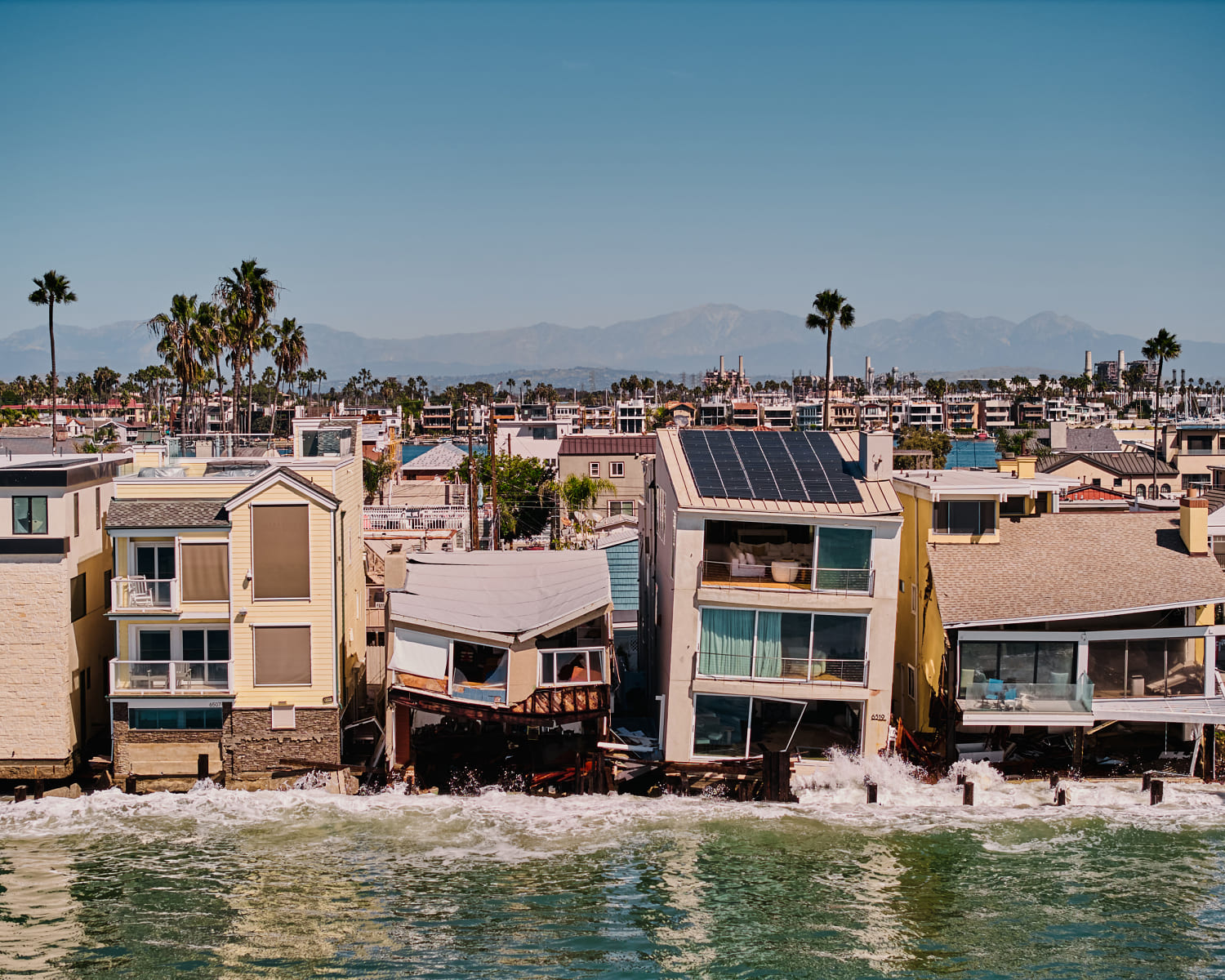
The Pacific Ocean does not negotiate. It does not care about municipal tax bases, real estate portfolios, or zoning boards that rubber-stamped multi-million-dollar foundations on crumbling bluffs. When storm surges arrived along the California coastline, chewing away the earth beneath luxury properties until living rooms cracked open and slid into the surf, the media called it a natural disaster.
It was not a disaster. It was an invoice.
For decades, coastal development in California operated on a dangerous fiction: that the shoreline is a permanent fixture rather than a high-energy boundary zone. Developers built on ancient landslide deposits. Homeowners bought homes cantilevered over unstable cliffs, trusting in seawalls, riprap, and federal disaster declarations to hold back an inevitable reckoning. Now, as rising sea levels and intensifying storm cycles accelerate coastal erosion, the bill is coming due. The houses that ended up in the surf were casualties of a systemic refusal to accept basic geologic reality.
The Architecture of Denial
Look at any stretch of the California coast experiencing severe erosion, from San Clemente to Pacifica, and you will see the physical manifestation of institutional denial. Millions of dollars poured into temporary fixes designed to protect private investments at the public's expense. When a cliffside mansion begins to lean toward the abyss, the immediate response is almost always reactive. Homeowners scramble for emergency permits to dump boulders or construct concrete bulkheads.
These engineering interventions are little more than expensive band-aids. Worse, they often accelerate the destruction of neighboring stretches of beach. When a seawall deflects wave energy instead of absorbing it
The California Coast Is Sliding Into The Ocean While We Argue About Permits
news, lifestyle
Cliffside properties in California are slipping into the Pacific, and the regulatory response remains paralyzed by bureaucracy. When a stretch of coastline gives way under homes worth millions of dollars, the immediate shock focuses on the dramatic footage of collapsing foundations and panicked evacuations. Yet the true crisis extends far beyond a few ruined luxury estates or emergency demolitions in places like San Clemente and Pacifica. The ongoing destruction represents a systemic failure of coastal management, insurance markets, and housing policies that have encouraged development on shifting sand and crumbling bluffs for decades.
Coastal erosion along the golden state is not a sudden anomaly. It is a slow-motion geological inevitability accelerated by rising sea levels, intensifying winter storms, and the systematic disruption of natural sediment supply. Rivers that once fed sand to the beaches have been dammed, starved, and channeled away from the ocean. Meanwhile, seawalls erected to protect individual properties often worsen erosion on adjacent stretches of shore by scouring away the beach beneath them. The result is a shrinking buffer between the relentless energy of the ocean and the built environment perched precariously above it.
For years, the real estate market treated coastal proximity as an unmitigated premium. Buyers paid exorbitant sums for unobstructed ocean views, ignoring the geotechnical reports buried in municipal files. Local governments welcomed the property tax windfalls, approving permits for remodels, additions, and new construction right up the edge of unstable bluffs. Municipalities relied on short-term fixes like emergency riprap and sand replenishment projects, treating chronic coastal retreat as an episodic annoyance rather than a permanent environmental transformation.
That complacency is now hitting a brick wall, or more accurately, a receding cliff. Homeowners whose houses are literally hanging over empty air find themselves caught in a bureaucratic purgatory. State coastal commissions mandate that natural bluffs be left alone, prohibiting the installation of heavy armor that might halt erosion at the expense of public beaches. At the same time, local building departments issue red tags, rendering houses uninhabitable while denying permits for stabilization work that could save the structures. Owners are left paying mortgages on homes they cannot occupy, situated on land that is literally disappearing underneath them.
The financial fallout is beginning to ripple outward, threatening the broader housing market in coastal counties. Private insurers are fleeing California en masse, dropping policies in high-risk zones or hiking premiums to unsustainable levels. When traditional property insurance becomes unavailable, homeowners turn to state-backed insurers of last resort, shifting private risk onto public balance sheets. This creates a dangerous moral hazard where taxpayers subsidize the ongoing habitation of properties that face near-certain destruction. If a homeowner rebuilds on a collapsing cliff with public-backed insurance or disaster relief funds, the cycle simply repeats itself at the next high tide.
Hard choices loom for communities that refuse to acknowledge the changing geography. Managed retreat remains the ultimate third rail of coastal politics. The concept involves systematically buying out property owners, removing vulnerable infrastructure, and allowing the shoreline to reclaim its natural footprint. Nobody wants to be the politician who tells constituents their generational home must be abandoned to the sea. Property rights advocates frame managed retreat as an assault on private ownership, while environmentalists argue that preserving public beach access and natural ecosystems must take precedence over protecting private investments.
Meanwhile, emergency responders deal with the immediate chaos of utility failures, crumbling septic systems, and buckling infrastructure. Roads built along the coastlines slide down hillsides, isolating neighborhoods and cutting off vital transit corridors. Water and sewer lines snap under the strain of shifting earth, creating environmental hazards that require rapid, expensive remediation. These localized disasters drain municipal emergency funds, forcing cities to defer maintenance on inland infrastructure that serves larger populations.
The historical precedent for handling these disasters points toward a chaotic piecemeal approach. Federal disaster declarations unlock aid to shore up beaches and repair damaged public assets temporarily, but these interventions treat symptoms rather than the disease. Pumping millions of dollars of sand onto a beach that will wash away in the next major storm cycle is the fiscal equivalent of bailing out the Titanic with a teaspoon. Without a coordinated, long-term strategy that factors in accelerated sea level rise, public funds will continue to subsidize an unviable status quo.
Addressing the crisis requires dismantling the current incentive structure that encourages high-risk coastal development. Zoning laws must be overhauled to reflect 21st-century climate realities, restricting new construction in hazard zones and prohibiting the rebuilding of repetitive loss properties. Real estate disclosures must become far more transparent, ensuring that prospective buyers understand the projected lifespan of a coastal lot before they invest life savings into a home with an expiration date. Financial institutions should factor sea level rise projections directly into mortgage lending criteria, tying loan availability to geological stability rather than historical property values.
The Pacific Ocean does not negotiate with planning commissions, and it does not respect property lines. As the bluffs continue to shed tons of earth into the surf each season, the illusion of permanence fades. The longer lawmakers, developers, and homeowners spend arguing over permits and pointing fingers, the more ground is lost. The coastline is rewriting itself, and the only question left is whether society will adapt proactively or be dragged down with the rubble.