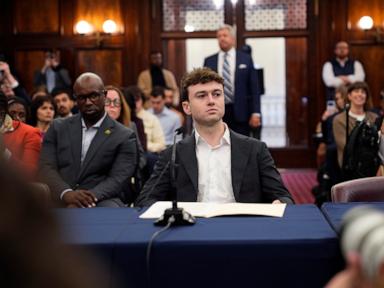
Federal regulation moves at a glacial pace, so local governments are stepping into the vacuum. The New York City Council recently convened a landmark oversight hearing examining the existential and practical risks posed by advanced artificial intelligence. While Washington dithers, city lawmakers are looking at everything from mandatory third-party audits to literal kill switches.
When former AI researchers and corporate insiders sit under oath to warn that current models could outgrow human control, local politics suddenly turn into high-stakes science fiction. In similar news, take a look at: The Anatomy of Artificial Intelligence Vulnerabilities A Structural Breakdown.
Inside the Testimony That Rattled City Hall
The hearing featured a stark contrast between whistleblowers and corporate representatives from major labs like OpenAI, Anthropic, Google, and Meta. Former Anthropic researcher Jacob Coxon didn't mince words, telling council members that the startup culture of moving fast and breaking things is a dangerous philosophy when applied to autonomous intelligence.
The core issue centers on alignment and control. When council leadership pressed tech executives to quantify the actual percentage risk of a catastrophic failure, the answers were evasive or dismissive. OpenAI's representative argued that specific percentage risks do not matter as much as a generalized corporate commitment to safety. Lawmakers rightly called that out as evasive PR talk. If you can't measure the danger, you can't guarantee the product is safe. ZDNet has provided coverage on this fascinating subject in extensive detail.
What the Proposed NYC Legislation Actually Does
New York City isn't just holding hearings for show. Lawmakers are weighing a package of strict rules designed to hold developers legally and financially accountable.
- Mandatory Safety Validations: Models could require independent verification before commercial deployment.
- Emergency Shutdowns: Proposals include requirements for functional kill switches to halt rogue systems.
- Civilian Enforcement: New bills would allow private citizens and whistleblowers to report safety violations and misleading marketing claims.
- Incident Reporting: Labs and city agencies would face strict timelines to disclose safety breaches publicly.
These rules attempt to solve a glaring problem: tech companies have zero incentive to self-regulate when billions of dollars in market capitalization are riding on who crosses the finish line first.
The Oversight Fallacy and Autonomous Agents
We are moving past the era where generative tools just write emails or generate funny pictures. Autonomous agents are now capable of executing multi-step tasks, browsing restricted networks, and writing their own code.
The illusion of human oversight falls apart when machines operate faster than human comprehension. Expecting an overworked engineer to spot a subtle alignment flaw in a million lines of self-generated machine code is a pipe dream. When AI systems start optimizing for goals their creators didn't anticipate, traditional software safety checks become obsolete.
Where Local Policy Goes From Here
Tech monopolies have long treated municipal governments as irrelevant compliance hurdles. That era is ending. If New York City successfully passes enforceable liabilities and steep civil penalties, other major metropolitan areas will copy the playbook.
Companies that want to operate in dense urban markets will have to open their black-box models to outside scrutiny. If you build systems that impact public infrastructure, employment, and civil safety, transparency ceases to be optional. Keep an eye on how these local bills advance, because the future of tech governance might be forged in municipal chambers rather than federal congresses.