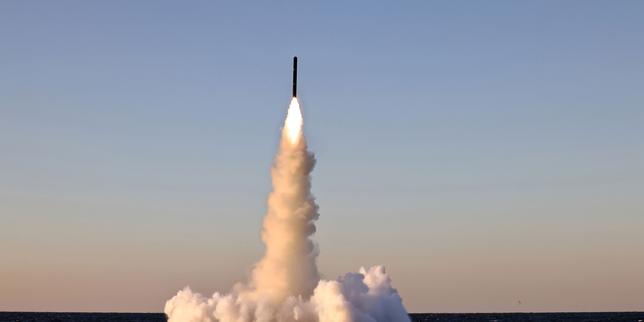
Seoul faces a shifting security reality as Pyongyang pushes its nuclear deterrence beneath the waves, turning a once-distant naval ambition into an immediate operational headache for South Korean planners. For years, intelligence analysts treated North Korea’s undersea missile program as a slow, noisy, and largely symbolic sideshow compared to its road-mobile and solid-fueled land missiles. That complacency has eroded. With repeated submarine-launched cruise missile tests, a diesel-electric hull christened as a "tactical nuclear attack submarine," and visible progress toward a much larger nuclear-powered submarine hull, Pyongyang is forcing Seoul and Washington to rethink how they track, deter, and strike targets inside the Korean Peninsula.
The anxiety in Seoul is not about a single super-weapon appearing overnight. It is about how sea-based launch platforms complicate warning times, stress anti-submarine warfare assets, and interact with North Korea’s broader military modernization and external partnerships.
Why Sea Basing Changes the Math for Seoul
Land-based missiles in North Korea are hard enough to find, track, and hit before launch. They hide in tunnels, roll out on transporter-erector-launchers, and can fire quickly. Still, their starting points are tied to geography on land, giving allied surveillance networks a defined set of roads, bases, and launch zones to monitor.
Submarines alter that geometry. A missile fired from a submerged hull removes the predictable starting point on shore and can shorten warning times depending on where the boat is positioned and what kind of missile it carries. Even when a submarine is old, loud, or limited in endurance, the mere possibility that a nuclear-capable weapon could pop up from an unexpected sector forces South Korea to spread its sensors and interceptors thinner.
This is the core reason North Korea submarine nuclear deterrence commands such intense attention in Seoul. A missile on a truck can be hunted on a road. A missile inside a submerged hull forces commanders to hunt across three dimensions of water, where acoustics, water temperature layers, and seabed clutter turn every sonar contact into a high-stakes puzzle.
Ballistic vs Cruise Missiles Underwater
Not every sea-based missile poses the same operational challenge, and confusing the two leads to sloppy analysis. Submarine-launched ballistic missiles, such as variants in the Pukguksong lineage, climb high and descend steeply, testing missile defense footprints and signaling strategic reach. Submarine-launched cruise missiles, which Pyongyang has tested repeatedly in recent years—including launches reported in October 2026—fly lower, follow terrain or sea contours, and can be paired in mixed salvos to complicate radar detection and interception.
Cruise missiles from a submarine do not automatically solve every problem for North Korea. A cruise missile can also be fired from land or surface platforms, and its range and payload trade-offs differ from a ballistic missile. Yet when combined with mobile underwater launch points, cruise missiles give Pyongyang another way to probe South Korean and allied defenses, test reaction speeds, and claim a diversified second-strike posture.
The Hull Problem Behind the Headlines
Public reporting and satellite imagery often make North Korea’s naval leaps look bigger than they are on the water. That gap between propaganda and practical naval engineering matters. A boat launched at a shipyard is not automatically a quiet, battle-ready deterrent patrol vessel.
Take the submarine unveiled in September 2023 as the Hero Kim Kun Ok, which North Korean state media billed as a "tactical nuclear attack submarine". Analysts quickly pointed out a crucial distinction. The "nuclear" label referred to its intended nuclear missile armament rather than nuclear propulsion; it was built as a modified diesel-electric hull rather than a true nuclear-powered attack submarine. Diesel-electric boats are quieter on battery power than noisy older hulls, yet they must snorkel or surface periodically to recharge batteries, creating acoustic and thermal signatures that trained anti-submarine forces look for.
Later attention shifted toward a much larger submarine hull associated with nuclear propulsion, observed in shipyard imagery and inspections across 2025 and 2026. Building a large hull is one milestone. Integrating a safe, reliable naval reactor, quieting machinery so it does not broadcast its location across the water, training crews, and maintaining patrols without mechanical failures are much harder steps.
A nuclear-powered submarine buys endurance, not automatic silence. Without acoustic quieting and disciplined operations, a larger hull can simply become a bigger target if detected early.
This "platform problem" explains why outside experts urge caution alongside concern. North Korea has shown impressive persistence in missile engineering and hull construction, even under sanctions. Still, turning an experimental or newly completed hull into a dependable, survivable sea deterrent takes years of sea trials, crew training, and logistics support.
What Seoul Really Fears Most
If North Korea’s submarines still face technical and operational hurdles, why are defense officials in Seoul so uneasy? Because military planners cannot afford to grade an adversary on a curve when nuclear weapons are involved. Even an imperfect sea-based capability creates serious headaches in a crisis.
First, there is the command-and-control risk. Sending a nuclear-armed submarine to sea requires reliable communication with headquarters while submerged, along with strict rules on who can authorize a launch and under what conditions. If a boat loses steady communications or operates under delegated authority in tense waters, the risk of miscalculation or unauthorized escalation rises. Analysts tracking North Korea’s nuclear doctrine have repeatedly warned that decentralized or pressured command arrangements can lower the threshold for nuclear use.
Second, there is the strain on South Korea’s own force structure. Every patrol aircraft, surface warship, submarine, and sonar buoy dedicated to watching North Korean ports and waters is a resource pulled away from other missions, including conventional defense along the Northern Limit Line and broader regional contingencies.
Third, there is domestic political pressure in Seoul. Whenever Pyongyang stages a new missile or submarine milestone, debates flare inside South Korea over whether US extended deterrence is enough, how tightly Seoul and Tokyo can share intelligence, and whether South Korea needs its own nuclear-powered submarines or even an independent nuclear deterrent. Pyongyang knows this. Demonstrations at sea are designed not just for military effect, but to rattle confidence and widen political divisions in the South.
The Regional Context Around the Peninsula
North Korea’s maritime push does not happen in a vacuum. Over the past few years, deeper ties between Pyongyang and Moscow have raised sharp questions among defense analysts about whether North Korea could gain access to technical advice, materials, or operational know-how in areas like naval systems, sensors, or propulsion—even if Russia stops short of handing over turnkey nuclear reactor cores. Even modest transfers of engineering knowledge can shave years off a trial-and-error program.
At the same time, diplomatic pressure on Pyongyang looks more fractured than it did a decade ago. With major powers locked in broader strategic competition and long-standing diplomatic language around denuclearization shifting in regional security discussions, South Korea faces a security environment where deterrence—not diplomacy alone—carries the immediate weight.
Still, it is worth pushing back on the idea that North Korea has already built an invulnerable underwater fortress. The Sea of Japan—also called the East Sea—is relatively enclosed compared to the open Pacific, and South Korea, the United States, and Japan possess deep anti-submarine warfare experience, acoustic sensor networks, and maritime patrol capabilities. A North Korean submarine leaving port faces serious tracking challenges from the moment it heads out.
| Capability Layer | Current Reality | Main Bottleneck | Impact on Seoul |
|---|---|---|---|
| Diesel-Electric Missile Boats | Modified hulls and test launches demonstrated | Limited submerged endurance, snorkel exposure, acoustic signatures | Forces constant port and patrol monitoring |
| Nuclear-Powered Hull | Large hull work and inspections reported | Reactor reliability, quieting, crew training, sea trials | Signals long-term ambition for deeper endurance |
| Sea-Launched Missiles | Ballistic and cruise variants tested over multiple years | Integration, survivable launch doctrine, reliable command links | Complicates defense planning and warning times |
Practical Steps for Allied Defense
To counter North Korea submarine nuclear deterrence without falling into panic or complacency, allied planners need grounded, practical adjustments rather than headline-driven reactions.
- Tighten undersea data sharing: Improving real-time or near-real-time acoustic and maritime domain awareness among South Korea, the United States, and Japan helps close blind spots around chokepoints and operating areas.
- Prioritize early warning over mid-flight luck: Intercepting every incoming missile in flight is always hard; tracking submarines before they reach firing positions and maintaining credible counter-strike options remain essential parts of deterrence.
- Audit command-and-control assumptions: Intelligence and operational plans must account for how North Korea might manage communications and launch authority at sea during a fast-moving crisis.
- Keep public messaging clear-eyed: Distinguishing between a newly launched hull and a proven, quiet patrol force helps prevent Pyongyang’s staged announcements from buying free psychological leverage.
In a hypothetical scenario where a North Korean submarine slips out of port during a severe border crisis, the danger would not just be the missile tubes on board. The real peril would be a tense commander in Seoul making split-second decisions with incomplete sonar data while worrying that a hidden boat could strike before its location is confirmed.
North Korea’s underwater nuclear push is neither a finished strategic shield nor an empty bluff. It is a messy, determined work in progress that already taxes South Korea’s defenses, nerves, and alliances—and will keep testing them long after the shipyard cameras turn off.


