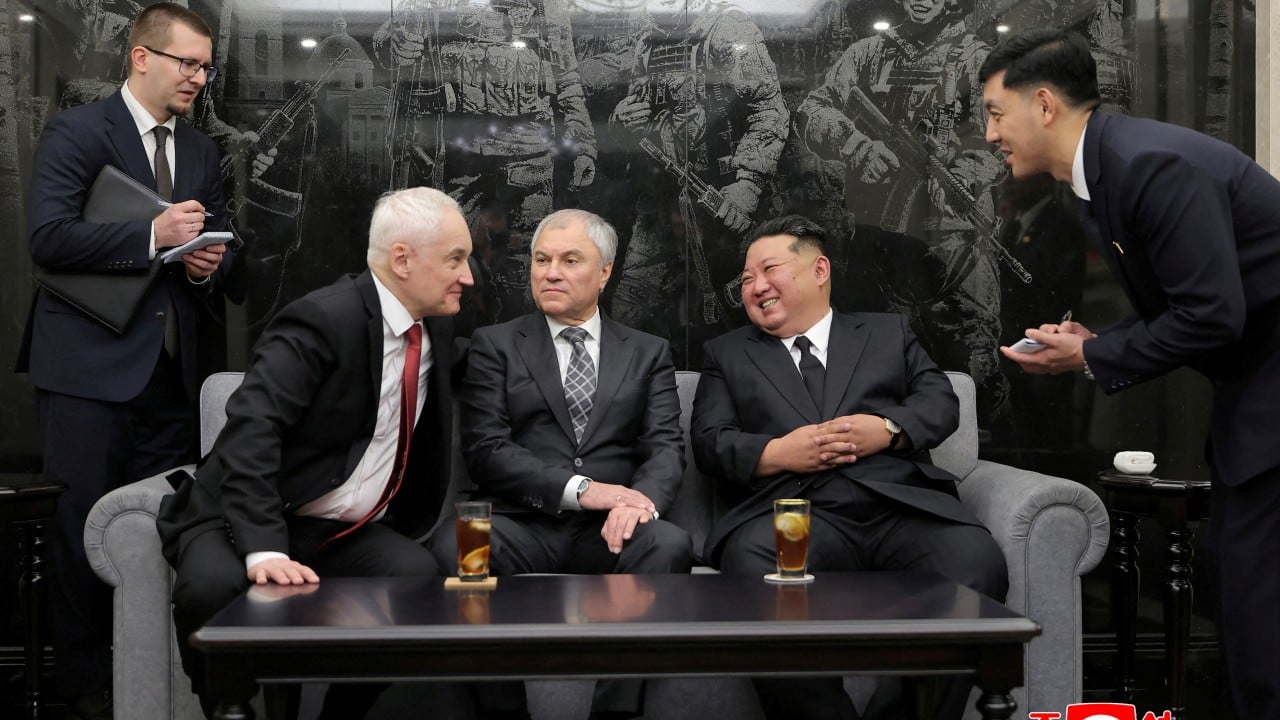
The foreign policy establishment is currently obsessed with a phantom "unease" in Beijing. You've read the headlines: Western analysts are practically salivating at the idea that Vladimir Putin and Kim Jong Un’s mutual defense pact—the Comprehensive Strategic Partnership Treaty—is a "slap in the face" to Xi Jinping. They claim China is terrified of losing its leverage over Pyongyang or being dragged into a messy Cold War bloc it didn't authorize.
They are wrong. They are fundamentally misreading the power dynamics of Northeast Asia. Read more on a similar issue: this related article.
What the "experts" call a diplomatic headache for China is, in reality, a masterclass in strategic outsourcing. China isn't "uneasy" about the Russia-North Korea alliance; China is the silent architect and the primary beneficiary of it. While the West waits for Beijing to discipline its subordinates, Xi Jinping is enjoying the greatest geopolitical gift he’s received in a decade: a permanent, high-intensity distraction that costs China absolutely nothing.
The Myth of the Anxious Dragon
The prevailing argument suggests that China views the $11 billion—or whatever the current price of Russian oil and North Korean shells happens to be—as a threat to its regional hegemony. The logic goes like this: China wants stability to grow its economy, and a "rogue" North Korea backed by a desperate Russia creates "instability." Additional reporting by NPR delves into similar perspectives on this issue.
This is a sanitised, Western-centric view of stability. To Beijing, stability isn't the absence of tension; it is the presence of tension that serves Chinese interests without requiring Chinese fingerprints.
For years, the "North Korea problem" was a liability for China. Every time Kim Jong Un tested a missile, Washington looked at Beijing and said, "Fix this." It made China responsible for the behavior of a hermit kingdom it couldn't fully control. By allowing Russia to step in as North Korea's primary security guarantor and weapons-tech provider, China has successfully offloaded the "North Korea burden."
If Kim Jong Un acts out now, it’s a "Russia-NK" problem. Beijing can sit back, look concerned at the UN, call for "restraint on all sides," and continue doing business with both while the US is forced to divert military assets and diplomatic bandwidth to a theater China already dominates.
Outsourcing the Dirty Work
Let’s talk about the hardware. The West is panicked that Russia might give North Korea advanced satellite technology, nuclear submarine designs, or sophisticated telemetry. They assume this crosses a "red line" for China because it makes North Korea more independent.
Think deeper.
China needs a nuclear-armed, technologically capable North Korea to act as a permanent thorn in the side of the US-Japan-South Korea trilateral alliance. However, if China provides that tech, it faces secondary sanctions and a total collapse of its remaining trade ties with Europe.
Enter Vladimir Putin.
Russia is already the most sanctioned nation on earth. They have nothing left to lose. Russia can provide the sensitive military upgrades that China wants North Korea to have but cannot give them directly. Russia is essentially acting as China’s "black site" for military proliferation.
By letting Moscow take the heat for arming Pyongyang, Beijing gets a more formidable buffer state against US forces in the Pacific, while maintaining its "responsible global power" mask. It is the ultimate geopolitical arbitrage.
The Illusion of Lost Leverage
Critics argue that Putin is "stealing" Kim away from Xi. This ignores the basic math of geography and economics.
Russia is a gas station with a few aging factories. China is the world's second-largest economy and North Korea’s only viable long-term survival partner. Kim Jong Un isn't "switching sides." He is diversifying his portfolio. And he is doing so with Beijing’s implicit permission.
I’ve watched diplomats sweat over "diplomatic snubs," like when Xi doesn't meet Kim for a year. They mistake silence for a loss of control. In the Chinese strategic playbook, specifically rooted in Legalist traditions, the most effective way to manage a vassal is to let them think they have options, only to realize all those options still lead back to the center.
Russia can give North Korea rockets and wheat today. Only China can provide the infrastructure, telecommunications, and financial lifelines required for the Kim regime to exist five years from now. Xi knows Kim has nowhere else to go. Letting him play in Putin’s backyard for a while keeps the "spoilt child" of Pyongyang occupied while China focuses on the real prize: Taiwan and the South China Sea.
The Real Winner of the Ukraine War is in Beijing
The North Korea-Russia pact is a direct byproduct of the war in Ukraine. North Korea provides the artillery shells; Russia provides the diplomatic cover and technology.
What the consensus ignores is how this serves China's long-term goal of exhausting the United States.
The US defense industrial base is already strained. By fueling a protracted conflict in Ukraine via North Korean proxies, China ensures that American munitions stockpiles remain low and American political will remains divided. Every 152mm shell fired in the Donbas that came from a North Korean factory is a shell that isn't being stockpiled in Guam or Hawaii.
China isn't "uneasy" about the pact because the pact keeps the US bogged down in a two-front mental crisis. Washington now has to worry about the "CRINKs" (China, Russia, Iran, North Korea). This grouping is a gift to Beijing because it lumps China in with "pariah states," which sounds bad, but actually gives China the role of the "rational adult" in the room. It allows Xi to say to Europe, "You need me to keep these three in check."
It’s a protection racket on a global scale.
The "Red Line" Fallacy
Western analysts love to talk about China's "red lines" regarding North Korean nuclear tests. They assume a seventh nuclear test would be the breaking point for the Xi-Putin relationship.
Actually, a nuclear test is exactly what Beijing might want if it decides the US is getting too comfortable in the Taiwan Strait. If the US starts moving more aggressively on semiconductor bans or naval transits, China just needs to nudge the "Russia-NK" axis to create a crisis.
Imagine a scenario where North Korea conducts a tactical nuclear test and Russia vetoes any new sanctions at the UN. China can shrug its shoulders and tell the State Department, "We tried to talk to them, but they're listening to Moscow now. Maybe if you relaxed your stance on our tech companies, we could use our influence."
China isn't losing leverage; it’s weaponizing its supposed "lack of control."
The Economic Reality Check
Let’s look at the trade data that the "uneasy China" theorists ignore.
North Korea-Russia trade is a drop in the ocean compared to China-Russia trade. In 2023, China-Russia trade hit a record $240 billion. The idea that Beijing is jealous of a few trainloads of shells and some oil shipments between Pyongyang and Vladivostok is laughable.
China is currently the sole buyer of Russian energy that matters and the sole provider of the dual-use chips Russia needs to keep its tanks running. Putin is not in a position to challenge Xi for "leadership" of the anti-Western bloc. He is a junior partner who has been tasked with managing the "North Korea problem" so the senior partner can focus on global hegemony.
Why the "Experts" are Wrong
The mistake most analysts make is applying Western democratic logic—where alliances are based on shared values and transparent treaties—to an Eastern autocratic triad.
In this triad, there is no "friendship." There is only a hierarchy of necessity.
- Russia needs shells to avoid losing a war.
- North Korea needs food and tech to avoid a coup.
- China needs the US to be distracted, exhausted, and overstretched.
The 5-year defense pact satisfies all three requirements perfectly. China is not a worried bystander. It is the house, and the house always wins.
Stop looking for cracks in the relationship. The "tension" you think you see is actually the gears of a very large, very effective machine grinding the Western security architecture into dust.
If you’re waiting for China to "step in" and stop the Russia-North Korea romance, you’ll be waiting forever. You don't interrupt your enemies when they are making a mistake, but you certainly don't interrupt your subordinates when they are doing your dirty work for free.
The "unease" isn't in Beijing. It’s in the Pentagon, and that is exactly where Xi Jinping wants it to stay.
Keep watching the "border friction" or the "diplomatic snubs" if you want to be entertained. If you want to be informed, watch the South China Sea. That’s where the real move is happening while the world is distracted by the sideshow in Pyongyang.