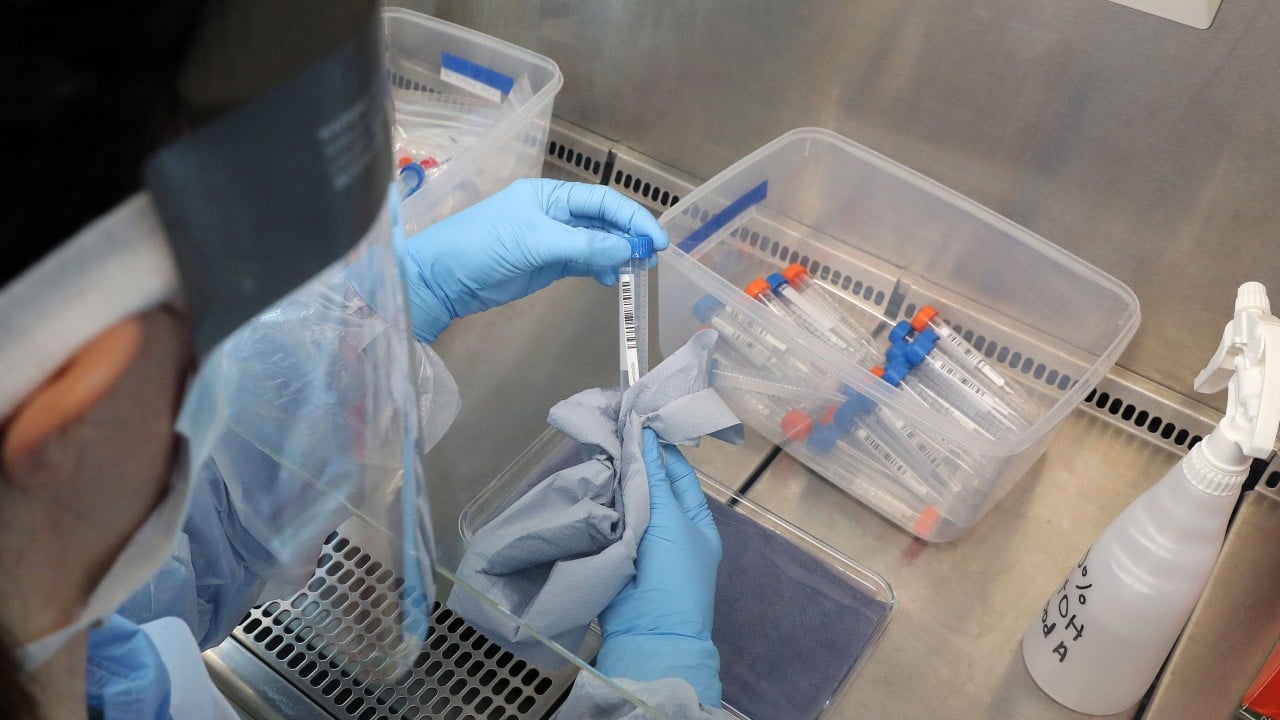
The smell of chlorine never really leaves your skin. It stays in the pores, a sharp, chemical reminder of the thin line between the living and the dead. In the eastern provinces of the Democratic Republic of Congo, that smell means an Ebola treatment center is nearby. To the doctors inside, it smells like safety. To the crowd gathering outside with rocks and machetes, it smells like a lie.
We tend to view outbreaks through the cold lens of epidemiology. We count the infected. We map the transmission chains. We talk about viral loads and containment zones as if we are rearranging pieces on a chessboard. But a virus does not operate in a vacuum. It invades a culture, a history, a fragile ecosystem of trust that has already been fractured by decades of war, exploitation, and broken promises. Don't forget to check out our previous coverage on this related article.
When an Ebola isolation ward is attacked and patients flee into the darkness, it is easy to blame ignorance. It is much harder, and much more urgent, to understand the terror that drove them to run.
The Sound of Shattering Glass
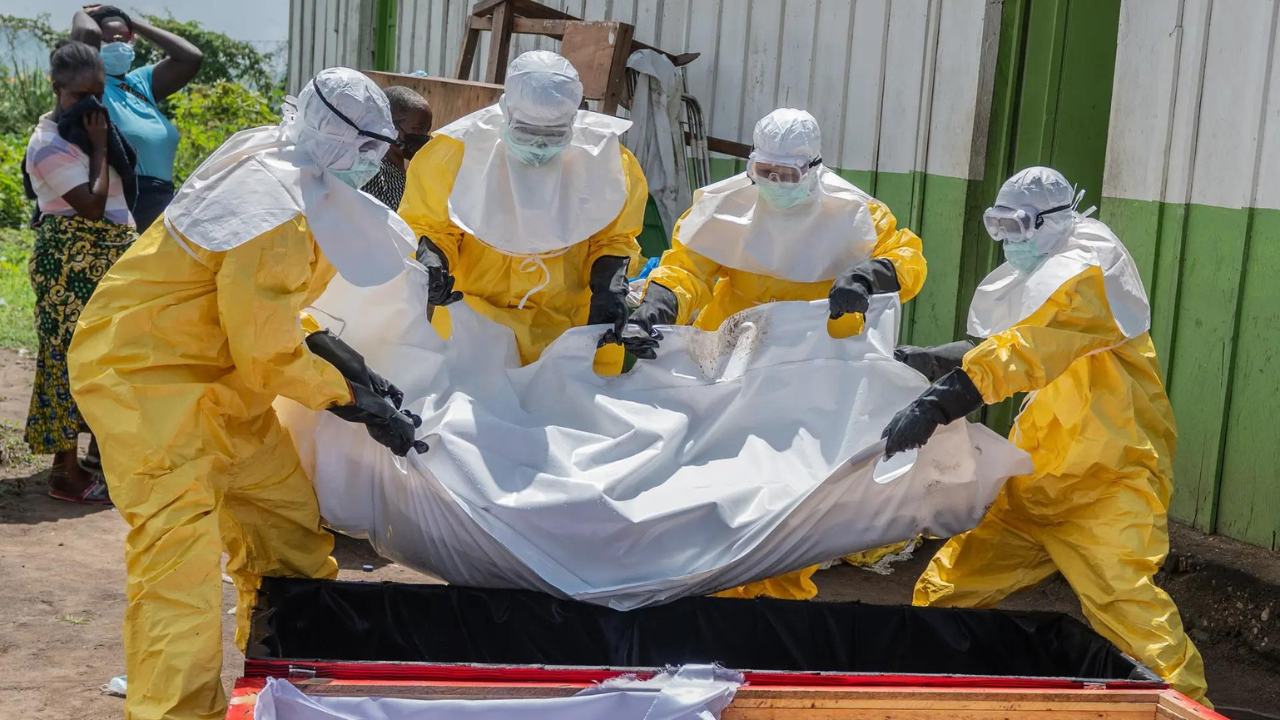
Imagine a concrete clinic under the heavy, humid air of a Congolese evening. Inside, a mother holds her feverish child. They are isolated behind thick plastic sheeting. The workers treating them look like ghosts—shrouded in heavy yellow personal protective equipment, goggles fogged with sweat, voices muffled and distant. The child is bleeding from the gums. The mother is terrified. To read more about the history here, CDC provides an informative breakdown.
Then comes the sound from the street.
It starts as a low rumble, a collective grievance that has found a target. Rocks hit the corrugated iron roof. Stones shatter the windows. The crowd roars. To them, this clinic is not a place of healing; it is a center of foreign intervention, a place where loved ones enter alive and leave in body bags, buried in plastic sheets without the traditional rituals that honor the ancestors.
In the chaos of an attack, the doors are kicked open. The plastic barriers are ripped down. The patients—some weak, some delirious, all terrified—are swept out into the night by relatives or by their own adrenaline.
This is not a hypothetical thriller. It is the recurring reality of trying to fight a deadly hemorrhagic fever in a conflict zone. When the Ebola virus struck the city of Butembo and the surrounding villages, the medical response clashed directly with a deeply traumatized populace. Armed militia groups, local politicians looking for a scapegoat, and community members consumed by rumors created a perfect storm.
The results were catastrophic. Treatment centers were torched. Health workers were assassinated. And infected patients vanished back into crowded neighborhoods.
The Anatomy of a Rumor
To understand why someone would attack a hospital during an epidemic, you have to look at the world through the eyes of the community.
For twenty years, citizens in eastern Congo have faced massacres, systemic poverty, and neglect from both their government and the international community. Millions died, and the world largely looked away. Then, a disease arrives that threatens wealthy nations, and suddenly, billions of dollars pour in. Fleets of white SUVs arrive. Foreigners occupy the hotels.
The local logic is brutal but understandable: You did not care when we were being slaughtered by rebels. Why do you care so much about our fever now? You must be making money off our blood.
Disinformation thrives in the soil of abandonment. Rumors spread through marketplaces and WhatsApp groups faster than the virus itself. One rumor claimed the virus was fabricated to wipe out specific ethnic groups. Another suggested that the white protective suits were used by organ traffickers to hide their identities.
When medical teams arrived in villages wearing gear that looked like spacesuits, refusing to let family members touch their dying relatives, the fear solidified into certainty. The response felt like an occupation, not healthcare.
Consider the mechanics of the Ebola virus itself. It is a filovirus, a microscopic thread that hitches a ride on human intimacy. It spreads through direct contact with body fluids—blood, vomit, sweat. It preys on the very instincts that make us human: the urge to nurse a sick child, to bathe the body of a deceased parent, to comfort a dying spouse.
When public health officials command people to stop doing these things, they are asking them to violently tear up their social fabric. If a father cannot bury his son with honor, he feels he has failed his most sacred duty. When the state steps in with body bags and lime powder, the hospital stops looking like a sanctuary. It looks like a prison.
The Invisible Chain
When a patient escapes an isolation ward, the clock starts ticking.
Ebola has an incubation period that ranges from two days to three weeks. During this window, a person might feel completely fine. They can walk miles, board public transit, visit relatives in distant villages, or seek shelter in crowded churches. They are a walking fuse, completely unaware of when the spark will catch.
The moment the symptoms hit—the sudden fever, the profound weakness, the muscle pain, the vomiting—they become highly contagious. If that person is hiding in a community that distrusts doctors, they will be cared for by family members at home.
And so, the invisible chain grows. One escaped patient becomes five hidden cases. Five become twenty-five. The contact tracers, whose job is to track down every single person an infected individual has met, suddenly find themselves staring at a blank map. The chain goes dark.
This is where the real tragedy lies. The violence against the clinics does not stop the virus; it feeds it. Every broken window at a treatment center guarantees more deaths in the weeks to come, mostly among the women and caregivers who bear the burden of home healthcare.
The Strategy of the Soft Footprint
We cannot lecture people into compliance. You cannot threaten a population into trusting you when they are already staring down the barrel of AK-47s on a daily basis. The only way to rebuild a broken ward is to rebuild the broken trust first.
The turning point in these outbreaks rarely comes from a new drug or a more secure fence. It comes when the response changes its posture.
Anthropologists began working alongside doctors. They realized that instead of banning traditional burials, they needed to adapt them. They trained local youth and religious leaders to conduct "safe and dignified burials," allowing families to see the body from a safe distance, pray over it, and place traditional cloths into the grave without touching the deceased.
They replaced the opaque, terrifying walls of the isolation wards with translucent plastic. Families could stand outside and look at their loved ones, talk to them through a screen, and see that they were being fed, hydrated, and cared for—not harvested for organs.
Most importantly, they hired local nurses and doctors. A syringe held by a neighbor is infinitely less terrifying than a syringe held by a stranger who doesn't speak your language.
But the scars remain. Even with highly effective vaccines and experimental treatments that have drastically lowered the mortality rate of Ebola, the weaponization of healthcare remains a terrifying precedent. The blueprint of distrust drawn in the Congo has been replicated globally, from vaccine skepticism in Western metropolises to the targeting of polio workers in Pakistan.
The Silence After the Storm
The morning after an attack, the clinic is eerie.
The yellow plastic fencing sways in the breeze, torn and useless. Spent bullet casings mix with broken glass in the mud. The white SUVs have retreated to safer ground, leaving behind an empty structure and an infected population that has dissolved into the jungle and the slums.
The virus does not care about political grievances. It does not care about historical trauma or the righteousness of a crowd's anger. It only looks for a tear in the skin, an unwashed hand, a moment of unprotected grief.
Until we realize that fighting an epidemic requires treating the collective psyche of a community with the same precision and care that we treat the physical body of a patient, the wards will keep breaking open. The fences will continue to burn. And the darkness will continue to swallow the sick, leaving us to chase shadows in the dust.