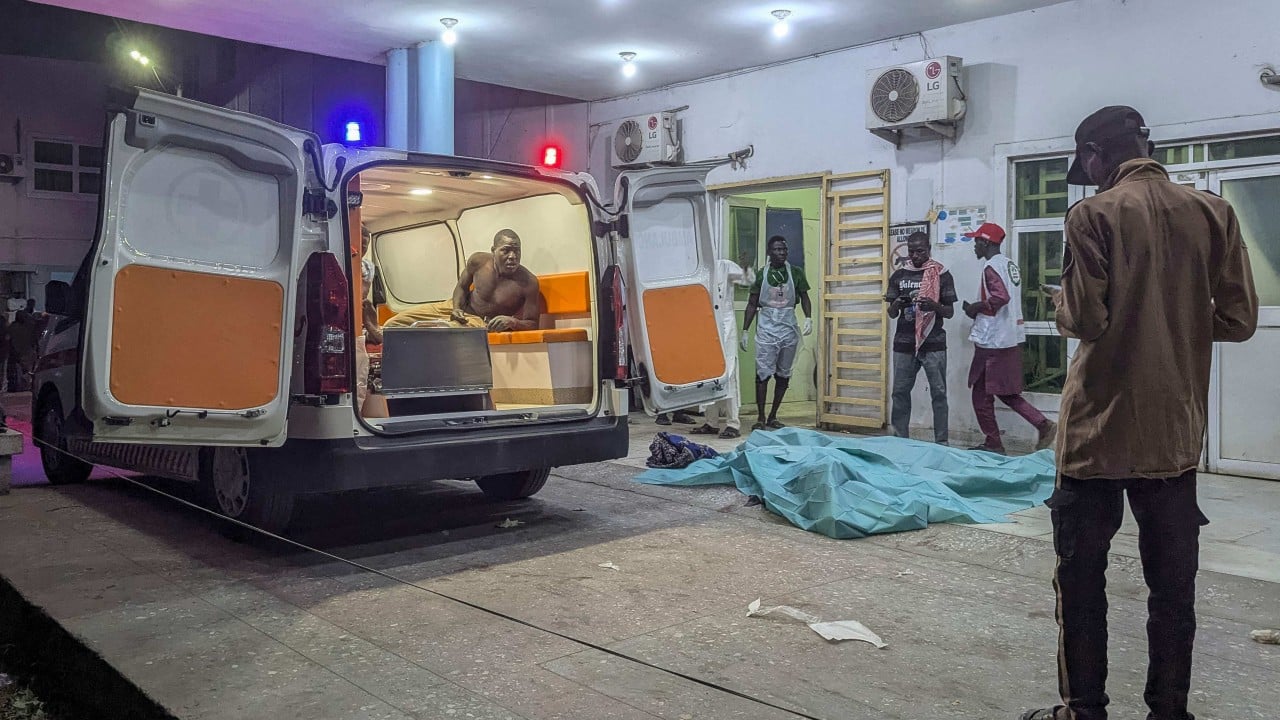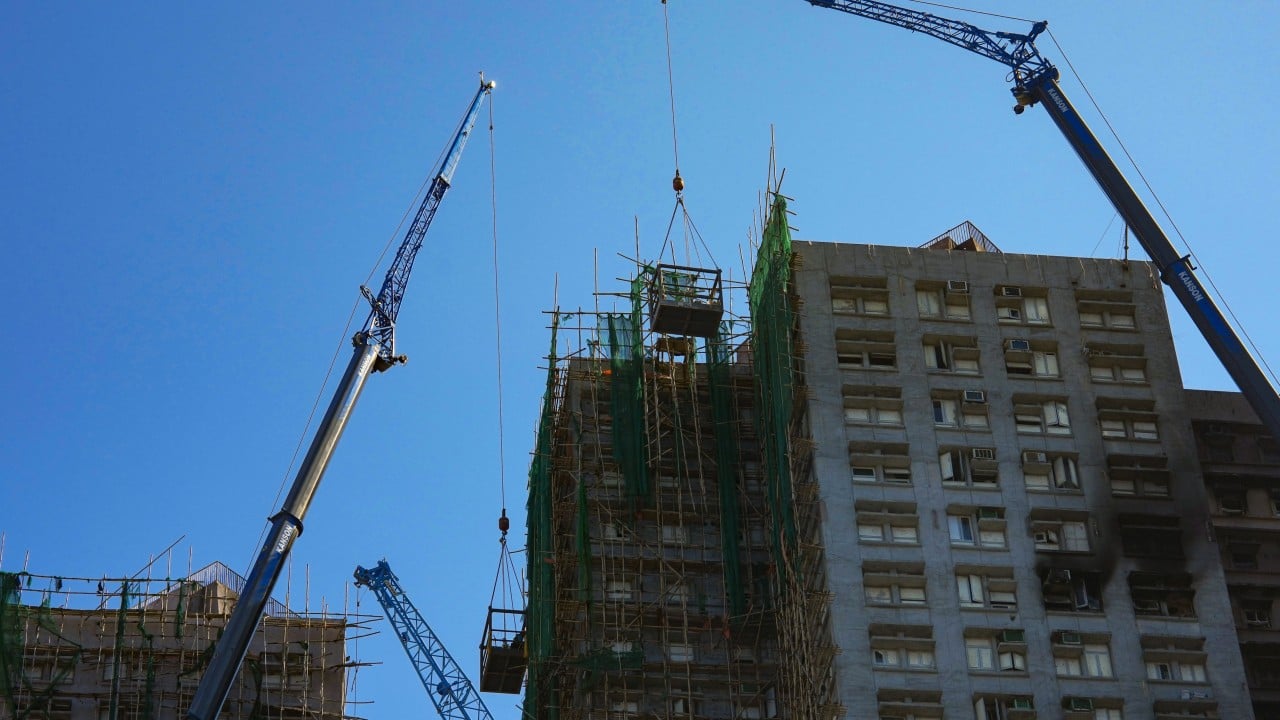
The air in Tai Po usually carries the faint, briny scent of the Tolo Harbour, a reliable comfort for the thousands who call the towering blocks of Wang Fuk Court home. But on a night that remains etched into the collective memory of the estate, that salt air was replaced by the acrid, choking thickness of electrical smoke. It is a smell that doesn't just sit in the nostrils; it clings to the back of the throat like a physical weight.
Buildings like these are more than just concrete and steel. They are vertical villages. They are the repositories of decade-old family photos, the smell of ginger-soy steaming fish at 7:00 PM, and the rhythmic sound of mahjong tiles clicking in the mid-afternoon. When fire tears through such a space, it doesn't just damage property. It violates a sanctuary.
Now, months after the sirens faded and the soot was scrubbed from the hallways, the silence of Wang Fuk Court is being replaced by a different kind of noise. It is the sound of voices. Twenty-one voices, to be precise.
The Weight of a Witness
Justice is often depicted as a blindfolded figure holding scales, but in the sterile environment of a formal fire probe, justice looks more like a stack of yellowing maintenance logs and the trembling hands of a grandmother describing how her front door felt hot to the touch.
The upcoming inquiry into the Wang Fuk Court blaze isn't merely a technical audit of sprinkler systems or fire shutters. It is a communal reckoning. Twenty-one residents and homeowners are preparing to step forward to give evidence. They are the living archives of that night. They are the ones who heard the screams before the alarms, who felt the vibration of the heat through the floorboards, and who now carry the heavy burden of ensuring it never happens again.
Consider a man we might call Mr. Lam. He has lived on the 14th floor for twenty years. To a structural engineer, Mr. Lam’s apartment is a unit of square footage with a specific fire-rating. To Mr. Lam, it is the place where he raised two daughters and where he noticed, months before the fire, that the fire door in the stairwell never quite latched shut.
When he stands to give his evidence, he isn't just reporting a technical fluke. He is testifying to a lapse in the unspoken contract between a building and its inhabitants: the promise that if you follow the rules, the walls will keep you safe.
The Invisible Infrastructure of Trust
Modern high-rise living is an exercise in extreme, often blind, trust. We trust the architects we’ve never met. We trust the electricians whose work is buried behind layers of drywall. We trust the management companies to treat a flickering light in a common corridor not as a nuisance, but as a potential warning sign.
The fire probe at Wang Fuk Court is pulling back the curtain on this hidden world. The investigators are looking for the "why," but the residents are looking for the "who."
- Was the alarm system tested on schedule?
- Did the smoke extraction fans trigger as designed, or did they sit dormant while the hallways turned into chimneys?
- Were the fire-fighting access routes clear, or were they choked by the debris of daily life?
These questions aren't academic. When twenty-one people are called to testify, it suggests a search for a pattern. One person reporting a blocked exit is an observation. Twenty-one people describing a culture of neglect is an indictment.
The stakes are invisible until they are everything. We walk past fire extinguishers every day without a second thought, treating them as part of the background noise of urban existence. We only truly see them when the room begins to turn grey.
The Anatomy of an Inquiry
The process of a fire probe is notoriously cold. It moves with the glacial, methodical pace of bureaucracy. There will be talk of "compartmentalization failures" and "combustible load densities." Experts will point to charts showing the rate of heat release.
But the real heart of the matter lies in the testimony of the residents. They provide the "human clock" for the disaster. They can say, "I called the management office at 10:02, and the bells didn't ring until 10:10." Those eight minutes are an eternity when smoke is blooming across a ceiling. Those eight minutes are where the tragedy lives.
The inquiry will likely focus on three critical pillars:
- Mechanical Integrity: Did the hardware of the building fail, or was it never fit for purpose?
- Human Protocol: Did the staff on duty follow the emergency playbooks, or did panic override procedure?
- Historical Maintenance: Is this fire the result of a single freak accident, or is it the inevitable conclusion of years of "good enough" repairs?
There is a particular kind of vulnerability in being a homeowner in a high-rise. You own your four walls, but your safety is entirely dependent on the three hundred people living around, above, and below you. If the person three floors down leaves a lithium-ion battery charging on a frayed cord, or if the building manager decides to delay a pump inspection to save on the annual budget, your life is the collateral.
The Echo in the Hallway
The 21 witnesses from Wang Fuk Court are doing something brave. They are revisiting a trauma to prevent its repetition. It is easy to want to move on, to paint over the smoke stains and pretend the building is exactly as it was. It is much harder to sit in a room and relive the moment you realized the exit was blocked.
The outcome of this probe will ripple far beyond Tai Po. Hong Kong is a city of towers. If Wang Fuk Court revealed a systemic flaw in how older estates are managed or how fire safety is enforced, then every resident in every high-rise across the territory has a stake in these proceedings.
We often think of safety as a static state—something we have or don't have. In reality, safety is a verb. It is something that must be done, daily, with a certain level of obsessive care. It is found in the grease on a door hinge, the charge in a backup battery, and the alertness of a security guard on a Tuesday at 3:00 AM.
As the hearings begin, the eyes of the community are on those twenty-one individuals. They aren't just residents anymore. They are the guardians of the truth. They are the ones making sure that the next time the salt air of the harbour blows through Tai Po, it isn't interrupted by the smell of something burning.
The truth about what happened in Wang Fuk Court isn't hidden in the ashes. It is waiting in the memories of the people who were there, ready to be spoken into the record, one voice at a time.
The walls may have burned, but the stories survived. Now, they are the only things that can build a safer foundation for the future.
Imagine the courtroom. The air is still. A resident steps to the microphone. The first word is spoken. The healing, finally, begins.