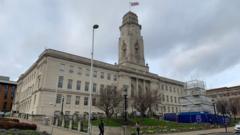
The air in the chamber smelled of wet wool and cold coffee. Outside, the rain was not the gentle sort that feeds gardens, but a heavy, sideways sheet of water that hammered against the municipal glass like a frantic hand. Inside, beneath the hum of fluorescent tubes that buzzed at a low, nagging frequency, a piece of paper was about to be torn up.
No dramatic thunder accompanied the moment. Just the dry rustle of an agenda being flipped.
A vote was called. Hands went up. A declaration, written five years earlier when the panic of summer heatwaves and flooded basements still stung raw, was quietly unwritten. The council voted to axe the climate emergency.
Paperwork moves slower than water, but it burns faster.
I remember the summer of the brown lawns. My neighbor, a retired machinist named Arthur who spent forty years tolerating the eccentricities of small-town municipal bureaucracy, stood at his fence with a garden hose that spat more air than liquid. His tomatoes curled up like dry paper plates, baked into nothingness before they could turn red. He looked at the sky not with anger, but with a strange, quiet betrayal, as if a contract he had signed decades ago had been voided in the fine print while he wasn't looking.
That was the year of the emergency. Words were spoken into microphones. Pledges were stamped onto official letterhead. Targets were set for years that felt safely far away, like 2030 or 2050, numbers so distant they might as well have been science fiction.
Then the bills arrived.
Change is expensive. That is the part nobody likes to say out loud in the glowing brochures. Retrofitting old brick buildings with modern insulation costs money that could otherwise patch potholes or fund the community center roof. Reducing municipal emissions means saying no to things people like, or yes to things that inconvenience their Tuesday mornings.
So the arithmetic shifted. The political winds veered. And the council decided that if you stop calling it an emergency, the water stops rising. Right?
Consider what happens next: nothing. That is the appeal of the eraser.
When a governing body rescinds a climate emergency declaration, physical laws do not adjust their schedules to match the minutes of the meeting. The local river does not check the council registry before overflowing its banks. The asphalt does not stay cooler in July just because the phrase was scrubbed from the municipal portal.
We comfort ourselves with administrative fiction. We treat words as the disease rather than the symptom. If the emergency label is gone, the anxiety must be gone too. The budget lines clear up. The friction with local developers eases. The editorials in the local paper grow shorter, tucked away behind advertisements for SUV leasing and lawn care.
Yet Arthur is still watering dust.
Let me introduce you to Sarah, a hypothetical urban planner working three towns over, though she could be anywhere. Sarah spends her Tuesday nights looking at drainage maps from 1950 overlaid with satellite data from last week. The blue lines on her screen do not match the old maps anymore. They bleed into parking lots. They swallow basements where children sleep.
When Sarah watches local governments retreat from their climate commitments, she doesn't see a victory for fiscal responsibility. She sees a structural engineer removing load-bearing bolts because they rattle in the wind.
"We are choosing the comfort of quiet nights over the reality of loud mornings," she told me once over a cup of tea that went cold while she traced a finger along a contour line. "The storm doesn't care about your election cycle."
We have built a civilization on the arrogant assumption that stability is the default setting of the universe. History tells a different story. Civilizations do not usually collapse in a sudden, cinematic flash of fire and falling meteors. They unravel in budget committees. They fray in the small print where someone decides that the cost of tomorrow is too high to pay today.
The vote to rescind the emergency declaration was framed as pragmatism. It was called a return to common sense. The argument went that grandiose promises were hurting local taxpayers, that lofty global goals had no business dictating the price of a municipal permit.
There is a populist warmth to that logic. It flatters our exhaustion. It tells us we can put down the heavy bag and rest.
But the bag is still there, resting on our shoulders whether we hold the straps or not.
The trouble with pretending an emergency is over is that emergencies have a stubborn habit of introducing themselves anyway. You can vote to repeal the weather, but the basement still floods. You can strike a phrase from the record, but the July heat still bends the railway tracks.
The paperwork is clean now. The council chamber is quiet. The rain has stopped, leaving behind puddles that mirror the gray, indifferent sky.
Arthur’s garden is dirt again. Not soil, just dirt. And somewhere in the dark, the water is rising, inch by silent inch, waiting for the next meeting to adjourn.