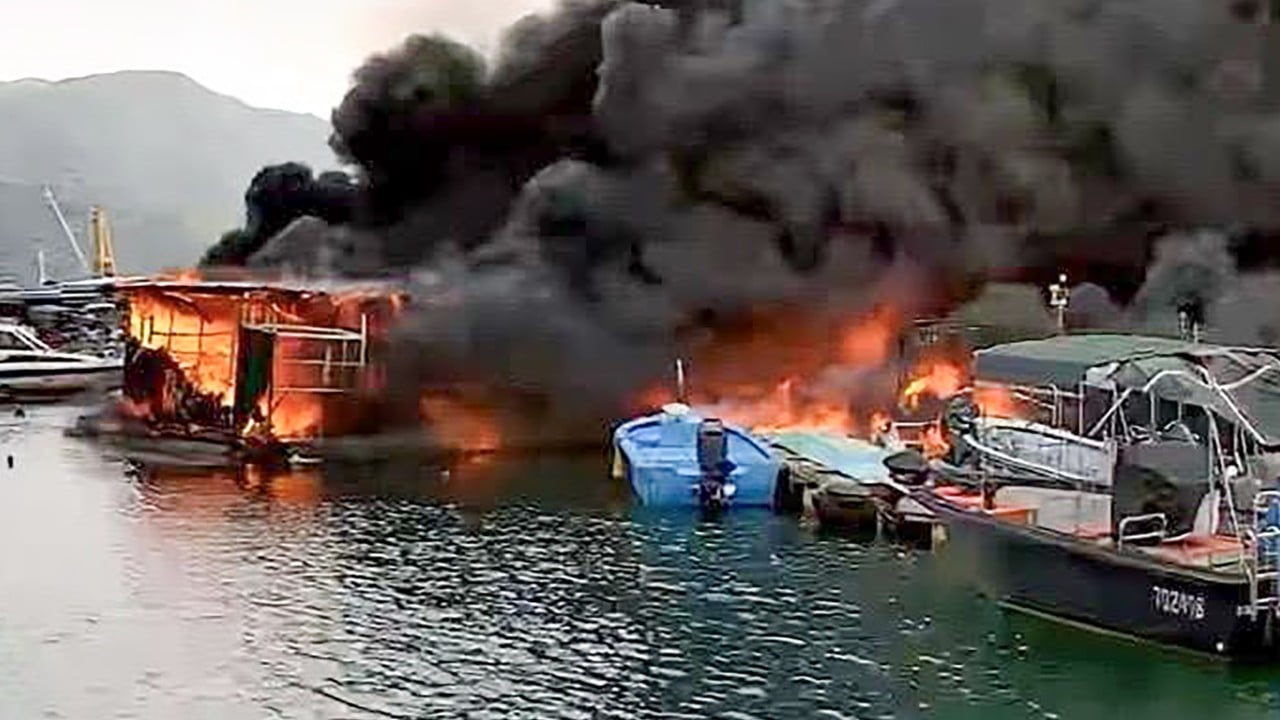
Saltwater does not usually taste like ash. But standing on the dark shoreline of Sai Kung that night, the air carried the bitter, unmistakable iron of things dying by fire.
The village was quiet. It is the kind of quiet that only coastal settlements know after midnight, when the outboard motors have stopped their droning, the day-trippers have vanished back toward the neon arteries of Kowloon, and the water belongs entirely to the tide and the ghosts. Until the yellow glare tore through the dark.
Fire does not care about the sea. We tend to think of water as a shield, a vast and permanent moat against the red hunger of flames. We build our lives along the edges of the ocean, trusting the wet breeze to keep us safe. But safety is a fragile agreement.
Consider what happens when a spark finds fuel in a place where everything is built of fiberglass, old teak, and dry salt-cured timber.
Two huts. Four speedboats. A single man.
These are the cold statistics from the initial reports. They are the dry bones of an incident, the kind of sentences typed into a police log between sips of lukewarm tea. But numbers do not capture the sound of a hull cracking open like dry bone under the heat. They do not capture the way orange light licks against the underside of a pier, turning the gentle ripples of the harbor into a crawling nest of vipers.
Let us walk down to the water's edge. This is a hypothetical reconstruction, grounded entirely in the verified mechanics of maritime disaster, to make sense of what the statistics leave out. (Note: The specific movements of the individual involved are reconstructed based on standard emergency response patterns for coastal village fires.)
Imagine waking up not to an alarm, but to a sound like tearing silk. A low, rushing roar that isn't the wind. You push open a wooden door, and the night air is suddenly too hot to breathe. The world has changed color. Everything is cast in a violent, flickering amber.
The speedboats are first. Modern watercraft are essentially floating plastic boxes filled with high-octane fuel and electrical wiring. When a fire catches on a docked boat, it moves with terrifying speed. There is no time to grab a line. There is no time to untie a knot with fingers shaking so hard they refuse to close. There is only the radiant heat pushing you backward, singing the hair on your arms, forcing you to choose between the metal you invested your livelihood in and the breath in your lungs.
One man was injured.
That is what the headline said. Just one. As if injury is a singular, tidy event. As if a man is a piece of machinery that either works or breaks.
In reality, burns are a thief. They take your skin, yes, but they also take your sleep, your confidence, the simple comfort of resting your hands against a cool surface. When the emergency services finally arrived—sirens bouncing off the jagged hills, blue and red strobes cutting through the smoke—they found a scene reduced to skeletal frames and smoking hulls. The two huts, weathered structures that had likely weathered decades of typhoons and salt spray, were simply gone, reduced to charred beams and glowing embers hissing as small wavelets lapped against them.
We live in an age where we expect infrastructure to protect us. We trust the zoning laws, the fire hydrants tucked away in the brush, the response times of crews stationed miles away across winding mountain roads. But the truth of the matter is stark, uncomfortable, and ancient: when the sea catches fire, you are entirely on your own for those crucial, terrifying minutes before help arrives.
Sai Kung is famous for its beauty. The jagged green islands scattered across the blue, the seafood stalls, the weekend hikers escaping the concrete jungle. It is marketed as a sanctuary. But sanctuaries have teeth.
The investigation into the cause will grind forward through bureaucratic channels. Inspectors will sift through the ash, looking for melted wire, a discarded cigarette, a battery left on charge too long in the humid night air. They will write reports. They will file them away.
Yet the real problem lies elsewhere, hidden in plain sight. It lives in the way we crowd combustible lives into tight, beautiful spaces. It lives in the illusion that nature and our toys can coexist without a price.
The smoke has long since cleared from the Sai Kung shore. The tide has washed away the floating debris, carrying the black ash out toward the open South China Sea. But if you walk past those empty docks tonight, past the charred pilings standing like broken teeth against the dark, you can still smell it.
The quiet reminder that the water only protects us until it doesn't.