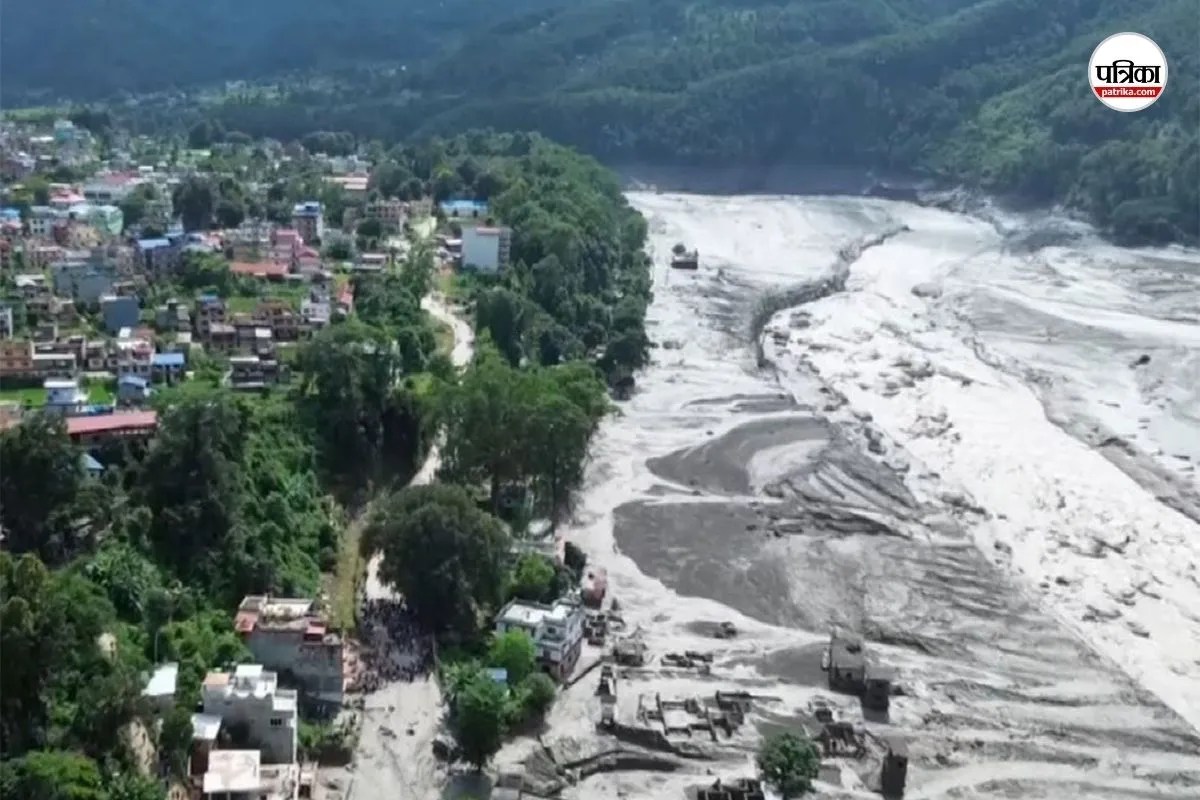
The mud always arrives before the sound.
It is a heavy, thick thing, smelling of torn roots, ancient silt, and the sudden, violent churn of a mountain robbed of its footing. When the wall of water broke through the riverbanks in Nepal, Bibek Kumar did not have time to look for his phone. He did not have time to call out to his fellow laborers or calculate the speed of the advancing ruin. He only had time to look up, watch the grey fury swallow the world he knew, and realize that everything he owned, everything he had built with his calloused hands, was about to become nothing more than flotsam.
Water is supposed to give life. We teach our children that rivers are the veins of the earth, carrying sustenance from the high snows down to the parched plains. But anyone who has lived through a flash flood knows the terrifying truth. A river gone mad is an executioner. It does not negotiate. It does not care about your tomorrow. It only wants the space you are currently standing on, and it will tear through bone and brick to take it.
Consider what happens next in the dark.
Bibek was swept into the chaos, a single leaf in a roaring washing machine of debris. The current tossed corrugated tin roofs like playing cards. It crushed concrete pillars into dust. The air tasted of iron and dirt. Panic is a cold fire in the chest, freezing the blood just as the water tries to drown it. In that split second, caught between the roar of the mountain and the silent dark of the deep current, surrender whispers its easiest lie: let go.
Then came the mango tree.
It was not a monument. It was an old, scarred survivor with thick, stubborn roots buried deep into the bank—a local landmark that had weathered a hundred monsoons, though none quite like this. As Bibek hurtled past, his hand clawed desperately at the empty air. His fingers caught bark.
Skin tore. Tendons screamed. The impact nearly dislocated his shoulder, but he held on with the feral tenacity of a man refusing to die in the mud. He dragged himself up into the forks of the branches, coughing up muddy water, shaking violently, and watched from his trembling perch as the river claimed the rest of the morning. Below him, the world he recognized dissolved into a brown sea.
Stories like Bibek’s are rarely captured in the neat columns of afternoon weather reports. We read statistics about displaced families, millimeter measurements of rainfall, and emergency fund allocations. Numbers are clean. Numbers are safe. They allow us to compartmentalize tragedy into neat little boxes that we can close and slide away before dinner.
But behind every weather alert is a human being clinging to a tree, listening to the horrifying snap of their neighbor's house collapsing into the current.
Why do these floods happen with such ruthless frequency now? The answer is not just bad luck. It is the slow, accumulating weight of environmental disruption. When hillsides are stripped bare for construction and roads, when climate shifts supercharge monsoons into atmospheric firehoses, the earth loses its skin. The soil can no longer drink the rain. It slides. It aggregates. It turns into a liquid batter of destruction that targets the most vulnerable among us—the migrant laborers, the riverside dwellers, the people who cannot afford to build on the high, safe stone of the ridge.
Bibek sat in that tree for hours, shivering as the adrenaline slowly leeched out of his muscles, leaving behind a profound, hollow ache. Around him, the water eventually began to recede, leaving behind a surreal landscape choked with grey slime and stranded debris. The physical storm had passed, but the internal storm—the realization of how thin the line is between a normal Tuesday and total annihilation—was just beginning.
We walk through our daily lives wrapped in an illusion of permanence. We trust the pavement under our feet, the walls of our homes, the predictable rhythm of the seasons. We forget that we share this planet with forces older and vastly more powerful than our highest towers.
When you look at the scars left behind by a Himalayan flash flood, you are not just looking at property damage. You are looking at a warning written in mud. It asks a quiet, chilling question of everyone safe in their dry rooms: What happens when the earth decides it wants its riverbed back?
The sun finally broke through the dense, bruised clouds late that afternoon, casting a pale, weak light over the wreckage. Bibek climbed down from the branches, his feet touching the ruined earth once more. He had no job, no belongings, and no shelter.
Yet, he had his breath. And as he looked out across the vast, silent expanse of grey mud, he began to walk toward whatever was left of the world.