Anwar is a foreman at a semiconductor assembly plant just outside of Kuala Lumpur. He doesn't think much about the Strait of Hormuz. He thinks about the microscopic precision of silicon wafers and the humidity levels in his cleanroom. But when the price of Brent crude spikes because of a drone swarm thousands of miles to the west, Anwar’s life changes before the news even hits his social media feed.
The logistics manager calls. The shipment of specialized resins from Japan is delayed. Why? Because the carrier had to reroute to avoid a regional flashpoint, and the bunkering costs in Singapore just tripled. Suddenly, the "just-in-time" miracle of modern manufacturing feels like a high-wire act performed in a hurricane.
This is the fragility of Southeast Asia. We live in a region that has spent three decades becoming the world’s factory floor, yet we remain tethered to an energy umbilical cord that stretches across the most volatile waters on Earth. If that cord is cut—even partially—the "Asian Century" doesn't just slow down. It goes dark.
The Ghost in the Supply Chain
Most people view an energy crisis as a gas station problem. You pay more at the pump, you grumble, you drive less. In the context of the ASEAN powerhouse, however, energy isn't just fuel. It is the invisible ingredient in every microchip, every sneaker, and every hard drive exported to the West.
Southeast Asia imports more than half of its fossil fuels. When Iran and its neighbors enter a cycle of kinetic escalation, the shockwaves travel at the speed of light through the financial markets and at the speed of a tanker through the waves. For countries like Vietnam, Thailand, and Malaysia, a sustained conflict in the Middle East is an existential threat to their industrial competitiveness.
Consider the "Energy Intensity" of a developing economy. To move a million people from poverty into the middle class, you need massive amounts of reliable, cheap electricity. You need to power the factories that give them jobs. If the cost of that power doubles overnight because of a maritime blockade in the Persian Gulf, the ladder of upward mobility is kicked away.
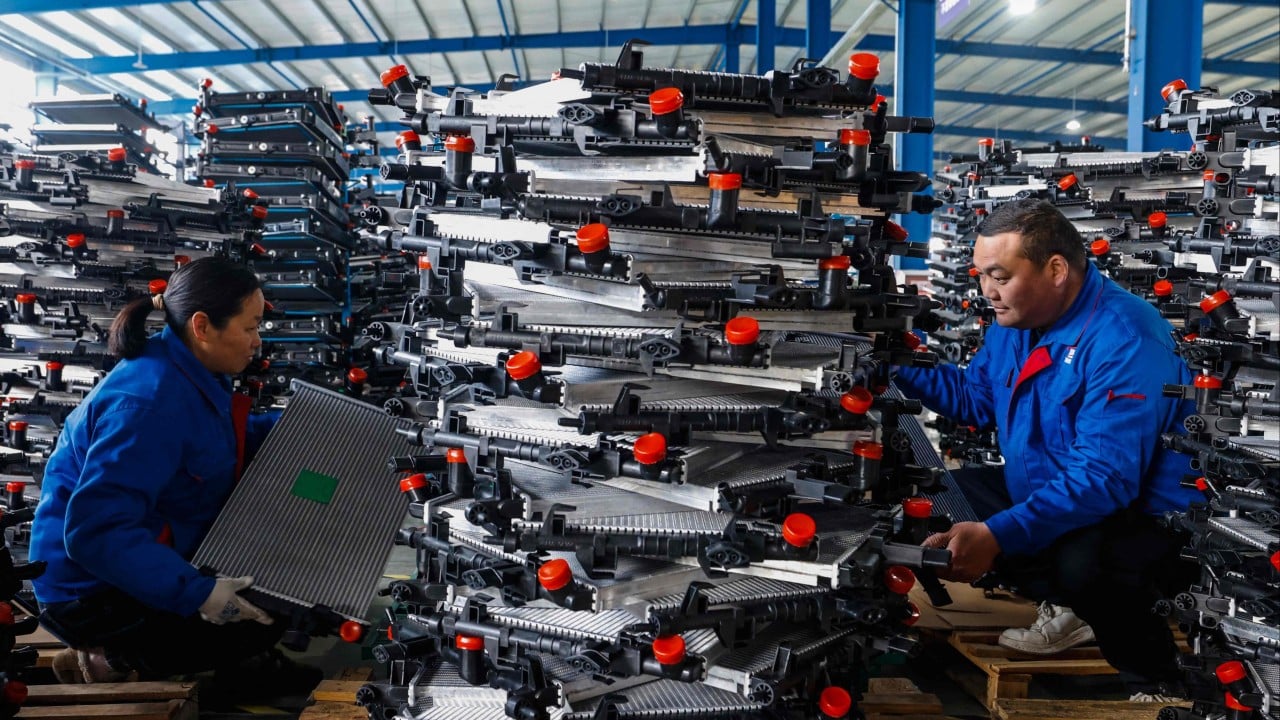
The margins in electronics manufacturing are razor-thin. A five-percent increase in total overhead due to energy surcharges can be the difference between a profitable quarter and a shuttered facility. We are talking about millions of "Anwars" whose livelihoods depend on the stability of a region they will never visit.
The Dragon’s Long Shadow
There is a quiet winner in this chaos. Beijing has spent the last decade preparing for exactly this scenario. While Southeast Asian nations remained largely dependent on traditional shipping routes and US-guaranteed maritime security, China was busy building the "Inland Empire" of energy.
Through the Power of Siberia pipelines and massive investments in Central Asian gas, China has diversified. It is no longer purely a hostage to the Strait of Malacca. But more importantly, China has become the world’s dominant provider of the "escape hatch": renewable infrastructure.
When a factory owner in Indonesia realizes he can no longer afford the diesel to run his generators, who does he call? He calls the Chinese firms that control 80% of the global solar supply chain. He looks toward the North.
This is the geopolitical pincer movement. A war in the Middle East makes Western-aligned energy markets volatile and expensive. China, meanwhile, offers a subsidized, state-backed alternative in the form of green tech and direct overland energy deals. It isn't just about who sells the oil; it’s about who provides the solution to the oil.
If Southeast Asia moves deeper into China’s energy orbit to survive a Middle Eastern shock, the political alignment follows the power lines. It is a gravity well. You cannot be militarily aligned with Washington while your entire industrial grid is serviced and financed by Beijing.
The Myth of the Buffer
Some economists point to the strategic petroleum reserves of nations like Japan or South Korea as a safety net for the region. They argue that the world has enough "slack" to handle a disruption.
They are wrong.
The "slack" in the system was designed for the 20th century, not the hyper-integrated, high-speed demands of the 2020s. We saw during the pandemic how a single stuck ship in the Suez Canal could paralyze global trade for weeks. Now, imagine that ship isn't stuck—it’s on fire. Imagine twenty of them.
The psychological impact of a conflict involving Iran creates a "risk premium" that stays long after the missiles stop flying. Insurance premiums for cargo ships don't drop the moment a ceasefire is signed. They linger. For a region like Southeast Asia, which relies on being the "low-cost" alternative to China, these lingering costs are poison.
The Human Cost of a Percentage Point
We often speak of "Supply Chain Diversification" as if it’s a board game. We talk about "China Plus One"—the strategy of moving manufacturing to places like Vietnam or India to avoid over-reliance on the PRC.
But this strategy assumes a stable global energy market. If the "Plus One" countries are more vulnerable to energy shocks than China is, the strategy collapses.
I spoke with a small business owner in Ho Chi Minh City last year. He produces high-end textiles. He told me that his biggest fear wasn't a lack of customers. It was the "Brownout." In 2023, extreme heat and energy shortages forced Vietnam to ration power. Factories were told to shut down during peak hours.
"When the power goes out," he said, "my workers sit in the dark. I still pay them, but the machines are silent. Every hour of silence is a step toward bankruptcy."
Now, add a war to that equation. If a heatwave can cause a brownout, what does a 40% reduction in LNG shipments do? It causes a blackout. Not just of lights, but of hope.
The Strategic Pivot No One Is Talking About
There is a desperate scramble happening behind closed doors in Jakarta, Manila, and Hanoi. These governments are realizing that "Neutrality" is a luxury of the well-fueled.
To survive the coming decades, Southeast Asia must undergo a radical, painful transformation. It has to leapfrog the traditional developmental path. It cannot afford to follow the West's slow transition from coal to gas to renewables. It has to go to the end of the line, and it has to do it now.
This requires capital. Trillions of dollars.
If the West is too distracted by the fires in the Middle East or its own internal political divisions, that capital will come from the only place that is still lending: the New Silk Road.
We are witnessing the slow-motion tectonic shift of an entire subcontinent. It is a tragedy of geography. Southeast Asia is the heart of global trade, but it does not own the arteries. It is a passenger on a ship steered by madmen in distant capitals.
The Silence of the Cleanroom
Back in the cleanroom, Anwar watches the yellow light on a diagnostic machine. It flickers. Just for a millisecond.
In the world of high-end semiconductors, a millisecond flicker can ruin a batch of chips worth half a million dollars. It is a tiny, microscopic indicator of a world out of balance.
The true cost of a war in Iran isn't found in the headlines about missile ranges or diplomatic "red lines." It is found in that flicker. It is found in the quiet conversation between a father and a mother in a suburb of Bangkok, wondering if the factory will be open next month. It is found in the realization that the prosperity of the East is still built on the shifting sands of the West.
We have built a brilliant, shimmering civilization of silicon and light. But we forgot that the light requires a flame. And right now, the people holding the match are standing in a powder keg.
The sun sets over the Malacca Strait, painting the water in bruised purples and deep oranges. Hundreds of ships sit at anchor, waiting for their turn to pass through the narrow throat of global commerce. They look like a city on the water—solid, permanent, invincible. But they are bubbles. Beautiful, floating bubbles, waiting for the first sharp edge of a distant reality to find them.