The rain in Vancouver does not just fall. It bleeds into the pavement, turning the neon reflections of Robson Street into long, blurred ribbons of light. For decades, the massive fabric roof of BC Place sat against that gray skyline like a dormant giant, a concrete bowl designed to hold crowd noise but often holding only the echoing memory of mid-season football games and standard-issue pop concerts. It was a structure built for utility, not magic.
Then came the whistle.
To understand what happened inside that stadium during Team Canada’s opening match, you have to understand the specific brand of anxiety that belongs to Canadian soccer fans. It is a quiet, scarred kind of hope. For generations, loving this game in this country meant waking up at four in the morning to watch leagues on the other side of the Atlantic. It meant explaining to coworkers why a nil-nil draw in a cold qualification match in Central America was actually a triumph. It meant feeling like an outsider in your own sports culture.
But tonight, the air tasted different.
Consider the sheer physics of fifty thousand people holding their breath at the exact same microsecond. A stadium is just steel, cables, and plastic seats until it is injected with collective desperation. When the Canadian squad walked out onto the pitch, the sound didn’t just rise from the stands. It rattled the fillings in your teeth. It was a roar thirty years in the making, a thick wall of sound that seemed to physically push against the players as they lined up.
The Anatomy of a Red Sea
There is a man named Marcus. He is sixty-two, with hands calloused from working the docks near North Vancouver, and he has worn the same faded red jersey to every national team match he could afford since 1986. For years, Marcus sat in half-empty stands, surrounded by empty plastic chairs, watching his team chase shadows.
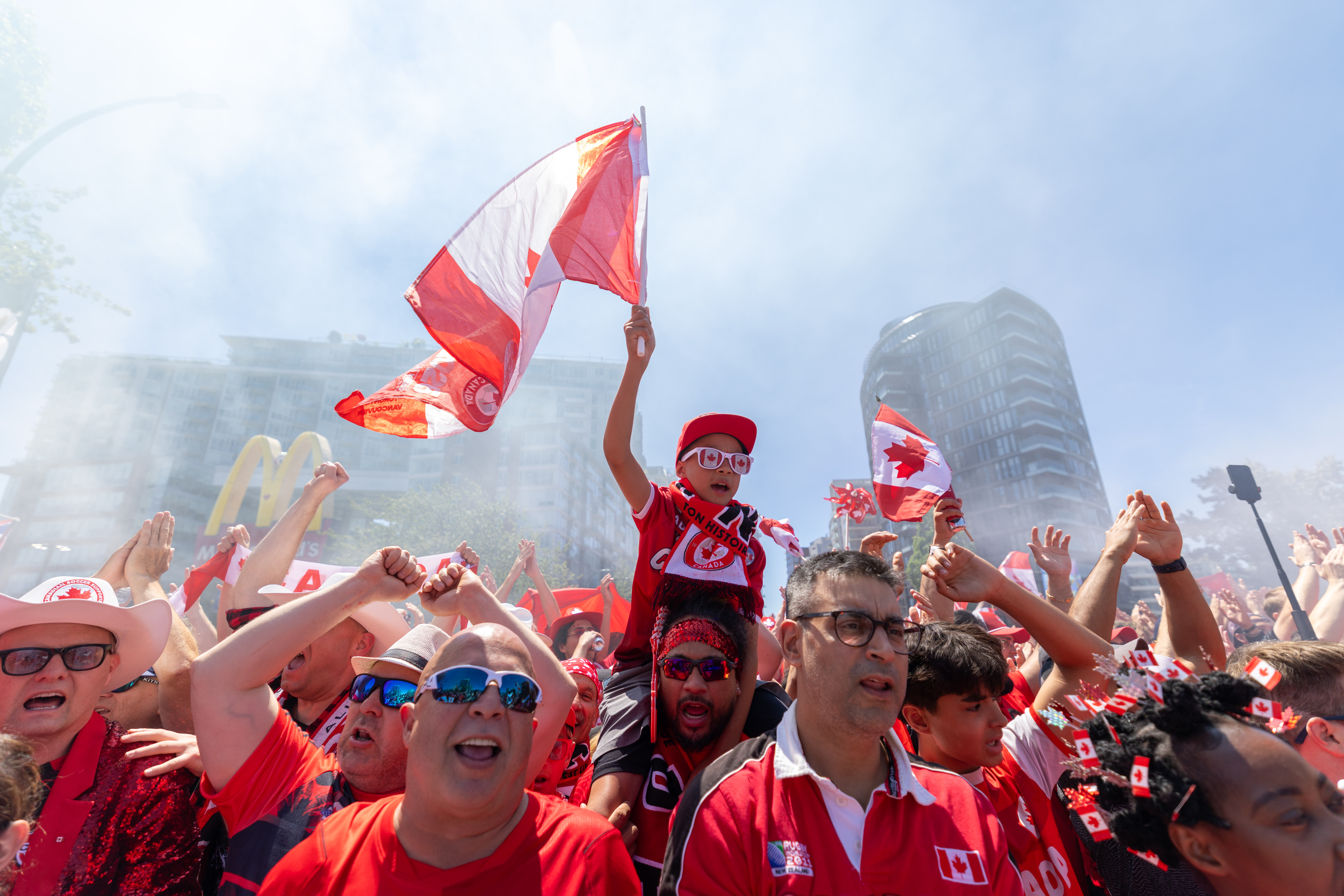
Tonight, Marcus couldn't see the empty chairs. They didn't exist. Instead, he was buried in a sea of crimson shirts, flanked by a teenager covered in maple leaf face paint on his left and a young woman wearing a hijab patterned in red and white on his right. This is the real victory that the box scores miss. The demographic of the crowd wasn't just a cross-section of a city; it was the new definition of the country itself.
The match began not with tactical brilliance, but with nerves. You could see it in the heavy touches, the anxious clearances, the way the ball skipped across the pristine surface a little too quickly. Every missed pass felt like a disaster. Every tackle brought a collective groan that rumbled through the concrete foundations of the building.
Anxiety is infectious. It spreads through a stadium faster than a wave.
But then, a shift occurred. It didn't happen because of a brilliant tactical adjustment from the sidelines or a sudden burst of individual genius. It happened because the crowd refused to let the tension swallow the room. When a Canadian defender misjudged a long ball, sending it spinning out of bounds, the expected jeers never came. Instead, Section 114 started a chant. It was low at first, a rhythmic thumping of feet against the floorboards, before it cascaded down the tiers until the entire stadium was vibrating to the same beat.
The players felt it. You could see the tension leave their shoulders. Their passes grew crisper. The ball started moving with a purpose, cutting through the opposition’s lines like a knife through the Vancouver fog.
The Invisible Weight of the Jersey
Playing a home game of this magnitude is a paradox. It gives you wings, but it also shackles your ankles with expectation. For the young players on this Canadian roster, many of whom grew up in suburban enclaves across the country dreaming of stages they only saw on television, the pressure was immense. They weren't just playing for three points in a tournament standings table. They were playing to validate the sacrifices of their parents, to prove that a kid from Brampton or Edmonton could stand on the world stage and look the traditional giants in the eye without blinking.
Every run down the wing carried that weight. Every sliding challenge was a declaration.
The opposition was stubborn, organized, and entirely unimpressed by the hometown atmosphere. They clogged the midfield, turning the game into a grueling chess match played at ninety miles an hour. Minutes bled away. The clock on the massive scoreboard became an enemy, ticking downward with relentless, robotic indifference.
In the press box, journalists from around the globe tapped their fingers against their laptops, ready to write the familiar narrative of a host nation crumbling under the spotlight. They had their adjectives ready. "Disappointing." "Inexperienced." "Overwhelmed."
They didn't understand the energy grid they were plugged into.
The Fracture and the Flood
The breakthrough didn't arrive with a clean, textbook sequence. True drama rarely follows a script. It came from a chaotic scramble, a ball fought for in the dirt and grime of the penalty box, a moment where logic stopped and pure desire took over.
When the ball finally crossed the goal line, the noise didn't sound like a crowd cheering. It sounded like an explosion. It was the sound of fifty thousand valves releasing decades of pent-up frustration, near-misses, and heartbreak all at once. Stranger embraced stranger. Beer rained down from the upper decks, catching the floodlights like liquid gold. Marcus, the veteran of 1986, found himself lifting a kid he had never met before entirely off his feet.
The stadium wasn't just loud; it was alive.
The final whistles always bring a specific kind of silence right before the cheers resume—a split second where everyone looks at the referee to ensure the moment is real. And then, the realization settled over BC Place. They had won. Not just the match, but the right to be taken seriously.
Long after the stadium lights were dimmed, after the players had retreated to the sanctuary of the locker room, thousands of fans lingered on the concourses. They didn't want to leave. To walk out into the cool Vancouver night air meant returning to reality, and nobody was ready to wake up just yet.
Outside, the rain kept falling, slicking the streets of the city. But the cold didn't matter anymore. A city that had long been accused of being too beautiful to be passionate, too detached to care deeply about sport, had just found its heartbeat in the middle of June, buried deep inside a concrete bowl that would never feel cold again.