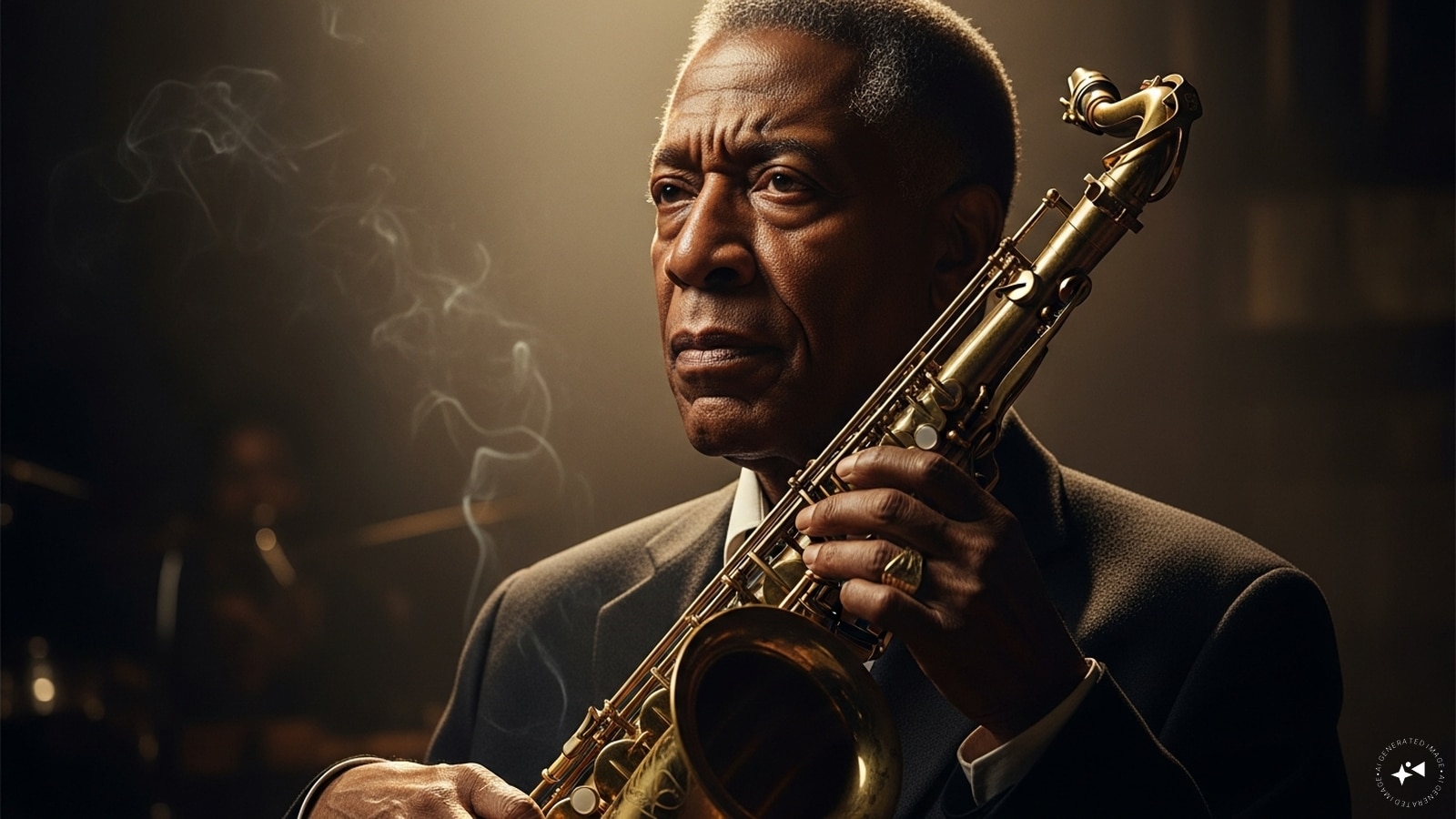
The air inside the Village Vanguard always smelled of stale beer, damp coats, and the faint, metallic tang of brass. If you sat close enough to the stage in the winter of 1957, you didn’t just hear the music. You felt the physical displacement of it. A man would step up to the microphone, hoist a tenor saxophone that looked almost toy-like against his massive frame, and simply alter the molecules in the room.
Sonny Rollins did not just play jazz. He wrestled it to the ground, interrogated it, and forced it to yield secrets no one else could find.
When word filtered out that the man they called the Saxophone Colossus had died at the age of 95, the collective reaction wasn't just grief. It was a sudden, jarring awareness of a silence that had just settled over American culture. A towering bridge to a mythical era of artistic reinvention had finally vanished. We are left on the other side of the river, holding the records, wondering how a single human being managed to carry that much lightning in his chest for nearly a century.
To understand the weight of this loss, you have to understand what it felt like to stand in his shadow.
The Bridge and the Ego
Imagine a young man at the absolute absolute peak of his powers. It is 1959. You are universally acknowledged as the greatest tenor saxophonist alive, rivaled only by John Coltrane. The clubs are packed. The money is finally arriving. The critics are writing hagiographies.
Most people would ride that wave until it broke. Sonny Rollins walked away.
He looked at the adulation, looked at his own fingers on the keys, and decided he wasn’t good enough. He suffered from a rare, beautiful affliction: an uncompromising artistic conscience. He felt trapped by the nightly routine of the jazz club, the expectations of the crowd, the suffocating praise that can make a creator lazy.
So, he took his horn to the Williamsburg Bridge.
For two years, through the biting New York winters and the sweltering summer humidity, Rollins walked up to the pedestrian walkway of the bridge. He would stand there for up to fifteen hours a day, aiming his saxophone out over the East River, competing with the roar of the subway trains and the industrial hum of the city.
Think about that image. A jazz superstar, completely alone in the wind, practicing scales against the rumble of commuters who had no idea they were passing genius in the wild. He wasn't doing it for a viral video. He wasn't doing it for a marketing campaign. He did it because he believed the music demanded a purity he hadn't yet achieved.
When he finally came down from the bridge in 1961, he recorded an album appropriately titled The Bridge. It didn’t sound like a man trying to show off. It sounded like a man who had looked into the abyss of his own talent and found a way to tame it.
That was the core of Sonny Rollins. He was a man who would repeatedly abandon the spotlight just to make sure his soul was still intact.
The Architecture of the Solo
Many people listen to jazz and hear a chaotic blur of notes. They assume it is random, a musical roll of the dice. But watching Rollins play was like watching a master architect build a cathedral in real-time, using nothing but air and instinct.
He was the undisputed king of thematic improvisation. He would take a melody—sometimes a notoriously cheesy pop tune or a show tune that other jazz musicians wouldn't touch with a ten-foot pole, like "Three Little Words" or "I'm an Old Cowhand"—and he would dismantle it piece by piece.
First, he’d play the tune straight. Then, he’d repeat a tiny three-note fragment of it. He would flip that fragment upside down. He would stretch the rhythm until it threatened to snap. He’d drop it into the lowest, gruffest register of his horn, then rocket it into a squealing cry.
By the time he was ten minutes into a solo, he had built a massive, complex structure out of that one silly little phrase. You could see the sweat pouring off his brow, his body swaying like a boxer slipping punches. He was arguing with the song. He was demanding that the melody tell him the truth.
Consider the sheer physical stamina required for this. The tenor saxophone is not a passive instrument. It requires immense lung capacity, core strength, and a hardened embouchure—the precise muscular control of the lips and facial muscles needed to produce a tone. To do that at a world-class level into your eighties is a feat of athletic endurance that rivals any Olympic runner. Rollins did it with a joyful, rolling ferocity that never seemed to tire.
The Last Giant
Born in Harlem in 1930, Rollins grew up in a neighborhood that was the epicenter of a cultural explosion. He saw Coleman Hawkins riding through the streets in a Cadillac. He went to high school with Jackie McLean and Kenny Drew. By the time he was a young man, he was recording with Miles Davis, Thelonious Monk, and Charlie Parker.
To look at his discography is to read the history of modern American music. He was there when bebop was forged in the crucible of uptown jam sessions. He helped invent hard bop, bringing a blues-drenched, muscular swing to the music that defined the sound of New York in the mid-fifties.
But history is a heavy thing to carry alone.
One by one, the titans fell. Miles went. Monk went. Coltrane burned out brilliantly and quickly, leaving us in 1967. By the turn of the century, Rollins was one of the last remaining standard-bearers of that golden age. He became a living monument, a historical text that could still breathe and blow fire.
Yet, he refused to become a museum piece. He hated nostalgia. If you interviewed him in his later years, expecting him to swap old gossip about Miles or Bird, he would gently steer the conversation back to the present. He wanted to talk about global warming. He wanted to talk about spirituality. He wanted to talk about the practice routine he was still trying to perfect, even when age and respiratory issues finally forced him to put down the saxophone for good in 2012.
There was a profound humility in that refusal to rest on his laurels. He knew that the music was bigger than he was. He was merely its custodian.
The Echo in the Empty Room
It is easy to get lost in the statistics of a life that spanned nearly a century. Ninety-five years. Dozens of seminal albums. A Grammy Lifetime Achievement Award. The National Medal of Arts.
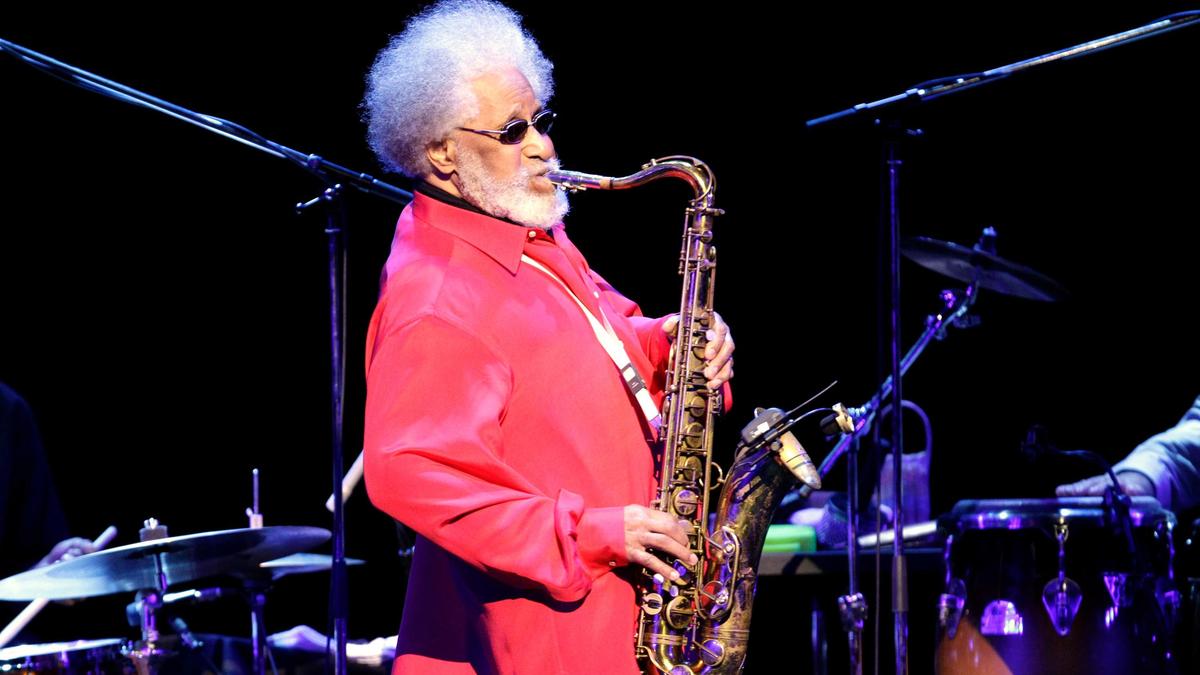
But those are just numbers and metal. They don't capture the feeling of walking into a concert hall and seeing an elderly man with a shock of white hair and dark sunglasses step up to the edge of the stage, plant his feet, and unleash a sound so massive it felt like it could knock down the walls.
With his passing, an era doesn't just end; it seals shut. The line connecting us back to the smoky rooms where modern jazz was born has been severed. We are officially in the afterlife of that great American movement.
The true legacy of Sonny Rollins isn’t just the recordings he left behind, though they will be studied as long as humans have ears. It is the lesson of the bridge. It is the reminder that when the world tells you that you are perfect, the correct response is to go find a lonely, windy place, face the roaring traffic, and work harder.
Somewhere over the East River, the traffic is still rumbling across the steel expanse. The water still moves toward the sea. But if you stand quiet enough on the pedestrian walkway, right around midnight when the city slows down, you can almost hear a ghostly, muscular tenor sax line cutting through the wind, searching for a note that hasn't been discovered yet.