The Empty Nail
The wall remembers.
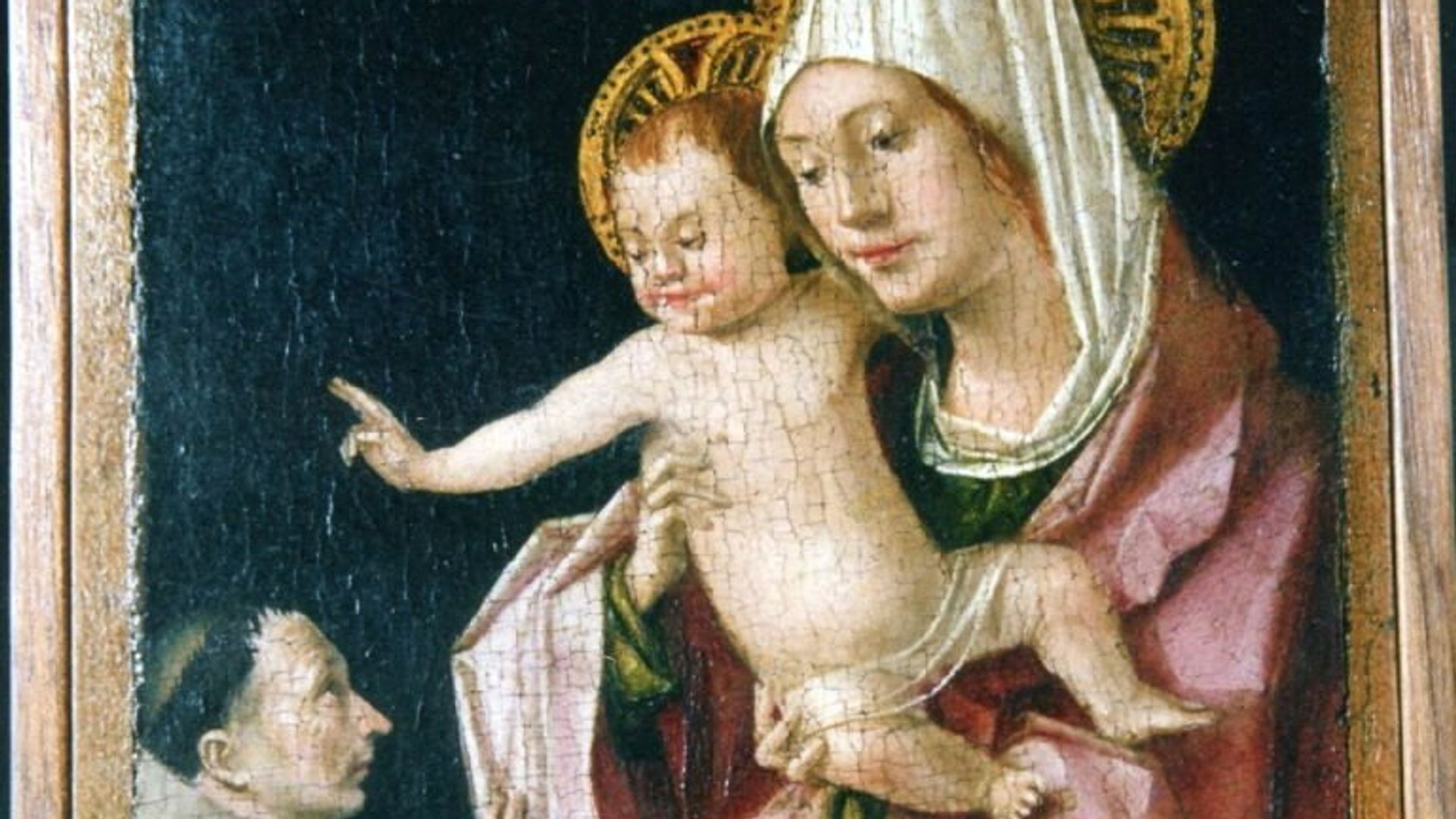
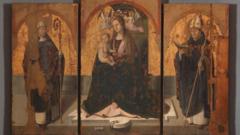
If you press your palm against the aged plaster of that Italian museum gallery, you can still feel the ghost weight. For centuries, four Renaissance paintings hung in a quiet communion with the light, absorbing the whispers of passing feet, the humid breath of winter crowds, the respectful silence of scholars. Now, there is only a faint rectangular shadow. A pale scar left behind by a wooden frame.
Four extraordinary works of art, born from the sweat, oil, and pigment of an era that believed humanity could reach into the heavens and pull down beauty, vanished into the dark.
We talk about art theft as a cinematic game. We picture men in black turtlenecks slipping through skylights, laser grids flickering like red spiderwebs, a sleek helicopter waiting on a fog-choked roof. That is Hollywood. That is a comforting fiction we tell ourselves because the truth is far more ordinary and far more devastating.
The truth smells like cheap grease and hurried footsteps. The truth is a kicked-in side door, a shattered padlock, and a quiet, brutal calculation made by people who look at eternity and see only a cash register.
Consider what happens next. The alarms ring, echoing through empty halls. Security guards rush toward the breach, their rubber-soled shoes squeaking on marble floors. They arrive too late. They find only dust motes dancing in the beam of a flashlight and four naked nails protruding from the wall.
Panic. Shouting into radios. The frantic dialing of local carabinieri.
Within hours, the news ripples outward. Art historians drop their coffee cups. Curators stare at their phones in disbelief. Somewhere in a damp basement or a sterile suburban garage, four irreplaceable windows into the human soul are wrapped in bubble wrap, stuffed into a trunk, and hidden away from the world that birthed them.
The Weight of the Brush
To understand what was lost, you have to look past the valuation numbers that financial investigators will inevitably throw around. Money is a poor translator for a Renaissance masterpiece.
Imagine standing before one of those canvases. (And let us be clear: I am speaking now not as a detached chronicler, but as someone who has spent hours staring into the bruised skies of sixteenth-century oil paintings until the gallery around me dissolved.)
When a master mixed lead white, ultramarine, and earth pigments on a wooden palette, they were not just decorating a wall. They were capturing a heartbeat. They were trapping light in a cage of varnish. You see the brushstrokes under a magnifying glass, and you realize they were made by a human hand that trembled, paused, corrected, and wept over the very same human doubts we carry today.
These four stolen paintings are not commodities. They are ancestors.
When thieves rip them from their frames, they commit an act of cultural vandalism that goes beyond theft. They sever a living thread. They lock away a conversation between the dead and the living that has been happening uninterrupted for five hundred years.
Security experts often talk about vulnerability. They point to underfunded provincial museums, to outdated motion sensors, to the impossible economics of protecting centuries-old heritage on a municipal budget. It is easy to point fingers at the curators. It is easy to blame the night watchman who perhaps blinked at the wrong second.
But the vulnerability goes deeper than padlocks and pixels. It lies in our collective complacency. We treat culture like a permanent fixture of the landscape, like the mountains or the sea, assuming it will always be there to comfort us, educate us, and humble us. We forget that beauty is fragile. We forget that what took a genius months to paint can be destroyed or hidden forever by a fool with a box cutter in thirty seconds.
The Anatomy of the Ghost Market
Where do they go?
This is the question that haunts every investigator who spends their career hunting stolen heritage. Do not believe the myth of the eccentric billionaire who pays a syndicate millions to gaze at a stolen masterpiece in a secret underground vault. That trope belongs in a paperback novel on an airport bookshelf.
Real stolen art rarely gets hung on a private wall. It becomes currency.
In the shadowy underworld of international organized crime, masterpieces function like high-denomination banknotes or bags of uncut diamonds. They are used as collateral in drug deals. They are leveraged to secure weapons shipments. They are held in ransom negotiations with insurance companies or governments.
Sometimes, they are simply used as leverage to spring a high-ranking mob boss from a maximum-security prison. "Give us our capo back," the demand goes, "or the canvas gets burned."
Imagine holding a gun to the head of history. That is the leverage these syndicates possess.
The Italian carabinieri, specifically the Carabinieri Command for the Protection of Cultural Heritage, know this game intimately. They are a rare breed of detective. They do not just study ballistics; they study iconography. They can spot the microscopic craquelure of a fifteenth-century panel painting from across a room. They know the black market routes through the Balkans, through Switzerland, through free ports where shipping containers sleep undisturbed for decades.
When these four paintings vanished, an invisible alarm bell went off in Rome. The network stirred. Informants were nudged. Phone taps were activated. Because in Italy, art is not just property. It is bloodline. It is the physical proof of an identity that predates modern borders.
The Long Shadow
The investigation will be slow. It will be punctuated by false leads, dead ends, anonymous tips from desperate informants looking for a reduced sentence, and sleepless nights in drab precinct offices.
Months may pass. Years may bleed into one another.
And while the detectives chase shadows, the frames remain empty. That is the tragedy that lingers long after the headlines fade and the cable news trucks pack up their cables. The museum visitor walks through that gallery, turns a corner, and stops dead in their tracks.
They see the empty space. They feel the sudden, jarring absence.
In that quiet moment of realization, something vital happens. We are forced to confront what happens when our shared memory is stolen piece by piece. We realize that the past is not safe. We realize that the things we love—the fragile, beautiful, defiant things we created to prove we were here—can be snatched away into the dark.
The nail is still in the wall.
The search has only just begun. Somewhere out there, wrapped in darkness, a Renaissance master is waiting to see the light again.