On a warm July night in 1962, families across the Hawaiian Islands gathered on beaches, leaned out of hotel windows, and climbed onto rooftops. They were not looking for shooting stars. They were waiting for an explosion.
The United States government had announced it was going to launch a nuclear missile into space.
Imagine sitting on the sand in Honolulu, the Pacific breeze rustling the palm fronds, looking out toward Johnston Island, hundreds of miles away. The military had assured everyone that the test, code-named Starfish Prime, would be a spectacular show but entirely harmless. It was a demonstration of dominance during the tensest days of the Cold War. People brought lawn chairs. They brought their children. They treated an impending thermonuclear blast in the upper atmosphere like a fourth of July fireworks display.
Then, at 11:00 PM, the sky tore open.
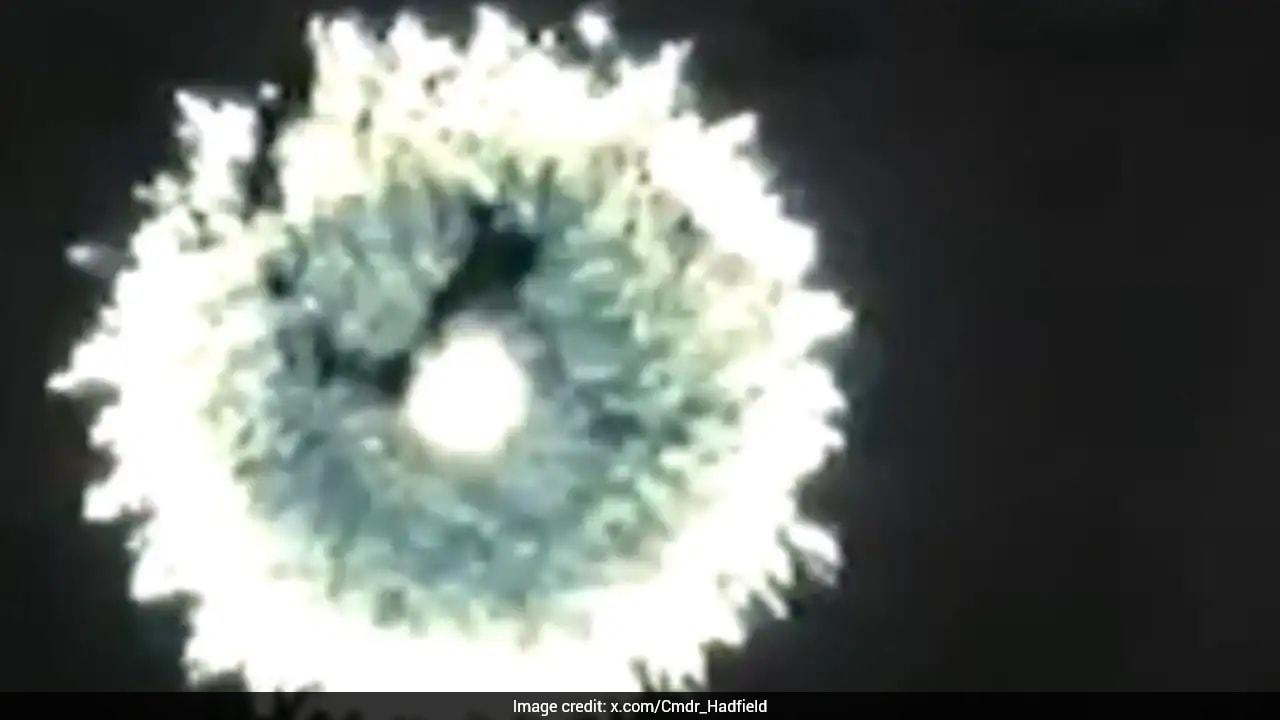
It did not flash white or orange like an ordinary explosion. Instead, a terrifying, blood-red light filled the horizon, expanding outward in massive, pulsing rings. High-altitude auroras—glowing greens and deep crimson curtains usually reserved for the polar circles—danced wildly over the equator. For a few minutes, the midnight sky was so bright that you could read a newspaper on the streets of Oahu.
But as the eerie, artificial light washed over the islands, something else happened. Something silent. Something that nobody, not even the brilliant scientists who designed the bomb, truly anticipated.
The Cold Logic of the High-Altitude Race
To understand why men in tailored suits and military uniforms decided to detonate a 1.4-megaton warhead 250 miles above the Earth, you have to understand the deep, suffocating paranoia of the early 1960s. This was the era of the missile gap. The Soviet Union had shocked the world by launching Sputnik, proving they could reach into space.
Washington was terrified.
Military planners realized that if an enemy could send a nuclear warhead into orbit, they could rain destruction down on American cities with mere minutes of warning. But the anxieties ran deeper than just falling bombs. Scientists were beginning to understand that the Earth is wrapped in an invisible, protective armor: the magnetosphere. This magnetic field traps radiation from the sun, creating bands of high-energy particles known as the Van Allen belts.
American leadership asked a dangerous question. What happens if we disrupt that armor?
The military hypothesized that a nuclear blast in space could create an artificial shield of radiation, a chaotic barrier that might fry the electronics of incoming Soviet missiles or blind their radar systems. They wanted to see if they could weaponize the very space surrounding our planet. They called it an experimental project, but it was an act of raw desperation.
The men behind Starfish Prime were not comic-book villains. They were pragmatic, highly educated scientists and engineers working under intense pressure. They calculated the yields, modeled the atmospheric densities, and checked their math on primitive mainframe computers. They knew there would be an explosion. They knew there would be light.
They simply had no idea how interconnected our world was about to become.
The Ghost in the Wires
Consider a hypothetical telephone operator sitting at a switchboard in Honolulu at 11:01 PM that night. Let us call her Sarah. She is watching the sky turn a brilliant, impossible shade of magenta through the window. Suddenly, the lights in her office flicker and die. The lines on her switchboard go completely dead.
Miles away, the streetlights along the avenues of Oahu suddenly extinguish in unison. Hundreds of burglar alarms begin to wail, triggered by nothing at all. Circuit breakers trip across the island, and a microwave communications link connecting Hawaii to the rest of the world goes completely dark.
Sarah did not know it, but she was among the first human beings to witness the terrifying power of an electromagnetic pulse, or EMP.
When the nuclear warhead detonated in the vacuum of space, it did not create a blast wave of air because there is no air in space. Instead, it released a massive torrent of gamma rays. These rays slammed into the upper layers of Earth’s atmosphere, stripping electrons from oxygen and nitrogen molecules.
This sudden, violent movement of electrons collided with the Earth’s natural magnetic field. The result was a massive, invisible wave of electromagnetic energy that cascaded down toward the surface.
It acted like a giant, cosmic hand plucking the strings of every electrical wire on the ground. Any long piece of metal—a power line, a telephone wire, an antenna—absorbed this sudden surge of energy. The wires could not handle the current. Systems melted. Fuses blew.
The scientists had anticipated a small, localized electromagnetic effect. They expected it to reach maybe a few miles from the blast center. Instead, the pulse traveled nearly nine hundred miles across the open ocean, crippling civilian infrastructure in a place full of people who had just been told to sit back and enjoy the show.
Blinding the Eyes in the Dark
The damage on the ground was a nuisance, but the damage in the sky was a catastrophe.
In 1962, humanity was just beginning to dip its toes into the cosmic ocean. A handful of primitive satellites were orbiting the Earth, acting as our first tentative eyes in the dark. Among them was Telstar 1, a marvel of modern engineering that had just begun transmitting the first live transatlantic television pictures. There were British satellites, American military satellites, and early weather monitors.
The Starfish Prime blast did not just create a momentary pulse; it left behind a thick, heavy ring of radioactive particles trapped in the Earth's magnetic field. It created a new, artificial radiation belt that refused to dissipate.
Over the days and weeks that followed, this radiation belt acted like a silent poison. Satellites passing through the zone were bombarded by high-energy electrons. Their primitive solar panels degraded rapidly. Their transistors failed.
One by one, the lights went out in orbit.
Telstar 1, the pride of global communications, went blind and died. Ariel 1, the United Kingdom’s very first satellite, was crippled. By the time the radiation finally began to clear, roughly one-third of all functioning satellites in low Earth orbit had been destroyed by the American test. We had effectively trapped ourselves in a cage of our own making, rendering parts of near-Earth space toxic to the very technology we were trying to pioneer.
The True Cost of Arrogance
The lesson of Starfish Prime is not just a historical footnote about a big explosion. It is a cautionary tale about the unintended consequences of messing with systems we do not fully comprehend.
The scientists who pushed the button were brilliant, but they suffered from a specific kind of hubris. They believed that because they could calculate the energy release of a bomb, they could control its environment. They viewed space as an empty canvas, a void where they could flex military muscle without touching the fragile web of life on the ground.
They were wrong.
The test shook the scientific community to its core. The realization that a single explosion in space could cripple communications, knock out power grids thousands of miles away, and destroy global satellite networks changed the trajectory of the Cold War. It forced both the United States and the Soviet Union to confront a sobering reality: space is not a separate realm. It is directly connected to our living rooms, our power grids, and our lines of communication.
The sheer unpredictability of the test is what ultimately drove world powers to the negotiating table. Just a year later, in 1963, the Limited Nuclear Test Ban Treaty was signed, banning nuclear detonations in the atmosphere, underwater, and in outer space. The global leadership realized that using these weapons in the upper atmosphere was a form of technological suicide.
Today, we live in a world that is infinitely more reliant on electronics than the citizens of Honolulu were in 1962. Every aspect of our daily existence—from the GPS navigation on our phones to the banking systems that manage our money and the grids that keep our hospitals running—hangs on a delicate web of satellites and microchips.
If a 1.4-megaton bomb were detonated in space today, it would not just turn off a few streetlights in Hawaii. It would plunge entire continents into darkness, wiping out the invisible infrastructure that keeps modern civilization alive.
The red sky of 1962 was a beautiful, terrifying warning shot. It showed us that the boundary between our world and the void of space is incredibly thin, and that the tools we build to protect ourselves can easily become the instruments of our own undoing.