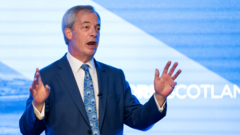
Nigel Farage is hitting the pause button on his lucrative side hustle. The Reform UK leader has officially suspended his account on Cameo, the platform where fans pay for personalized video shout-outs. While some might assume he’s just too busy with the daily grind of Westminster or party management, the reality is much more sobering. This isn't about time management. It's about a genuine, escalating threat to his personal security.
Reform UK confirmed the move this week. They didn't mince words. The party pointed directly to security concerns as the primary driver behind the decision. For a man who has built a career on being accessible and populist, pulling back from a direct-to-fan platform like Cameo is a massive shift. It highlights a growing, ugly trend in British politics where the line between digital interaction and physical danger is thinning out.
The security gamble of digital accessibility
Being a high-profile politician in 2026 isn't just about winning debates or passing policy. It's about managing a constant stream of vitriol that occasionally turns into something much darker. Farage has always been a lightning rod. Whether you love him or hate him, you can't deny he attracts intense reactions.
Cameo presents a unique problem for someone with Farage's profile. On the surface, it’s a goldmine. He’s reportedly one of the platform's highest earners, pulling in hundreds of thousands of pounds by recorded birthday wishes and pep talks. But the platform requires a level of openness that can be exploited.
Think about how it works. You send a script or a set of instructions. The celebrity records it. In the wrong hands, those requests can be used to bait a politician into saying something that can be clipped, out of context, to incite trouble. Worse, the metadata or the frequency of these interactions can sometimes provide breadcrumbs for those looking to track movements or habits.
The party hasn't detailed a specific "smoking gun" incident. They don't have to. We've seen enough over the last decade—from the tragic murders of Jo Cox and Sir David Amess to the frequent harassment of MPs outside Parliament—to know that "security reasons" isn't just a convenient excuse. It’s a survival strategy.
Balancing the books versus personal safety
Let's talk about the money because everyone else is. Critics often point to Farage’s Cameo earnings as a distraction from his duties as an MP for Clacton. They argue he’s a "part-time politician" lining his pockets. According to the Register of Members' Financial Interests, Farage has seen substantial returns from the site. Some months, he’s topped the charts for all UK politicians.
But here’s the thing. If this were purely about the optics of "greed," he probably would have shut it down months ago during the election heat. To shut it down now, after the election is won, suggests the threat level has hit a threshold that money can no longer justify.
Security for MPs is a massive, ongoing headache for the Home Office. The cost of protecting public figures is skyrocketing. When a politician uses a third-party app to engage with the public, they’re essentially stepping outside the "ring of steel" provided by official security details. They’re creating an unmonitored channel. For someone like Farage, who already requires significant private security, the Cameo account was likely flagged as a "soft" entry point for bad actors.
A chilling effect on political engagement
You might not like Nigel Farage. You might despise his politics. But there’s a broader issue here that should worry anyone who cares about democracy. When politicians feel they have to retreat from public platforms because of safety fears, the "wall" between the governed and the governors gets thicker.
The whole appeal of Reform UK was this idea of breaking the "Westminster bubble." Digital tools like Cameo, TikTok, and X are the hammers used to break that glass. If those tools become too dangerous to use, politicians will naturally retreat back into secure, sterile environments. We end up with leaders who only speak through highly filtered, heavily guarded press releases.
We’re seeing a shift where the "cost" of being a public figure isn't just a thick skin—it’s a literal physical risk. If a veteran campaigner like Farage, who is used to being pelted with milkshakes and heckled in the streets, feels the need to go dark on a video app, what does that mean for a new, younger MP?
The logistics of the pause
According to Reform UK officials, this isn't necessarily a permanent goodbye. They’ve used the word "pause." That’s a classic political hedge. It allows them to reassess the threat landscape without completely cutting off a major revenue stream and a direct line to his base.
In the meantime, expect Farage to double down on more controlled environments. More televised appearances, more rallies with heavy security presence, and more one-way communication via his official social media channels. The era of paying £75 for Nigel to wish your nan a happy 80th might be over for the foreseeable future.
This move should be a wake-up call regarding the state of public discourse. We’ve reached a point where a simple video-sharing app is considered a security liability for a Member of Parliament.
If you're following this closely, keep an eye on the upcoming reports from the Intelligence and Security Committee. They’ve been looking into the physical and digital threats facing MPs for a while now. The "Farage Pause" is just one high-profile symptom of a much deeper rot in how we handle political disagreement.
The next step for anyone following UK politics is to watch how other high-profile MPs handle their digital footprints. We might see a wider exodus from interactive platforms as security teams across all parties tighten their grip on how their members interact with the public online. The "bubble" isn't just about elitism anymore; it's becoming a fortress for self-preservation.