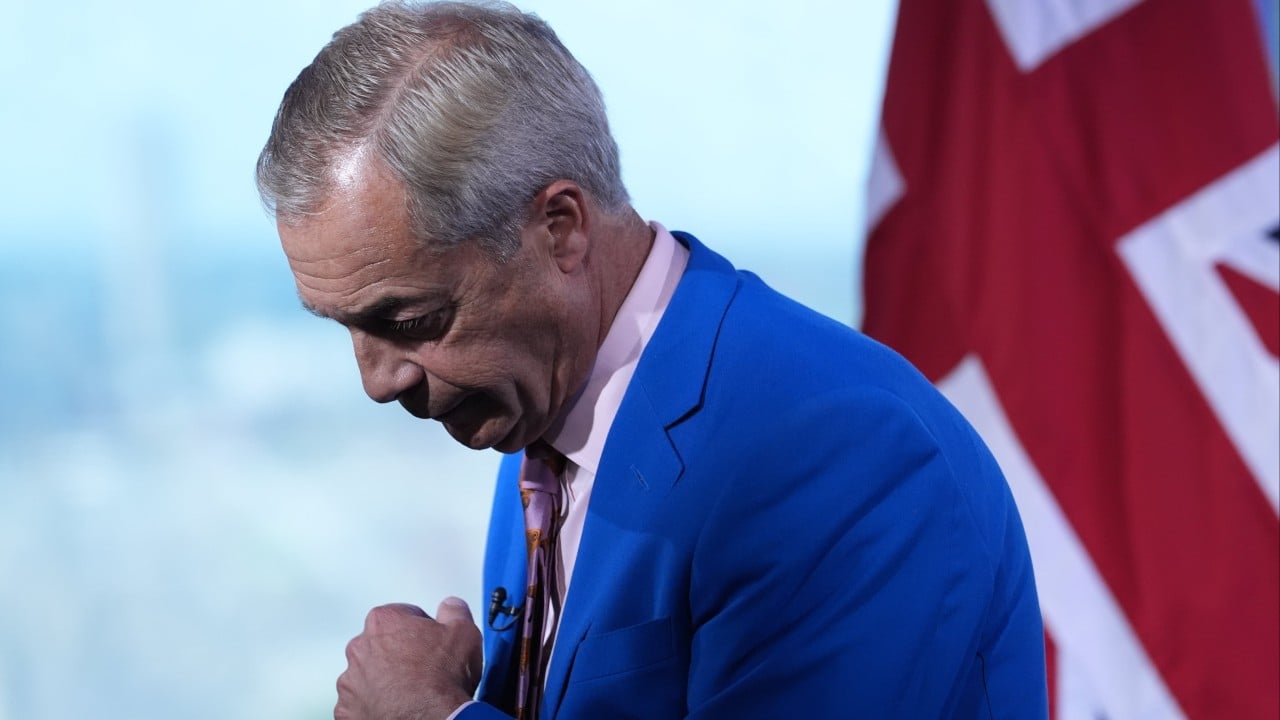
Nigel Farage is currently attempting to deflect a deepening parliamentary standards investigation into millions of pounds in undisclosed donations by retreating into his familiar role as a political insurgent. Faced with four separate complaints before the Parliamentary Commissioner for Standards, including a massive five million pound gift from cryptocurrency billionaire Christopher Harborne, the Reform UK leader has chosen to attack the rules rather than explain his accounts. By framing a technical transparency inquiry as an establishment conspiracy, Farage is trying to convert a serious regulatory threat into political capital.
This strategy is not new. For nearly three decades, Farage has operated on a simple, highly effective formula. Whenever a financial irregularity, an administrative blunder, or an internal party dispute threatens his position, he shifts the focus from the details of the allegation to the identity of the accuser. The machinery of Westminster, in his telling, is permanently rigged against him.
The current crisis, however, presents an entirely different set of structural challenges. Farage is no longer an outside agitator throwing stones from the comfortable periphery of the European Parliament. He is an elected Member of Parliament for Clacton, bound by the strict statutory requirements of the House of Commons. The tools that served him well on the campaign trail are proving remarkably ill-suited to the methodical grinding of parliamentary discipline.
The Five Million Pound Crypto Problem
At the center of the current storm is an unprecedented financial transaction that occurred shortly before the general election. The disclosure that Farage received a five million pound donation from Christopher Harborne, a wealthy expatriate investor deeply embedded in the digital currency sector, has fundamentally altered the scale of British political financing. It has also triggered an intense examination of Rule 5 of the Code of Conduct for Members of Parliament.
The regulation itself is straightforward. Members are required to register any financial interest, gift, or benefit that could reasonably be thought to influence their actions, speeches, or votes in the legislature. This declaration must occur within twenty-eight days of receiving the benefit. Farage did not register the Harborne funding within this window, a failure that his allies describe as a minor administrative oversight but which critics view as a deliberate attempt to keep a massive injection of private wealth out of the public eye.
The sheer volume of the cash complicates any defense of accidental omission. Five million pounds is not an unrecorded lunch or a complimentary ticket to a football match. It is a sum large enough to bankroll a national political apparatus. The Parliamentary Commissioner for Standards, Daniel Greenberg, must determine whether this money was given to Farage as an individual, as the leader of Reform UK, or through a corporate structure designed to obscure the ultimate beneficiary.
Harborne himself is a figure accustomed to operating far from the glare of daily press briefings. Holding dual citizenship in the United Kingdom and Thailand, he has built a vast fortune through strategic investments in tech start-ups and stablecoin issuers. His financial relationship with Farage marks a significant departure from traditional British political donations, which typically originate from property developers, trade unions, or established City financiers. The alignment of a cryptocurrency magnate with a populist political movement suggests a shared desire to bypass conventional regulatory frameworks, an ambition that is now colliding directly with the transparency requirements of the British state.
The Mechanics of Parliamentary Discipline
The mistake Farage is making is treating Daniel Greenberg as if he were an interviewer on a rival news channel. He is not. The standards commissioner does not trade in soundbites or public relations victories. He reviews bank statements, cross-references dates, and applies statutory definitions with legalistic precision.
When Farage issued a statement to the press declaring the investigation an establishment hit job, he was appealing to his core electorate. The response within the walls of parliament was entirely different. Former cabinet ministers and constitutional experts quickly pointed out that public attacks on an ongoing investigation are treated as aggravating factors when a penalty is being determined.
The system operates through a clear sequence. If the commissioner finds that a breach of the rules has occurred, the matter is referred to the Committee on Standards. This body, comprised of both elected politicians and independent lay members, possesses the authority to recommend punishments ranging from a formal apology on the floor of the House to a lengthy suspension from parliament.
Historical precedent offers little comfort for the member for Clacton. There is simply no record of an MP failing to declare a financial benefit approaching five million pounds. Previous suspensions for unregistered interests have involved sums that are a tiny fraction of this amount. If the committee decides that the failure to disclose was intentional or reckless, a suspension exceeding ten days becomes a distinct possibility.
The Reality of the Clacton Recall
A suspension of more than ten days is the critical threshold in modern British politics. Under the Recall of MPs Act, any suspension of this duration automatically triggers a recall petition in the member’s constituency. If ten percent of eligible voters in Clacton sign that petition over a six-week period, the seat is declared vacant and a by-election must be held.
This is the vulnerability Farage cannot bluster his way past. Winning a seat in parliament was an arduous task that required eight attempts over several decades. Retaining it during a highly charged by-election, while under the cloud of a damning standards report, would be an entirely different proposition. The local electorate in Clacton, while intensely supportive of Farage’s rhetoric on immigration and national identity, may look less favorably on a representative who appears distracted by complex international financial arrangements and personal legal battles.
The threat of a recall explains the frantic nature of the current Reform UK media counter-offensive. Farage needs his supporters to believe that any negative finding by the commissioner is a political execution rather than a standard regulatory correction. If he can convince the public that the committee is merely an instrument of the Westminster consensus, he can frame a potential by-election not as a referendum on his financial integrity, but as a battle between the people and the elite.
The Splintering of the Reform Coalition
Beyond the immediate legal jeopardy, the finance row is exposing deep structural cracks within Reform UK itself. The party is no longer just a vehicle for a single charismatic individual. It now possesses a small parliamentary group, a growing network of local councillors, and a formal membership that expects a degree of institutional professionalism.
For months, an internal debate has quieted the party’s offices. Senior figures within Reform UK are increasingly concerned that Farage’s personalized style of leadership is hindering the party’s long-term growth. They watch his frequent trips to the United States, his lucrative media contracts, and his opaque financial arrangements with growing unease. They recognize that if the party is ever to replace the Conservatives as the primary force on the political right, it must transition from an insurgent movement into a credible government in waiting.
A massive, undeclared donation from a crypto billionaire does not help build that credibility. It reinforces the perception that Reform UK is a boutique operation run for the benefit of a select few, rather than a serious political enterprise. The fact that Farage is now facing three additional complaints, covering unrecorded media earnings and undeclared hospitality, suggests a systemic disregard for the mundane administrative tasks that every other Member of Parliament must perform.
The tension between Farage’s personal brand and the needs of his party is becoming unsustainable. If the standards investigation results in a severe penalty, the loyalty of his parliamentary colleagues will be tested. They will face a choice between defending a leader who broke the rules and protecting the broader electoral prospects of their movement.
The Strategy of Permanent Grievance
The current confrontation is the logical conclusion of a political career built entirely on the cultivation of grievance. Farage has always required an enemy to give his movement purpose. In the past, it was the European Commission in Brussels. Then it was the leadership of the Conservative Party. Now, it is the internal regulatory architecture of the British parliament.
This approach has definite limits when applied to statutory institutions. A select committee cannot be defeated by a clever performance on a late-night talk show. It cannot be intimidated by a social media campaign or a noisy rally in a seaside town. The rules governing parliamentary standards exist to ensure that the public can see who is funding their elected representatives, a principle that remains fundamental to the functioning of a representative democracy.
By attempting to seize back the agenda through an escalation of his rhetoric, Farage is gambling that his base cares more about his anti-establishment credentials than the rule book. He is betting that the phrase "establishment hit job" will carry enough emotional weight to obscure the simple question of why a five million pound gift went unregistered. It is a high-stakes strategy that assumes the public will indefinitely tolerate a double standard for populist leaders. As the commissioner's investigation moves toward its conclusion, that assumption is about to face its most severe test.