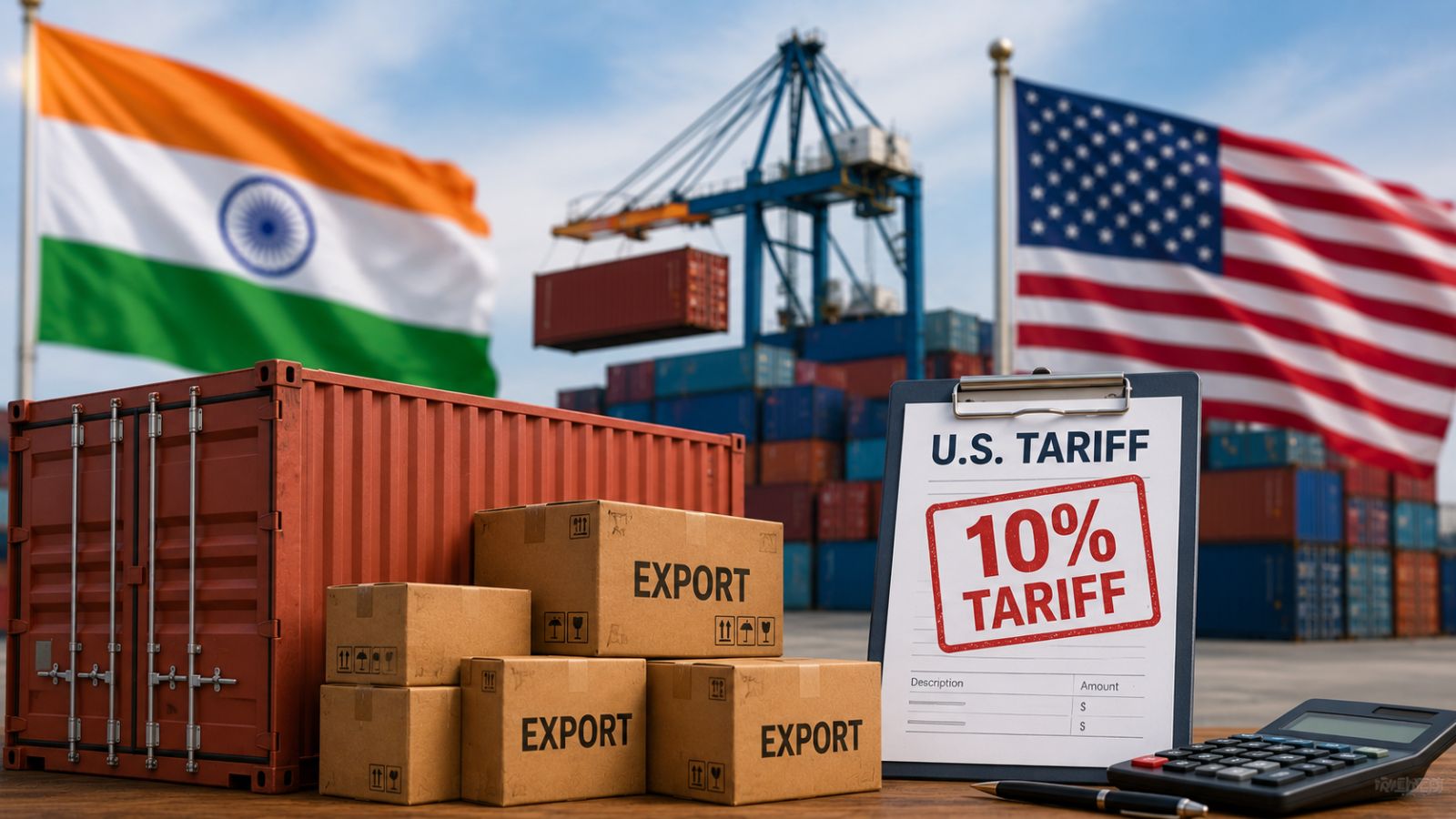
Headline news often paints trade policy changes with a heavy brush, triggering panic before anyone looks at the actual fine print. That's exactly what happened when Washington hit international shipments with fresh import penalties under Section 301. Headlines blared about higher prices and squeezed margins for Indian goods arriving on American shores.
If you look beneath the surface, the narrative shifts fast. For a more detailed analysis into similar topics, we suggest: this related article.
The Federation of Indian Export Organisations (FIEO) stepped in to clear up the confusion. Yes, landed costs for Indian products will go up. But trade isn't played in a vacuum—it's a game of relative pricing. When you analyze where India stands compared to its global rivals, the strategic picture actually looks surprisingly solid.
Understanding the New US Tariff Structure
The Office of the United States Trade Representative (USTR) rolled out fresh tariff brackets ranging between 10% and 12.5% across dozens of trading partners under Section 301 forced-labor regulations. For further background on the matter, detailed reporting can also be found at Financial Times.
India didn't get singled out. It was placed into the lower 10% duty category, joining about 16 other countries.
Meanwhile, nearly 38 competing nations were slapped with the higher 12.5% rate.
That 2.5% gap sounds small on paper. In high-volume international trade, it's a massive deal.
| Country / Region | Section 301 Tariff Rate | Relative Advantage / Disadvantage |
|---|---|---|
| India | 10% | Lower baseline bracket |
| Bangladesh, Pakistan, Sri Lanka | 10% | Parity in labor-intensive goods |
| China, Vietnam, Thailand | 12.5% | India holds a 2.5% price advantage |
| Turkey, UAE, Brazil, South Africa | 12.5% | India holds a 2.5% price advantage |
Because major manufacturing powerhouses like China, Vietnam, Thailand, and Turkey are stuck paying 12.5%, Indian goods become relatively cheaper on American store shelves compared to those competitors.
The Battle in Labour Intensive Sectors
When you look at labor-heavy industries—garments, footwear, leather goods, and textiles—margins are tight. Sourcing managers at major US retail brands flip suppliers over pennies.
In these specific sectors, India's primary direct rivals include Bangladesh, Cambodia, Pakistan, Sri Lanka, Indonesia, and Malaysia. All of those nations received the exact same 10% tariff rate.
What does this mean for Indian suppliers?
- No loss of market share to direct regional rivals: Since regional competitors share the same 10% duty, Indian manufacturers don't face a price disadvantage against them.
- A clear edge over East Asian manufacturing hubs: China and Vietnam facing 12.5% opens up trade diversion opportunities for Indian producers.
- A reason for US buyers to shift orders: Even a slight duty margin can sway long-term supply agreements toward Indian factories.
FIEO President S.C. Ralhan pointed out that American buyers aren't going to drop Indian suppliers overnight when competitor alternatives face equal or harsher markups.
Key Exclusions Keep Major Export Sectors Safe
Another reason for calm is that vast swaths of trade remain entirely untouched by this decision.
The new Section 301 duties don't stack on top of existing Section 232 trade actions. FIEO Director General Ajay Sahai clarified that several core industries remain explicitly excluded or operate under separate frameworks.
Products unaffected by the new tariff include:
- Steel and aluminum shipments
- Automotive components
- Active pharmaceutical ingredients (APIs) and finished pharmaceuticals
- Select agricultural exports
Keeping pharmaceuticals and auto parts free from additional duties protects two of India's most important export engines to North America.
What Indian Exporters Need to Do Right Now
Sitting back and relying on competitor tariffs isn't a long-term business strategy. Sourcing managers in the US care about total landed cost, speed to market, and reliable supply chains.
If you're managing export operations, take these four practical steps immediately:
- Audit your HS codes line by line: Calculate exact landed duty differentials against your top three global competitors. Don't assume the blanket 10% applies equally across your whole catalog.
- Review your supply chain compliance: The USTR action stems from forced-labor inquiries. Ensure your factory floor audit documentation, worker contracts, and raw material lineage are completely transparent and ready for US Customs inspection.
- Pivoting toward high-duty gap categories: Lean heavily into selling product lines where your primary competitors are stuck paying the higher 12.5% rate.
- Monitor textile tariff-rate quotas (TRQs): Watch how Washington structures prospective TRQs for countries sourcing US-grown cotton. Indian apparel exporters must push for similar parity through ongoing bilateral negotiations to avoid getting squeezed out on raw material inputs.
Trade policy shifts always cause short-term turbulence, but relative pricing drives long-term buyer decisions. Indian exporters who tighten up compliance and aggressively pitch their price advantage will turn this tariff adjustment into an operational win.
.png)