Beijing is drawing a new line in the sand—or rather, the water. When Philippine President Ferdinand Marcos Jr. and Japanese Prime Minister Sanae Takaichi met in Tokyo on May 28, 2026, they didn't just exchange pleasantries. They dropped a diplomatic bombshell by announcing formal negotiations to map out the exact maritime boundary separating their exclusive economic zones (EEZs) and continental shelves.
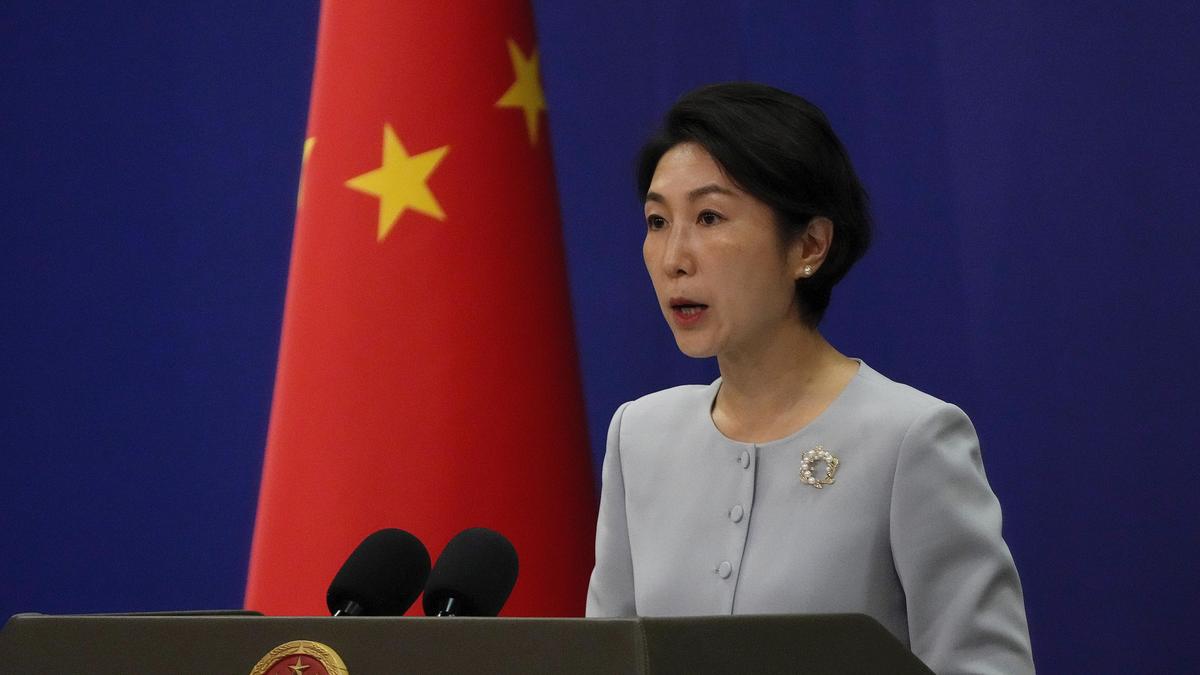
The response from China was swift and furious. Within 24 hours, Chinese Foreign Ministry spokesperson Mao Ning declared the talks entirely illegal, null, and void. Beijing insists these waters, located east of Taiwan, belong under its own jurisdiction.
This isn't just a boring legal dispute over nautical charts. It's a calculated chess move by Manila and Tokyo to box China in. By attempting to formally lock down their shared border, the two island nations are creating a united front right in the backyard of Beijing’s primary geopolitical target: Taiwan.
The Secret Geography Behind the Outrage
To understand why China is losing its mind over a technical border negotiation, you have to look at a map. Most people focus on the South China Sea or the East China Sea when they think about Asian maritime friction. This deal shifts the spotlight to the Western Pacific, specifically the waters stretching east of Taiwan.
Beijing claims an expansive EEZ and continental shelf in this exact zone, citing both domestic laws and its own interpretation of the United Nations Convention on the Law of the Sea (UNCLOS). When Japan and the Philippines sit down to draw a line connecting their respective zones, they are fundamentally ignoring China’s claims to those same waters.
Geopolitical analysts aren't fooled by the legal jargon. This negotiation is a structural attempt to stitch together the "first island chain"—the strategic network of islands running from Japan down through Taiwan to the Philippines. By binding their maritime boundaries together, Tokyo and Manila are effectively trying to block China’s navy from easily slipping out into the broader Pacific Open Ocean.
A Playbook Born Out of Mutual Frustration
If you feel like you've seen this movie before, it's because Manila and Tokyo have been sprinting into each other's arms for years. Both countries are sick of dealing with Chinese gray-zone tactics on their own.
- The Philippine Struggle: In the South China Sea, Filipino sailors routinely face off against Chinese coast guard vessels using high-powered water cannons, military-grade lasers, and aggressive ramming tactics at places like Second Thomas Shoal.
- The Japanese Friction: Up north, Japanese vessels constantly play a high-stakes game of chicken with Chinese ships around the disputed Senkaku Islands (which Beijing calls the Diaoyu Islands) in the East China Sea.
Basically, both nations realized that fighting these battles individually wasn't working. The Tokyo meeting represents a major evolution. Beyond drawing border lines, the joint statement revealed plans to supercharge cooperation between their respective coast guards, launch joint training operations, and boost capacity-building programs.
More alarmingly for Beijing, Japan is rewriting its historic pacifist rules. Tokyo is actively exporting defensive military hardware to Manila and discussing agreements that could allow Japanese troops to train on Philippine soil.
Beijing’s Legal Counteroffensive
China’s legal argument hinges on the idea of third-party prejudice. According to Chinese state scholars, you can't just sit down with your neighbor and split up a piece of land if a third person already claims ownership of it.
Mao Ning made it clear that Beijing considers the unilateral talks a direct infringement on its sovereignty. The Chinese state media apparatus has gone into overdrive, framing the talks as a dangerous move that undermines regional stability. They argue that Japan is using the Philippines to revive its old militarist past, while Manila is trying to exploit undersea resources near Taiwan under the protection of Tokyo and Washington.
But here is the irony. The Philippines is the country that famously took China to an international tribunal in The Hague back in 2016, winning a landmark arbitration case that invalidated Beijing’s sweeping "nine-dash line" claim. China simply ignored that ruling. Now, Manila and Tokyo are using UNCLOS as the literal framework for their new boundary talks, explicitly stating they want to inject "legal certainty" into the region. It's a direct ideological middle finger to Beijing's might-makes-right approach to maritime law.
What This Means for Global Shipping and Security
You shouldn't view this as a localized spat. More than $3 trillion in ship-borne trade passes through these contested Asian waterways every single year. If the waters east of Taiwan become a hot zone of overlapping military patrols and naval standoffs, global supply chains will feel the squeeze instantly.
The real danger lies in the potential for miscalculation. We aren't just talking about diplomatic letters anymore. We're looking at a future where a Japanese-funded Philippine Coast Guard vessel, operating in a newly defined bilateral zone, could collide with a Chinese naval asset claiming the exact same patch of ocean.
If you are tracking geopolitical risk, the next steps are highly predictable. China will likely escalate its naval presence in the waters east of Taiwan to physically assert the rights it claims on paper. They want to prove that the Japan-Philippines line doesn't exist in reality, no matter what agreements are signed in Tokyo.
Expect to see more Chinese combat air patrols and naval drills pushing deep into the Western Pacific over the coming months. Manila and Tokyo have made their play to formalize the map, and now the ball is firmly in Beijing's court to see how aggressively they choose to disrupt it.