An unapproved drug shipped from San Diego to Central Africa tells you everything about our failure to handle emerging pandemics.
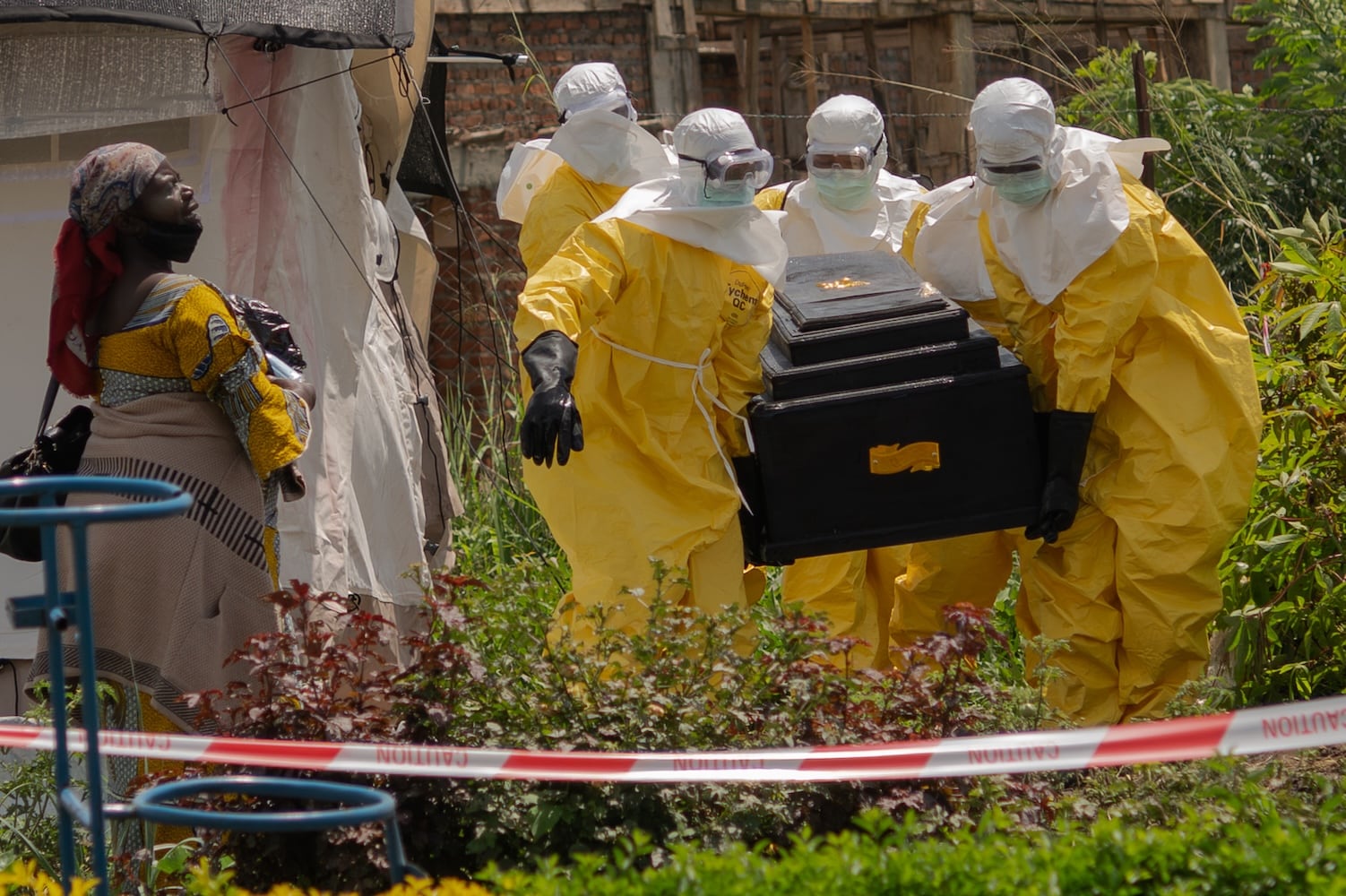
The US government just quietly partnered with Mapp Biopharmaceutical to ship an experimental antibody treatment to the Democratic Republic of Congo. The target is a sudden, aggressive outbreak of the Bundibugyo ebolavirus strain. It has already killed more than 130 people, logged hundreds of suspected cases, and jumped the border into Uganda.
Here is the problem. We don't have a single approved vaccine or specific antiviral for Bundibugyo. Zero.
So the Department of Health and Human Services reached into its emergency toolkit, grabbed an unapproved drug designed for an entirely different virus, and sent it to the front lines. It is a desperate gamble born out of necessity.
The Science of a Calculated Gamble
The drug in flight isn't a random shot in the dark, but it isn't a perfect match either. Mapp Biopharmaceutical developed this specific antibody cocktail, called MBP134, using immune cells isolated from a survivor of the massive 2013-2016 West African Zaire Ebola outbreak.
The Biomedical Advanced Research and Development Authority heavily funded its development. But BARDA didn't build it for Bundibugyo. They financed it to fight the Sudan virus strain.
To understand why this works, you have to look at how ebolaviruses function. They are shaped like long, tangled threads covered in glycoproteins. These glycoproteins act like keys to unlock human cells. Monoclonal antibodies work by gumming up those keys. They physically bind to the virus, rendering it incapable of infecting a cell.
MBP134 contains two distinct antibodies that target highly conserved regions across different ebolaviruses. In plain English, it attacks parts of the virus that don't change much from strain to strain. Laboratory bench work and tests on rhesus macaques show that MBP134 can neutralize Bundibugyo alongside Sudan and Zaire strains.
But animal models aren't human beings. We are deploying an unapproved medication to high-risk individuals and exposed health workers under emergency protocol. It highlights a recurring pathology in global health. We only advance medical counter-measures when the house is already on fire.
Why We Keep Starting From Zero
The Bundibugyo strain isn't new. It was first identified nearly twenty years ago in 2007. Yet, the medical community still relies on compassionate use authorization and experimental shipments when an outbreak hits.
The reason is simple economic reality. Large pharmaceutical companies do not invest hundreds of millions of dollars to develop, test, and manufacture treatments for diseases that primarily strike impoverished, rural communities in Central Africa. There is no commercial market. No profit margin exists to justify the cost of multi-phase clinical trials.
Consequently, the burden falls on tiny biotech firms like Mapp Biopharmaceutical, backed entirely by Western defense and health security agencies like BARDA and the Department of Defense. They treat these pathogens as bioweapons threats rather than traditional commercial opportunities.
When an epidemic wanes, the funding dries up. The clinical trials stall. Look at what happened with ZMapp, Mapp’s earlier three-antibody cocktail used during the 2014 Zaire crisis. By the time researchers set up proper randomized controlled trials, the outbreak subsided. The trial closed early due to a lack of patients, leaving the data statistically underpowered. ZMapp was eventually discontinued.
We repeat this exact loop every few years. An outbreak occurs, panic ensues, governments dump millions into an experimental fix, the outbreak resolves, and everyone loses interest until the next mutation hits.
The Operational Reality on the Ground
Shipping a highly sensitive biopharmaceutical product to eastern DRC isn't like mailing a package. Monoclonal antibodies are delicate proteins. They require strict cold-chain management, specialized shipping containers, and reliable electricity to keep them stable from the lab bench in California to a field clinic in Africa.
Local medical personnel are already operating under severe resource constraints. First responders in the affected zones note that they lack basic infection control supplies, personal protective equipment, and basic supportive care fluids. Injecting an advanced, experimental intravenous drug into this environment introduces heavy clinical hurdles.
- Diagnostic delays: You cannot give an entry-inhibiting antibody effectively if you don't know who has the virus. Field diagnostics for Bundibugyo take days to confirm, missing the narrow therapeutic window where antibodies provide the highest survival benefit.
- Administration logistics: This isn't a pill. It requires monitored intravenous infusion, creating additional exposure risks for healthcare workers who must manage IV lines in hot zones.
- Ethical friction: Deploying unapproved drugs to African populations carries historical weight. US agencies, the FDA, and the World Health Organization must manage this rollout through a coordinated approach to ensure transparent informed consent.
Your Immediate Actions to Watch This Crisis
Do not look at this as just another isolated health news blurb. Watch how the deployment unfolds over the coming weeks to understand the actual trajectory of global pandemic preparedness.
- Track the epidemiological line: Keep an eye on the case fatality rate in the DRC and Uganda. If the death rate holds near the historical 30-40% average for Bundibugyo despite the deployment of MBP134, it indicates the drug's cross-reactivity in the lab isn't translating to real-world human efficacy.
- Monitor the cold chain logistics: Watch for reports on whether the drug can actually reach remote stabilization centers intact. If doses degrade due to lack of local infrastructure, it proves that creating high-tech drugs without investing in basic healthcare delivery systems is useless.
- Audit the funding cycles: See if this deployment triggers a sustained manufacturing push or just a one-off shipment. True security requires permanent, warm-manufacturing capabilities for broad-spectrum antivirals, not panic-buying stock from a boutique biotech firm whenever a new hotspot blips on the map.