A rare type of Ebola is moving silently through northeastern Democratic Republic of the Congo. It didn't announce itself with the usual diagnostic red flags. Instead, the Bundibugyo virus strain masqueraded as malaria for weeks, sliding right past standard screening protocols. Now, the World Health Organization has declared a Public Health Emergency of International Concern. The ground reality in cities like Bunia and Goma is a mix of panic, rising prices, and severe resource shortages.
If you think this is just another routine outbreak in a country that has seen 17 of them, you're missing the terrifying shift in variables. The vaccines and treatments that saved thousands of lives during recent Zaire-strain epidemics don't work against this specific virus. Frontline responders are facing an old enemy with a completely blank therapeutic slate.
The Cost of a Blind Spot
The current crisis started in late April in the Ituri province. A local healthcare worker developed a fever, vomited, and died in Bunia. Because eastern Congo has become highly efficient at tracking the Zaire strain of Ebola, medical teams ran standard tests. They all came back negative.
That negative result created a dangerous false sense of security. Doctors and families assumed they were dealing with severe malaria or a localized hemorrhagic illness. While everyone let their guard down, the virus spread through households and clinics.
By the time the National Institute of Biomedical Research in Kinshasa ran targeted sequencing and identified the Bundibugyo virus, the chains of transmission were already tangled. According to WHO data, there are nearly 600 suspected cases and 139 suspected deaths, though modeling from the MRC Centre for Global Infectious Disease Analysis suggests the actual footprint likely exceeds 1,000 cases.
The primary issue right now isn't just the math. It's the geography and the math combined. Cases have spiked in Mongbwalu, Rwampara, and Bunia, but they've also hit Goma—a massive hub of over a million people. To make matters worse, two travelers carried the virus across the border into Kampala, Uganda, where one has already died.
No Vaccines and No Quick Fixes
When the Zaire strain hit eastern Congo between 2018 and 2020, responders deployed the Ervebo vaccine to create a ring of immunity around confirmed cases. It saved lives.
With the Bundibugyo virus, that playbook is useless. Ervebo offers zero protection against this specific strain. Dr. Anne Ancia, the WHO representative in Congo, stated that adapting or approving a vaccine for this outbreak will take months. Dr. Vasee Moorthy, a special adviser at the WHO, estimated that a targeted vaccine wouldn't be ready on the ground for at least six to nine months.
We simply don't have that kind of time.
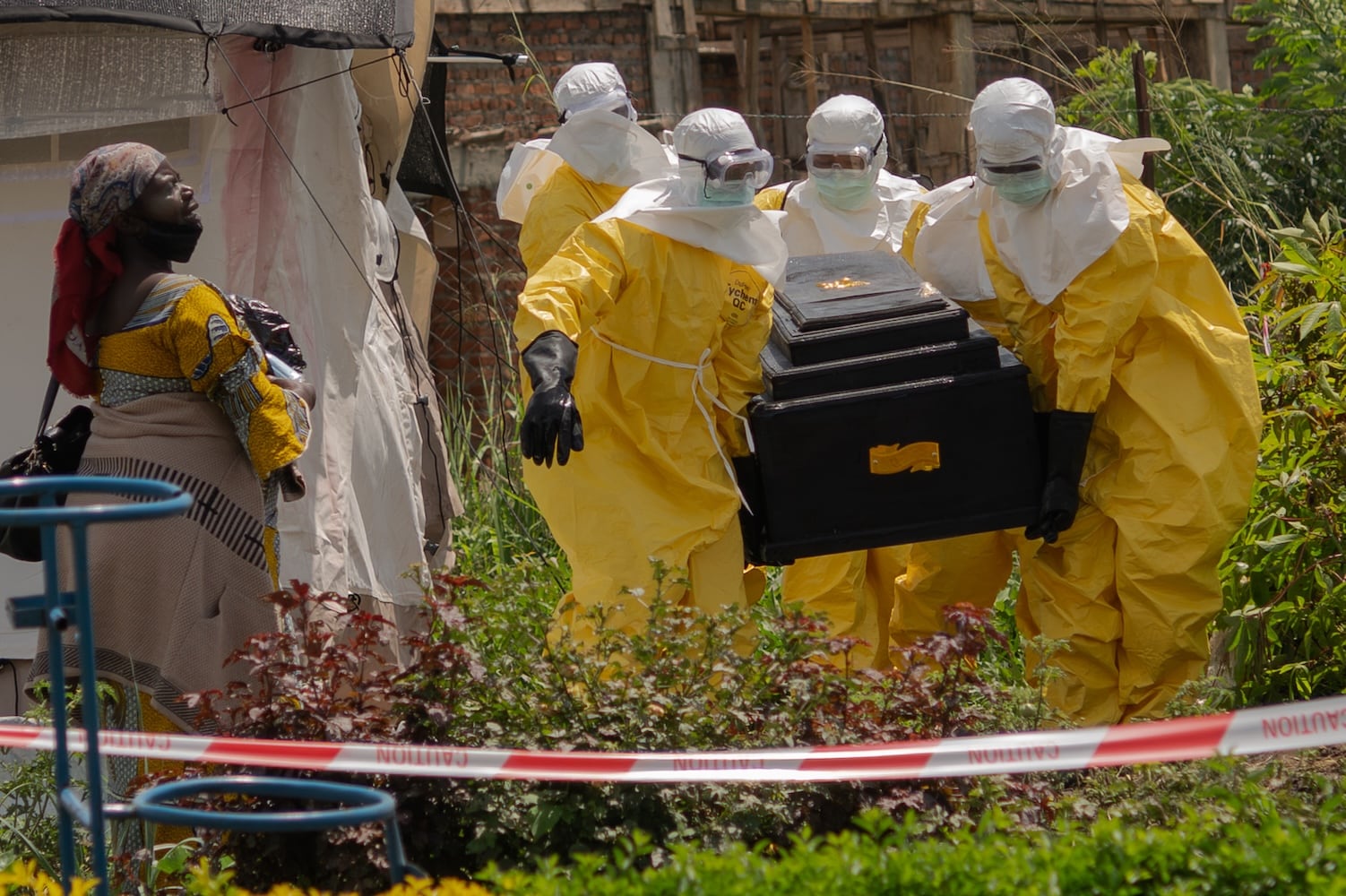
Without a vaccine, containment relies entirely on classic, grueling public health work: isolation, contact tracing, and aggressive hygiene. But even basic defense is failing on the ground. Healthcare workers at Mongbwalu General Hospital report that they are understaffed, undertrained, and terrified. Dr. Richard Lokudu, the hospital’s medical director, warned that patients are scattered across regular wards without proper triage infrastructure. If confirmed cases surge, the staff will have no real protection.
Conflict Meets Contagion
Controlling an epidemic requires trust, movement, and stable logistics. Eastern Congo currently has none of those things. The epicenter in Ituri and North Kivu is actively torn apart by armed conflict.
Just this week, militants linked to the Islamic State group slaughtered 17 people in Alima village, right in the middle of the outbreak zone. In Goma, the Rwanda-backed M23 rebels control major access points. Sending contact tracers into these areas isn't just difficult; it's a suicide mission.
"It's truly sad and painful because we've already been through a security crisis, and now Ebola is here too," says Justin Ndasi, a resident of Bunia.
Local economic opportunism is compounding the dread. Basic supplies are vanishing. Disinfectant that used to cost 2,500 Congolese francs (around $1) has quadrupled in price. Families are left to care for sick relatives without soap, masks, or clean water.
Because women traditionally act as the primary caregivers and handle funeral preparations, they are bearing the brunt of the infection. The WHO reports that 60 percent of the suspected cases are female, mostly between the ages of 20 and 39. It's a disease that weaponizes human compassion.
What Needs to Happen Now
International aid is trickling in, but the response is lagging behind the transmission curve. The U.S. government pledged $23 million to fund 50 emergency clinics, and UNICEF airlifted 16 tons of supplies to Bunia. Soap and water tanks alone won't stop a regional emergency if the underlying strategy doesn't shift immediately.
If you are an international health responder, a local authority, or a regional analyst, containment requires a specific set of non-negotiable operational adjustments.
- Establish Immediate Isolation Triage: Stop sending suspected cases to general hospital wards. Local clinics must construct temporary, isolated tents outside main facilities to screen for fever and bleeding before patients enter common spaces.
- Enforce Universal Border Screening: The border between Ituri and Uganda remains open for trade and mining. Authorities must mandate temperature checks and handwashing stations at every formal and informal crossing point along the frontier.
- Deploy Local Security Escorts for Health Teams: Epidemic response cannot wait for peace treaties. Aid organizations must coordinate with local community leaders and neutral security entities to guarantee safe passage for contact tracing teams in red-zone villages.
- Subsidize Basic Hygiene Goods: Price gouging on soap and bleach will accelerate deaths. Local governments must cap prices on disinfectants or distribute free hygiene kits directly to households in high-density urban zones like Bunia and Goma.