The wind off the Bosphorus carries the scent of salt, roasted chestnuts, and old empires. Standing on the stone ramparts of Istanbul, looking out toward the dark water where Europe meets Asia, you can almost hear the ghost gears of history turning. Empires rise, they contract, and then, quietly, they find each other again in the dark.
Right now, three capitals are drawing very close. Ankara, Islamabad, and Riyadh.
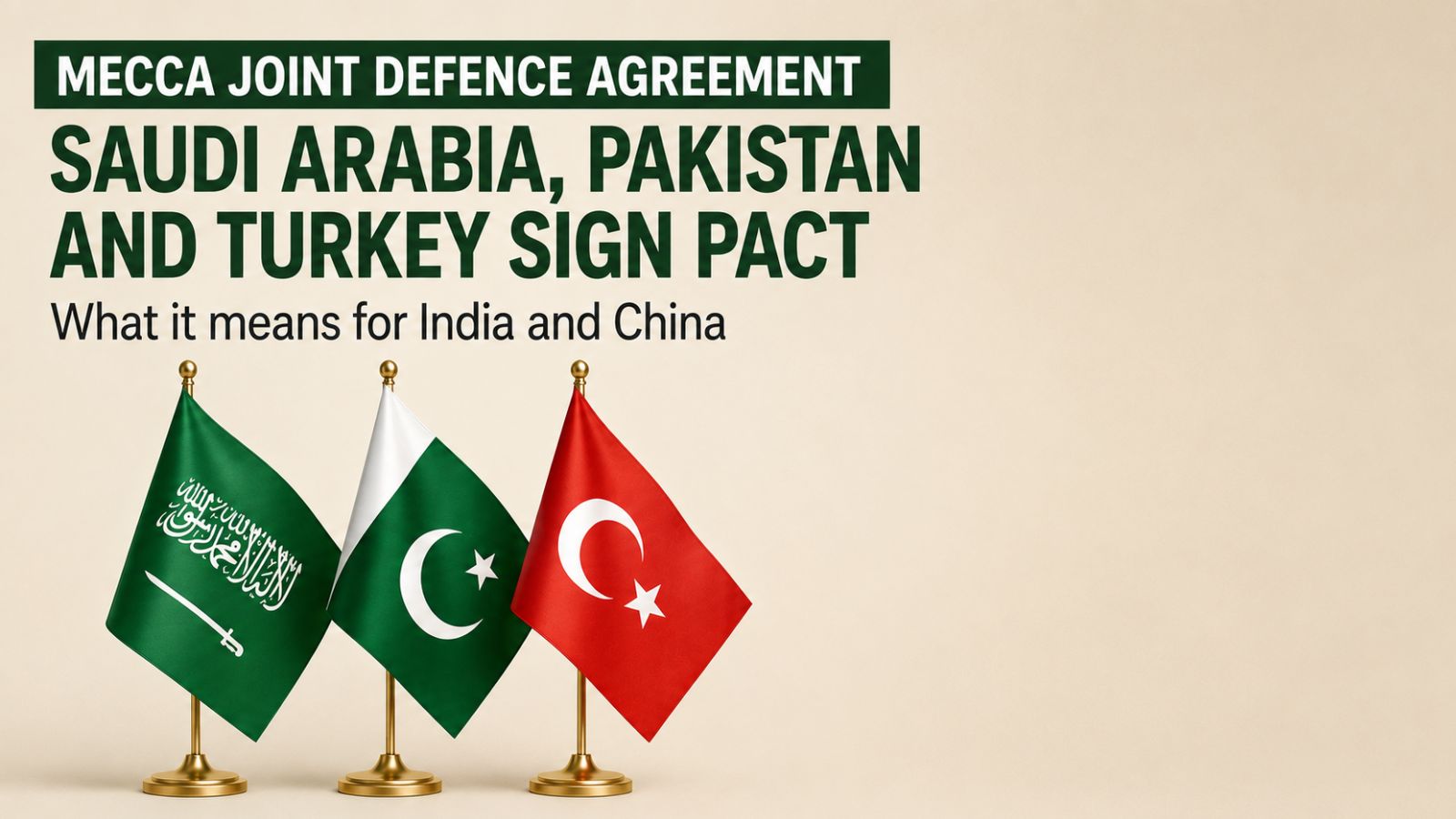
They have just forged a defense pact that looks remarkably like an eastern variant of Article 5. An attack on one is an attack on all. On paper, it is a document signed by bureaucrats in pressed suits. On the ground, it is an earthquake.
To understand why this matters, you have to leave the air-conditioned boardrooms and walk the dusty perimeter of a Pakistani military cantonment, or stand under the blinding desert sun outside Riyadh, or listen to the low hum of drone factories humming in Turkish suburbs. You have to look at the map not as a flat sheet of blue and green, but as a chessboard where the pieces are suddenly moving very fast.
Consider a hypothetical intelligence officer named Tariq sitting in a low-lit office in Rawalpindi. For decades, Pakistan’s security calculus was dictated by its western border with Afghanistan and its perennial, bleeding standoff with India to the east. The United States was a fickle patron, writing checks one decade and slapping sanctions the next. China was a reliable banker, building ports and highways, but Beijing does not fight other people's wars. Beijing buys influence; it does not bleed for it.
So what does Tariq feel when he reads the terms of this new mutual defense agreement? He feels oxygen.
He feels the weight of isolation lift just a fraction. Because now, behind his nation’s struggling economy and fractured politics, stands the industrial might of Turkey’s drone-forged military complex and the bottomless sovereign wealth of Saudi Arabia.
This is not just a treaty. It is an insurance policy written in blood and riyals.
The Architecture of Trust and Steel
Why would a kingdom built on oil, a republic forged in secular nationalism, and a nuclear-armed Islamic state bind their fates together?
Fear is a great unifier. But ambition is an even stronger glue.
For Turkey, President Recep Tayyip Erdogan has spent years projecting power far beyond Anatolia. From the skies of Libya to the mountains of the Caucasus, Turkish Bayraktar drones have rewritten the grammar of modern warfare. But ambition costs money. The Turkish lira has faced brutal inflation, and Ankara needs deep pockets to fund its defense ambitions. Enter Saudi Arabia, flush with cash and eager to diversify its security architecture away from a Washington that increasingly looks east toward the Pacific or inward at its own polarization.
For Pakistan, the equation is economic oxygen paired with strategic depth. A nation balancing on the edge of financial default needs friends who can write checks that the International Monetary Fund respects.
Put these three together, and you have a triad of unmatched regional gravity: Turkey brings the steel and the tactics, Saudi Arabia brings the capital, and Pakistan brings the seasoned military manpower and a nuclear deterrent.
Listen. Can you hear it? That is the sound of traditional regional hierarchies cracking open.
The View from New Delhi and Beijing
When the news hit New Delhi, the tea in the cup went cold.
Imagine a veteran diplomat staring out a window overlooking South Block, watching the monsoon rain blur the stone paths. India’s strategic planners have spent decades managing a two-front dilemma: Pakistan to the west, China to the north. They built their entire foreign policy around managing that tension, cultivating ties with the Gulf monarchies—especially Riyadh and Abu Dhabi—as a diplomatic counterweight to Islamabad.
This new pact shatters that comfort zone.
If Saudi Arabia, India’s prized economic partner and energy supplier, formally links its security apparatus with Pakistan, New Delhi’s diplomatic balancing act becomes an extreme sport. It forces Indian strategists to ask a terrifying question: If a crisis erupts along the Line of Control in Kashmir, does a Saudi-Turkish security umbrella give Islamabad the diplomatic and material impunity to push harder?
And what about Beijing? At first glance, China might smile. After all, anything that distracts Washington or complicates India's grand strategy plays into Beijing's hands. The China-Pakistan Economic Corridor is already the crown jewel of Beijing's Belt and Road Initiative.
Yet, unease lingers in the Forbidden City.
Beijing prefers bilateral dependency. China wants nations to owe China, not each other. When secondary powers organize regional security pacts without Beijing sitting at the head of the table, Chinese planners get nervous. A strong, autonomous Islamic military bloc operating across Central Asia and the Middle East is not something Beijing controls. It is something Beijing must manage.
The Human Cost of the New Alignment
Grand strategy is written by men in suits, but it is paid for by people who wear boots.
Talk to a young conscript patrolling the rugged borderlands between Pakistan and Iran, or a Turkish aerospace engineer pulling a double shift in Ankara to meet export quotas. They do not talk about geopolitical frameworks. They talk about rent, about whether their children will have stable jobs, about the lingering dread that the next border skirmish might be the one that spirals out of control.
When defense pacts are signed, ordinary citizens rarely pop champagne. Instead, they brace themselves. They know that when great and middle powers lock shields, the friction points grow hotter. Proxies become more brazen. Small border incidents turn into diplomatic crises.
We have seen this movie before.
History is littered with the wreckage of mutual defense pacts that promised stability and delivered conflagration. In 1914, a web of interlocking alliances turned a political assassination in Sarajevo into a global butcher's yard because nobody could back down without losing face.
Today's architects of the Turkish-Saudi-Pakistani axis swear this is different. They call it a shield, not a sword. They argue that deterrence prevents war.
Perhaps. But history also suggests that when you build a bigger shield, your neighbors feel compelled to sharpen longer swords.
Walking the Tightrope
The world is no longer unipolar, nor is it neatly bipolar. It is a chaotic, multipolar scramble where middle powers refuse to wait for permission from Washington, Beijing, or Brussels. They are cutting their own deals, hedging their own bets, and building their own fortresses.
This pact is a symptom of a fracturing international order. It tells us that traditional alliances are fraying, and in their place, regional heavyweights are stitching together patchwork quilts of survival.
If you live in Islamabad, you see a lifeline. If you live in Ankara, you see the resurgence of historical destiny. If you live in Riyadh, you see a pragmatic hedge against an unpredictable future.
And if you live in New Delhi or Beijing, you see a new chess piece on a board that just became infinitely more complicated.
The ink on the parchment is dry. The diplomats have smiled for the cameras, shaking hands under chandeliers, posing for history books that have not yet been written.
Now comes the hard part.
Now the rest of the world has to live with the consequences of what happens when three very different, very ambitious nations decide that they are safer together than they are alone. The shadows are lengthening across Asia, and the temperature of the peace is dropping by the hour.


