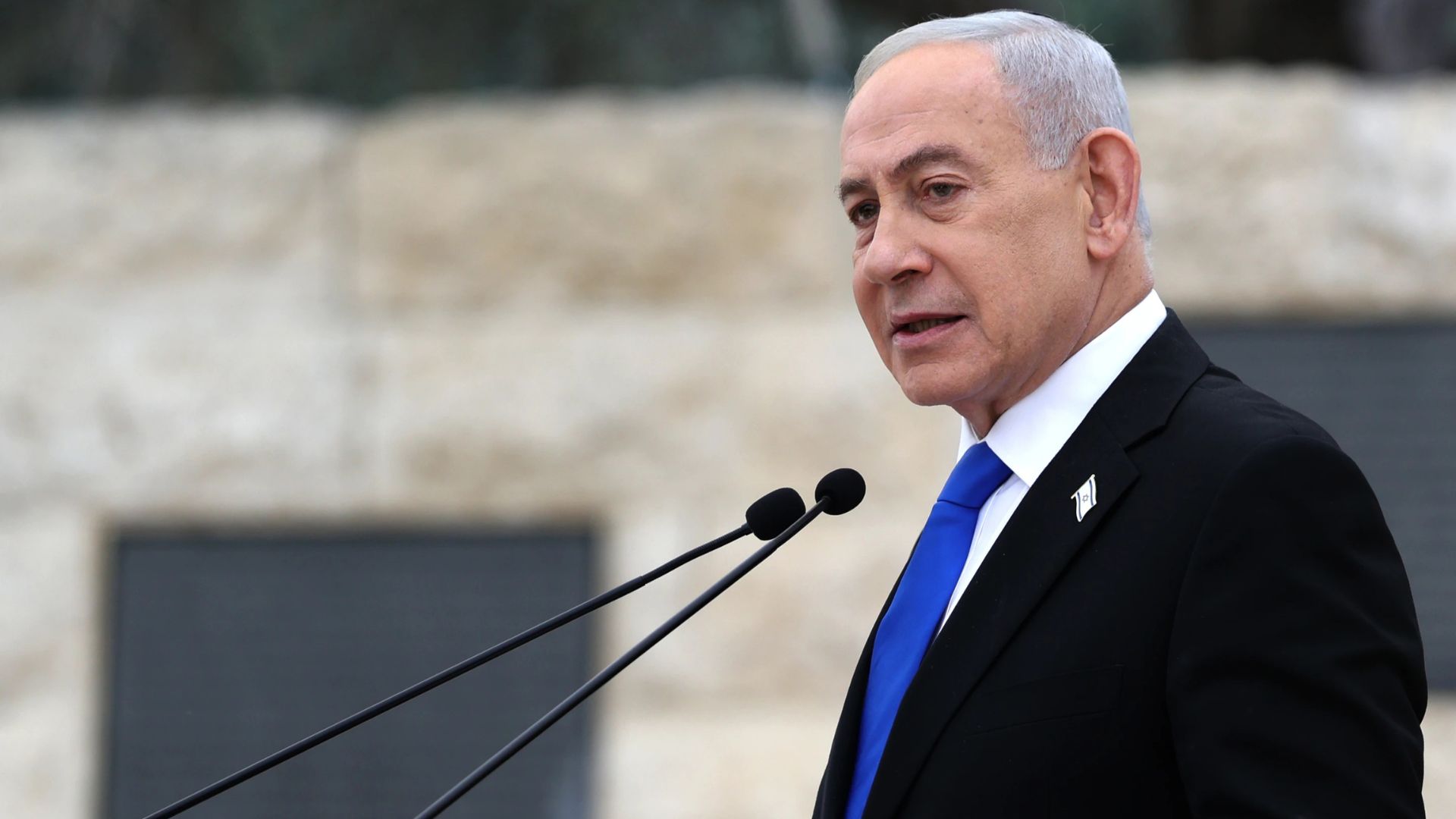
Mainstream newsrooms are currently experiencing a collective panic attack over Benjamin Netanyahu’s late-night admission to Hadassah Ein Kerem hospital. The flashes went off. The headlines screamed about emergency transfers in Jerusalem. The commentary immediately defaulted to the standard, lazy script: an aging leader, a nation in perpetual conflict, and the fragile stability of a Middle Eastern nuclear power hanging by a thread.
They are asking the wrong questions because they are reading the wrong playbook.
The competitor’s rush to frame a routine dental procedure as a harbinger of geopolitical collapse is not just bad journalism. It reveals a fundamental misunderstanding of how political power operates in the modern era. The media treats a leader's body as a direct proxy for the state’s vulnerability. If a prime minister gets a root canal or a crown replaced, the editorial desks treat it like a crack in the foundations of the Western world.
I have watched political analysts blow millions of dollars in television airtime predicting the fall of governments based entirely on a politician's limp or a sudden trip to an oncology ward. It is a sucker's game. Netanyahu’s late-night hospital visit is not a crisis. It is a clinic in operational continuity and narrative control.
The Flawed Premise of the Biological State
The obsession with Netanyahu’s health rests on a fragile assumption: that the strength of the Israeli state is inextricably bound to the cellular health of a 76-year-old man. This is a medieval view of sovereignty. It is the old doctrine of the King's Two Bodies, updated for the 24-hour cable news cycle.
Let us look at the facts instead of the panic. Yes, Netanyahu has a medical history. He had a pacemaker implanted in July 2023. He underwent hernia surgery in early 2024. He recently disclosed that he completed successful radiation therapy for an early-stage prostate tumor.
The media looks at this list and sees a ledger of decline. A real insider looks at this list and sees a machine that is being systematically, meticulously maintained.
Prostate cancer is the most common non-skin cancer among men. According to data from the National Cancer Institute, the 5-year relative survival rate for localized prostate cancer is nearly 100 percent. Treating an early-stage, sub-centimeter tumor with radiation is standard maintenance for an aging executive. It is the biological equivalent of changing the oil in an armored personnel carrier.
Yet, the press treats the delay in his annual medical report as a sinister conspiracy. Netanyahu openly admitted he held back the report during the peak of the recent conflict with Iran to deny Tehran a propaganda victory. This was not a cover-up; it was a tactical informational delay. In statecraft, your medical data is ammunition. You do not hand your adversary a targeting vector when you are actively managing a regional war and brokering complex ceasefires through Washington.
The Mirage of the Power Vacuum
The Pundit Class loves to ask: What happens if the leader falls?
They imagine a chaotic scramble, an immediate breakdown of command, and a nation left defenseless. This is a complete misunderstanding of institutional inertia. Israel is not a fragile banana republic held together by the sheer willpower of one individual. It is a highly institutionalized, bureaucratic military state.
Imagine a scenario where a prime minister is completely incapacitated during a medical procedure. The structural mechanisms of governance do not vanish. The cabinet remains. The Israel Defense Forces (IDF) operate on deeply entrenched doctrines that do not require hourly sign-offs from a single office in Jerusalem. The Shin Bet and Mossad do not stop tracking threats because a political leader is under local anesthesia.
The real danger to a nation is never the temporary physical absence of its executive. The real danger is institutional decay—the rot of civil services, the breakdown of judicial systems, or the loss of military readiness. By focusing entirely on whether Netanyahu is sitting in a dentist's chair or an oncology clinic, the media ignores the actual mechanics of governance that keep the country stable.
The Weaponization of Executive Health
There is a distinct tactical advantage to the way Netanyahu manages his physical vulnerability. By treating his health as a matter of state security rather than public relations, he shifts the leverage back to his office.
When fake, AI-generated images circulated on Iranian state media suggesting the prime minister had died during the war, the Western press panicked. Netanyahu’s response was to ignore the noise, complete his targeted treatments, and drop the clean bill of health precisely when it served his diplomatic agenda—just ahead of high-level meetings at the White House to negotiate long-term security frameworks.
This is the contrarian reality: a leader who openly manages their health as an asset is far more dangerous and effective than one who attempts to project an artificial, flawless facade. The vulnerability is managed, quantified, and neutralized before it can be leveraged by external actors.
Stop analyzing the medical chart. Start analyzing the institutional infrastructure. The next time a headline tells you a leader has been rushed to a hospital for an undisclosed or routine procedure, do not check the stock market or look for signs of a coup. Check the schedule of the deputy ministers, look at the operational readiness of the defense sectors, and recognize the theater for what it is: routine maintenance elevated to drama by a press corps that cannot see the forest for the teeth.
Israel PM Netanyahu cancer treatment update This broadcast outlines the official timeline of Netanyahu's recent medical disclosures and health status, illustrating how executive medical data is strategically managed on the world stage.