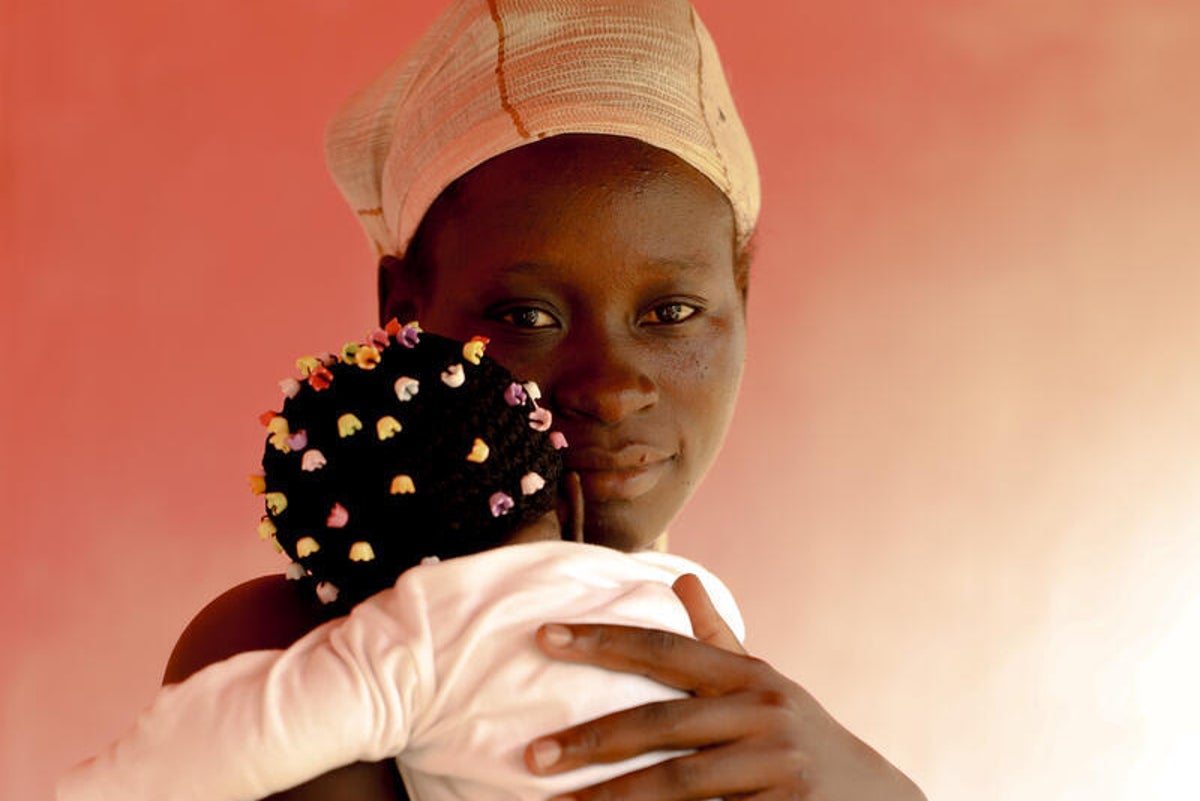
The standard narrative of maternal health in Africa is a well-meaning lie. You have seen the brochures. They feature a grateful mother, a sterile white-tiled room, and a plea for more high-tech hospital beds. The logic seems airtight: Western hospitals have low mortality rates, so we should build Western hospitals everywhere else.
It is a failure of imagination that borders on negligence.
The obsession with "hospital-first" solutions in sub-Saharan Africa—often pushed by well-funded NGOs and celebrity-backed charities—ignores a brutal reality. Centralizing care in massive, urban medical hubs does not solve the mortality crisis; it creates a bottleneck that kills the very people it claims to save. We are exporting a 20th-century model of reactive medicine to a continent that needs 21st-century decentralized prevention.
Stop thinking about hospital beds. Start thinking about the dirt road that leads to them.
The Proximity Paradox
The "lazy consensus" suggests that if we just build more specialized centers, mothers will be safe. I have seen the wreckage of this logic in rural districts where multimillion-dollar facilities sit half-empty while women die in their homes three miles away.
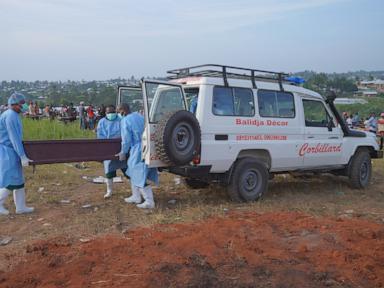
Why? Because a hospital is useless if the infrastructure around it is non-existent. When a woman in labor faces a six-hour journey on the back of a motorbike or a three-day walk, the "gold standard" of hospital care is a fantasy. By the time she reaches that sterile room, the window for intervention has closed.
The data supports a uncomfortable truth: Outcomes are often better when resources are stripped from the central hospital and pushed into the community. In many regions, the "referral system" is a death sentence. When a local clinic identifies a complication, they send the mother to the city. That transition—the transport, the handoff, the cost—is where the mortality rate spikes. We are obsessed with the destination when we should be obsessed with the transit.
The Myth of the "High-Tech" Fix
Donors love shiny objects. It is easy to fundraise for a $50,000 incubator. It is much harder to fundraise for the salary of a midwife who walks ten miles a day to check on prenatal nutrition.
Here is the problem with the high-tech fetish:
- Maintenance: Most high-end medical equipment in rural Africa breaks within 18 months. There are no spare parts and no specialized technicians.
- Electricity: You cannot run a neonatal intensive care unit on a grid that flickers out four times a day without an expensive, diesel-chugging backup system.
- Brain Drain: When you build one massive "center of excellence," you pull every skilled nurse and doctor out of the surrounding villages. You create a "health desert" in the countryside to staff a single oasis in the city.
We are treating the symptom of poverty with the tools of the elite. It is like trying to fix a drought by installing a gold-plated faucet in a dry well.
Dismantling the Expert Monopoly
The current maternal health "landscape"—if we must use a term for this messy reality—is dominated by an ivory-tower obsession with MD-led care. This is a bottleneck of our own making.
In the West, we have been conditioned to believe that birth is a medical emergency that requires a surgeon. In much of Africa, birth is a social reality that requires a community. When we tell African mothers that their only hope is a distant hospital staffed by people who don't speak their local dialect, we don't build trust. We build fear.
Task-Shifting: The Only Real Solution
The most effective way to lower maternal mortality is not more doctors. It is Task-Shifting.
This is the process of delegating clinical tasks from higher-to-lower qualified health workers. It sounds "lesser than" to a Western ear, but the results are undeniable. In countries like Mozambique, non-physician clinicians—trained specifically in emergency obstetric surgery—perform C-sections with outcomes comparable to fully-trained MDs.
Yet, we see constant pushback from medical boards and international regulators who claim this "lowers the standard of care."
The "standard of care" is currently death. Let’s be blunt: A "lower-qualified" health worker who is present at the birth is infinitely better than a "highly-qualified" surgeon who is 100 miles away.
The contrarian move? Stop funding medical schools for a decade and put every cent into massive, localized training for community health workers (CHWs).
The Economics of Birth: Who Actually Benefits?
We need to talk about where the money goes. The "charity-industrial complex" thrives on the status quo.
Large NGOs have a vested interest in maintaining the "crisis" narrative because it fuels the donation cycle. When they build a hospital, they get a plaque and a photo op. If they spent that same money improving the nutritional quality of local crops to prevent maternal anemia, there would be no ribbon-cutting ceremony.
The Financial Fallout for the Mother:
- Catastrophic Spending: Even when care is technically "free," the cost of transport, lost wages for the husband, and the "under-the-table" tips required to get a bed can bankrupt a family for three generations.
- The Opportunity Cost: Resources poured into urban hospitals are resources stolen from primary prevention.
We are essentially building "Repair Shops" for humans. It is more expensive and less effective than keeping the "machine" running well in the first place. If we actually wanted to help mothers, we would stop obsessing over the 1% of births that go catastrophically wrong and start fixing the 99% of lives that are lived in crushing poverty before the pregnancy even begins.
The Dark Side of Modernization
There is a patronizing assumption that African traditional birth attendants (TBAs) are "the problem."
For decades, international organizations have tried to ban or sideline TBAs, labeling them as unhygienic or superstitious. This was a catastrophic strategic error. These women are the backbone of rural society. They are already in the room. They have the trust of the mother.
When you ban the TBA, you don't magically make the mother go to the hospital. You just make the birth happen in the shadows, without any oversight at all.
The "superior" model—one that is finally gaining some begrudging traction—is to treat the TBA as the primary scout. Give them basic training, clean kits, and a mobile phone. Pay them for every mother they bring into the formal prenatal system.
The status quo treats these women as obstacles. The reality is they are the only viable infrastructure we have.
Stop Asking "How Can We Help?"
People often ask: "What can I do to help mothers in Africa?"
Usually, they want a link to a GoFundMe for a new wing of a hospital. They want to feel like they are "saving" someone. This is the wrong question. It’s the "white savior" reflex applied to clinical medicine.
The right question is: "Why are we forcing Western medical structures onto a geography that cannot sustain them?"
If you want to move the needle, you have to support the unsexy stuff:
- Mobile Health (mHealth): Using SMS and basic data to track high-risk pregnancies in real-time. It’s cheap, it’s scalable, and it works on a $20 phone.
- Voucher Systems: Giving mothers direct cash transfers to cover the cost of transport and food. If the obstacle is a $10 motorbike ride, a million-dollar hospital is irrelevant.
- Blood Cold-Chains: Postpartum hemorrhage is the leading killer. You don't need a surgeon to stop it; you need blood and the ability to keep it cold in a village with no power.
The Trade-Offs
Is my approach "dangerous"? Some would say yes. They would argue that pushing care into the hands of less-trained community members increases the risk of error.
They are right. There will be errors.
But we are currently trading "the risk of error" for "the certainty of death" for millions of women. Choosing the "perfect" hospital model for the few means abandoning the "good enough" community model for the many. It is a moral failure masked as a medical standard.
We have spent fifty years trying to build a healthcare system from the top down. It hasn't worked. The mortality rates in many African nations have stagnated or only moved at a glacial pace compared to the billions of dollars injected into the system.
It is time to burn the blueprints for the urban hospitals. It is time to stop the "grateful mother" PR campaigns. The African mother doesn't need your charity; she needs a system that isn't designed to fail her by being geographically and economically impossible to reach.
The era of the "Center of Excellence" must end. The era of the "Community of Sufficiency" must begin.
Stop building monuments to Western medicine in the middle of health deserts. Train the woman who is already there. Give her a phone, a bike, and the authority to act.
Get out of the way.