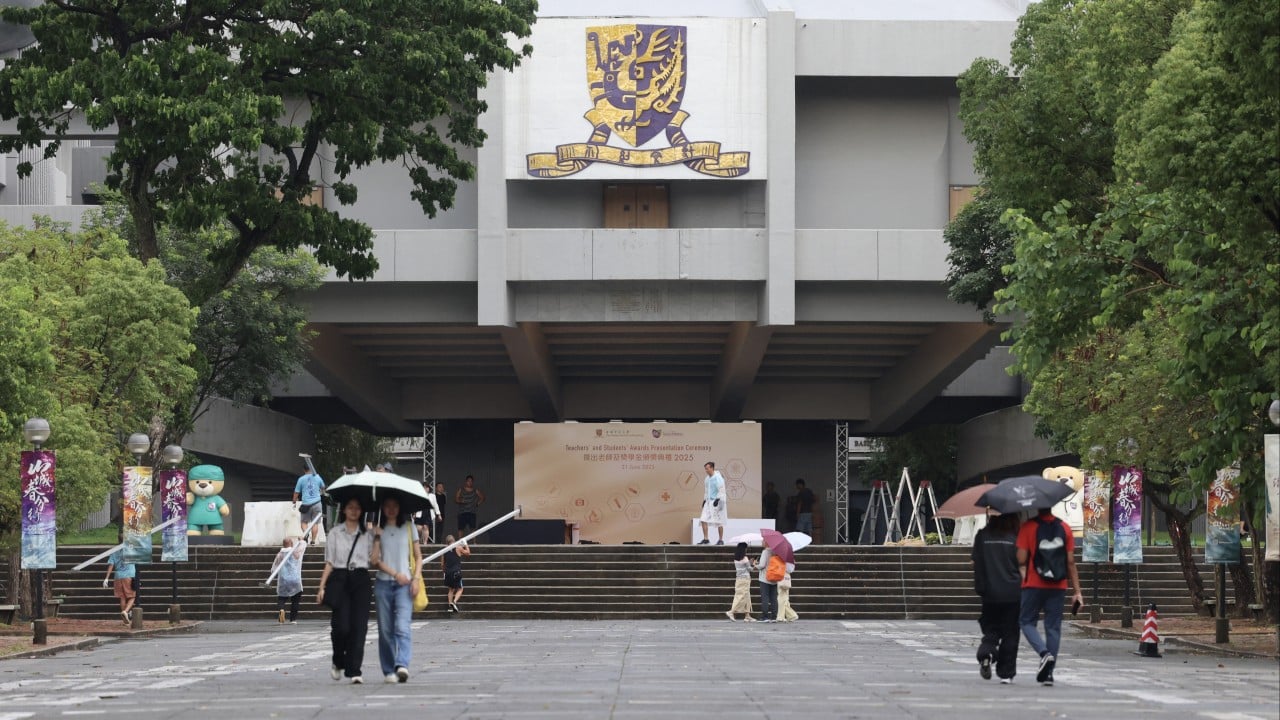
Imagine running a multi-billion-dollar research university, only to find out your board of governors wants the power to fire you and your top deputies without holding a formal inquiry first. That is the exact scenario playing out right now at the Chinese University of Hong Kong (CUHK).
Four Hong Kong lawmakers who sit on CUHK's governing council just submitted a private member's bill to the Legislative Council (LegCo). Their proposal, titled The Chinese University of Hong Kong (Amendment) Bill 2026, aims to rewrite the university's foundational statutes. If passed, the council will gain sweeping authority to remove senior executives—including the vice-chancellor, provost, and pro-vice-chancellors—for "good cause" without going through the traditional, drawn-out committee investigation mechanisms that have protected academic leadership since 1976.
Most news coverage treats this like another dry administrative tweak. It isn't. This bill fundamentally shifts the balance of power inside one of Asia's top universities, stripping away procedural buffers that were originally designed to insulate academic governance from sudden political or boardroom pressure.
What the Proposed CUHK Rule Change Actually Does
To understand why faculty and alumni are watching this so closely, you have to look at how the current rules work versus what the 2026 amendment bill puts on the table.
Under the existing CUHK Ordinance, which has remained largely untouched since 1976, firing a senior university leader isn't something a council can do on a whim during an afternoon meeting. Historically, removing top administrators required strict procedural steps, including formal inquiries and specific thresholds defined within the university's statutes.
The new bill, outlined in LegCo paper CB(3)1413/2026(01) and scheduled for discussion by the Panel on Education on December 4, 2026, changes that structure in three major ways.
- Direct Dismissal Authority: It moves the appointment and removal procedures for the vice-chancellor (the university president), provost, pro-vice-chancellors, and vice-presidents directly into the main body of the ordinance.
- Broadened Grounds for Removal: Back in May 2026, when the university first signaled these reforms, administrators noted they wanted to expand dismissal grounds to explicitly include misconduct, incompetence, and inefficiency. The council can act if it determines "good cause" exists.
- Eliminating Mandatory Inquiries: Instead of triggering a separate, independent investigative tribunal before a termination vote can happen, the council itself becomes the judge and jury on whether a senior leader has failed in their duties.
Let's be honest about what this means in practice. When you remove a mandatory inquiry step, you aren't just cutting red tape. You are removing the time, transparency, and evidentiary burden required to prove an executive actually did something wrong.
Why Four Lawmakers Are Pushing This Now
You might wonder why legislators are drafting rules for a university's internal HR policies. In Hong Kong, the governance structure of publicly funded universities ties directly into the legislature.
Four lawmakers—Bill Tang Ka-piu, Ben Chan Han-pan, Nicholas Chan Hiu-fung, and Jonathan Leung Chun—also serve as members of the CUHK Council. Because CUHK was established by statute under the 1963 Ordinance, major structural changes to its governance can't just be voted on internally by professors. They have to go through LegCo.
This isn't happening in a vacuum. Over the past few years, CUHK has been the epicenter of intense governance battles. Remember the abrupt termination of former vice-president and council secretary Eric Ng Shu-pui, or the early departure of former president Rocky Tuan? Those episodes exposed deep friction between the university's executive management and its council members.
In 2023, LegCo already overhauled the composition of the CUHK Council, shrinking its overall size and increasing the proportion of external members relative to internal academic staff. That reform gave external council members—including lawmakers—the voting majority. This 2026 bill is the logical next step in that exact same playbook. First, you change who sits on the board. Next, you give that board direct firing power over the executives who run the campus.
Supporters of the bill argue that modernizing a 50-year-old ordinance is overdue. They frame the amendments as a basic corporate governance upgrade. In the private sector, a board of directors doesn't need to convene a six-month quasi-judicial inquiry to fire a CEO who isn't performing. Lawmakers defending the bill insist it strengthens accountability and brings CUHK's management rules in line with contemporary standards.
The Hidden Risks of Bypassing Formal Inquiries
Applying corporate boardroom logic to a research university sounds tidy on paper, but it breaks down fast when you look at how higher education actually works.
Universities aren't tech startups or retail chains. A university president has to balance competing demands from tenured faculty, government funding bodies, donors, and students. Sometimes, protecting academic standards or research integrity requires telling powerful external stakeholders "no."
The Chilling Effect on Leadership
If a provost or vice-president knows they can be dismissed for "inefficiency" without an independent inquiry to test the evidence, their incentives change overnight. Self-preservation takes over. Instead of defending academic freedom or pushing back against unrealistic political or financial demands, senior administrators become risk-averse bureaucrats trying to keep council members happy.
Defining "Inefficiency" Is Subjective
Misconduct—like fraud or harassment—is relatively clear-cut. Inefficiency is completely subjective. If a major infrastructure project faces delays, or if a university's global ranking dips by two spots, is that "inefficiency" worthy of summary dismissal? Without a formal inquiry process where an executive can present context and evidence, "inefficiency" becomes a catch-all excuse to remove anyone who falls out of favor with the council majority.
Recruitment Challenges for Global Talent
Hong Kong's universities compete globally for top-tier academic leaders. When international candidates look at a job offer in Hong Kong, they examine the governance protections in the university's charter. Knowing that a governing board can oust you without an inquiry makes CUHK a much harder sell for world-class provosts and vice-chancellors who have safer options in Singapore, the UK, or North America.
It's Not Just About Firing Executives
While the dismissal rule grabs the headlines, burying your focus there means missing other major structural shifts tucked into the same legislative package.
The 2026 amendment bill also moves to abolish the existing CUHK Convocation—the statutory body representing all graduates of the university—and replace it with an "Alumni Advisory Board" (also referred to in drafts as an Alumni Advisory Committee).
That distinction matters more than you might think. A statutory convocation has independent standing and a historical role in electing representatives and voicing graduate concerns. An advisory board, by contrast, exists largely to offer input when asked. Replacing an autonomous alumni body with an advisory committee fits the broader pattern of centralizing authority squarely inside the council.
On top of that, earlier iterations of the university's statute overhaul included strict controls over the CUHK name and brand, prohibiting any group from presenting itself as representing the university without written council consent.
Sloppy Drafting Exposed During the Rollout
Even if you agree with the lawmakers' goal of tightening university accountability, the execution of this bill has already hit an embarrassing snag.
Almost immediately after the draft text in paper CB(3)1413/2026(01) went public, campus watchdogs—specifically the CUHK Governance Concern Group—pointed out glaring typos and text errors throughout the document.
In the Chinese text, basic legal terms were mangled. The word for "forged" or "fabricated" academic qualifications was miswritten using a wrong character, and the term for "revoke" or "rescind" contained a typo. Even the English title of the legislation itself contained a duplicated word, reading "The The Chinese University of Hong Kong Ordinance".
Lawmaker Bill Tang Ka-piu acknowledged the errors and said the council welcomed feedback to clean up the text before formal submission. Fellow council member and lawmaker Jonathan Leung Chun explained that the draft had gone through ten to twenty rounds of revisions inside CUHK, which led to proofreading slips.
Still, when you are rewriting the constitutional document of a premier institution to strip away due-process protections for its leaders, seeing basic proofreading failures in the legislative text doesn't inspire confidence. It makes the process look rushed rather than carefully deliberated.
How CUHK Compares to Other Hong Kong Universities
Hong Kong has eight publicly funded universities under the University Grants Committee (UGC), and governance reforms have swept across several of them over the last decade.
At the University of Hong Kong (HKU), governance clashes over council appointments and senior management vetoes have made headlines for years. Other local institutions have similarly tightened administrative oversight, and student unions across six of the eight UGC-funded universities—including CUHK and HKU—have effectively disbanded or lost institutional recognition.
CUHK has always been slightly different because of its collegiate system. Founded in 1963 through the merger of New Asia College, Chung Chi College, and United College, CUHK was built on a federal model that distributed power across colleges, the Senate, and the Council. That decentralized culture is precisely why the 2023 council restructuring and this 2026 dismissal bill feel so jarring to long-time faculty and graduates. Each legislative tweak chips away at the shared-governance model that defined the campus for half a century.
What Happens Next in LegCo and How to Track It
The bill isn't law yet, and there is still a narrow window where stakeholders can scrutinize the exact language before it passes.
Here is what happens over the coming weeks and how anyone connected to the university—whether you are an alumnus, faculty member, or higher-education observer—can follow the process:
- Watch the December 4 Panel Meeting: The LegCo Panel on Education is scheduled to discuss the proposed amendments on December 4, 2026. Pay close attention to whether lawmakers question the removal of inquiry procedures or focus solely on cleaning up the drafting typos.
- Read the Revised Bill Text: Before the bill goes through its First, Second, and Third Readings in the full council, the secretariat will have to publish a corrected version fixing the errors in CB(3)1413/2026(01). Compare the revised clauses on "good cause" against the 1976 statutes to see if any minimum notice periods or defense rights for accused administrators are added back in.
- Monitor Alumni Reactions: With the statutory Convocation slated to be replaced by an Alumni Advisory Board, watch how existing alumni associations respond prior to the formal bills committee stage. Once a private member's bill clears the panel stage and enters formal readings in LegCo, amendments become much harder to secure without backing from the four sponsoring council members.
Keep a close eye on the LegCo Education Panel agenda on December 4. Once that meeting wraps up, the timeline for pushing the bill through its formal legislative readings will become clear, and CUHK's senior leadership will know whether their job security is about to rest entirely on a council majority vote.