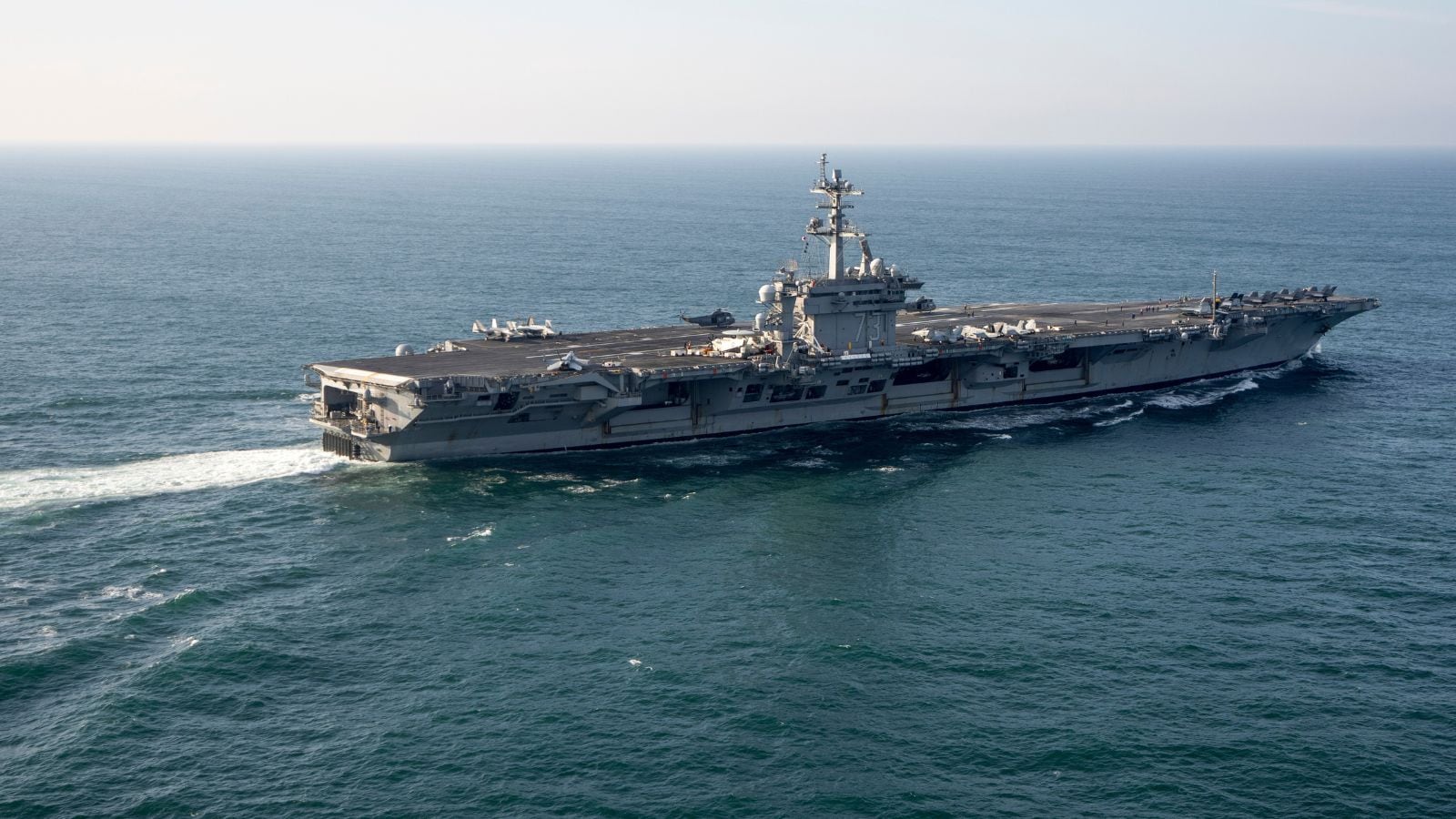
Carrier strike group deployments operate on a fragile equilibrium of asset availability, maintenance cycles, and geopolitical demand signals. When the USS George Washington transitions to West Asia to relieve the USS Abraham Lincoln, the maneuver reflects far more than a routine operational swap. It highlights systemic strain in naval force management, chronic maintenance backlogs, and the hidden costs of extended operational tempos on human capital and hardware.
The underlying mechanics driving this redeployment reveal deep vulnerabilities in how maritime power projection is sustained over extended timelines. Strategic planners face an intractable optimization problem: balancing an insatiable demand for forward presence against finite hulls, qualified personnel, and dry-dock capacity.
The Operational Mechanics of Carrier Relief Operations
Naval logistics dictate that a carrier strike group cannot remain on station indefinitely without facing severe degradation in operational readiness. The lifecycle of a nuclear-powered aircraft carrier is bound by strict regulatory and engineering limitations, primarily centered on reactor core maintenance, air wing flight-hour caps, and structural fatigue thresholds on the flight deck and arresting gear.
When a relief operation occurs under duress or accelerated timelines, it exposes friction within the Optimized Fleet Response Plan. The OFRP is designed to cycle strike groups through maintenance, basic phase training, integrated training, and deployment phases in a predictable twenty-four to thirty-six-month window.
[Maintenance Phase] -> [Basic Training] -> [Integrated Phase] -> [Deployment Window] -> [Sustainment / Surge]
When regional crises compress the maintenance window or extend deployment lengths beyond the standard six to eight months, the entire pipeline destabilizes. The incoming carrier absorbs the deficit created by its predecessor's extended tour, while the outgoing carrier returns to port requiring extensive overhauls rather than routine maintenance. This compression creates a cascading deficit across subsequent deployment cycles, reducing the pool of available strike groups for future contingencies.
Human Capital Degradation and Retention Costs
The operational strain of extended deployments manifests most acutely in crew fatigue and personnel retention metrics. Modern aircraft carriers house thousands of sailors operating in high-stress, high-tempo environments where cognitive errors carry catastrophic safety risks.
Extended deployments disrupt personal lives, degrade morale, and accelerate burnout across critical technical ratings. Nuclear operators, aviation boatswain mates, air traffic controllers, and electronic technicians face relentless watch rotations. The institutional knowledge lost when exhausted sailors leave active service upon contract completion represents a far greater threat to naval capability than temporary equipment failures.
Retention loss creates a structural vacuum. Junior sailors who experience chronic deployment extensions often choose separation over reenlistment. Replacing these specialists requires years of specialized pipeline training, during which shipboard proficiency remains depressed. The hidden cost of maintaining continuous presence in West Asia is paid in the long-term erosion of technical expertise across the fleet.
Equipment Fatigue and Maintenance Deficits
Beyond human capital, high-tempo rotations accelerate material degradation. Saltwater environments, continuous flight operations, and sustained propulsion demands exact a heavy toll on shipboard infrastructure.
Catapults, arresting gear, radar arrays, and propulsion plants operate at high utilization rates during combat-coded deployments. When transit schedules are accelerated to execute handoffs between incoming and outgoing hulls, maintenance windows are squeezed. Depots experience backlogs, and intermediate-level maintenance teams must perform complex repairs at sea or during truncated port visits rather than in controlled shipyard environments.
This reactive maintenance posture increases the probability of equipment failure. A propulsion anomaly or combat system fault that might be addressed comprehensively during a scheduled shipyard availability becomes a chronic operational restriction when the ship is required to maintain a forward posture under strategic pressure.
Strategic Opportunity Costs and Global Posture Balances
Shifting a major naval asset from one theater to another alters the global balance of maritime deterrence. The decision to redeploy the USS George Washington to West Asia means that its presence is subtracted from its previous posture, creating potential vulnerabilities or forcing allied navies to assume a heavier security burden in other strategic zones.
Global naval architecture relies on a delicate calculus of distributed presence. When finite assets are constantly pulled toward acute regional crises, strategic reserves evaporate. This dynamic leaves command authorities with fewer options when simultaneous friction points emerge in separate geographic domains.
The allocation of maritime power is fundamentally an exercise in risk management. By prioritizing continuous strike group presence in West Asia to mitigate immediate security concerns, naval planners accept elevated risk regarding deferred maintenance, crew fatigue accumulation, and reduced response capacity elsewhere.
Operational Execution
Optimize scheduling algorithms to factor in crew exhaustion coefficients alongside mechanical flight-hour limits during strike group rotations. Prioritize predictable maintenance windows over arbitrary presence metrics to protect long-term fleet integrity. Expand regional maintenance hubs to reduce transit times and minimize off-station periods required for intermediate repairs.