The Optics of Empty Noise
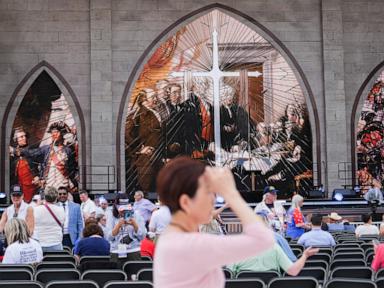
Thousands of people gathered on the National Mall. They waved flags, shed tears, and chanted prayers under the Washington sky. The mainstream media covers it as a "massive cultural flashpoint." The organizers call it a "historic awakening."
They are both wrong.
What happened in Washington was not a demonstration of cultural power. It was an expensive exercise in self-soothing.
For decades, political and religious organizers have operated under a flawed premise: that gathering a massive crowd in a visible place creates a mandate for societal change. It does not. In the modern attention economy, the mass rally is an obsolete format. It serves the egos of the speakers and the emotional needs of the attendees while failing to move the needle on a single policy, cultural norm, or institutional structure.
We need to stop treating mass gatherings as metrics of success. They are lagging indicators of an echo chamber.
The Flawed Premise of the "National Mall Mandate"
The standard narrative surrounding these events relies on a lazy assumption: visibility equals influence. Organizers believe that if you fill the space between the Capitol and the Washington Monument, the sheer gravity of human bodies will force institutional capitulation.
This strategy misunderstands how modern power operates.
Power does not care about your weekend gathering. Power resides in institutional architecture—in the civil service, corporate boardrooms, legal faculties, and administrative systems that govern daily life. A crowd on the Mall is temporary; bureaucracy is permanent.
When thousands of people leave their homes, buy plane tickets, and stand outside for six hours, they are spending significant social and financial capital. What is the return on investment? Historically, it is near zero. The classic civil rights marches of the 1960s succeeded not because they gathered crowds, but because those crowds were the public face of a highly organized, legally sophisticated, and economically disruptive boycott apparatus. The march was the exclamation point, not the sentence. Today’s rallies are all punctuation with no text.
The Dopamine Trap of the Echo Chamber
Why do people still show up? Because the psychological reward is immediate and addictive.
Standing in a crowd of like-minded individuals creates an intense feeling of validation. You feel part of a movement. You feel powerful. But this is a psychological illusion.
- Validation is not Victory: Feeling like you are winning because you are surrounded by people who agree with you is a primary symptom of insularity.
- The Cost of Complacency: When an attendee goes home after a rally, they feel they have "done their part." This emotional release reduces the likelihood of them engaging in the difficult, unglamorous, day-to-day local organizing that actually changes communities.
- The Spectacle Economy: These events are built as entertainment products. They feature high-end sound systems, celebrity speakers, and curated social media moments. They are designed to produce content, not change.
Dismantling the "People Also Ask" Assumptions
To understand why these events fail, we have to look at the questions people routinely ask about them—and correct the flawed premises built into those very questions.
Does a massive rally show national unity?
No. It shows high-density polarization. A gathering of thousands of people who already hold identical beliefs does nothing to bridge cultural divides. In fact, it hardens them. To the outsider, a massive display of ideological fervor looks exclusionary, not inviting. It signals to the rest of the country that your group is a distinct political faction to be resisted, rather than a community to be joined.
Do politicians listen to large demonstrations?
Only if the crowd represents a swing vote that can unseat them in the next primary. For the most part, politicians use these rallies as backdrops for their own fundraising efforts. If a politician already agrees with the rally's message, the event is redundant. If they disagree, the rally validates their opposition, allowing them to point to the crowd and tell their own base, "Look at who is trying to take over our country."
Isn't prayer outside of a church inherently impactful?
Moving an activity from a private building to a public park changes its political context, not its spiritual efficacy. When prayer becomes a public spectacle on the National Mall, it is inevitably interpreted through the lens of political theater. The medium becomes the message. The spiritual intent is swallowed by the secular architecture of the space.
The Mechanistic Failure of Mass Mobilization
Let’s look at the logistics of how these events function. Imagine a scenario where an organization spends $2 million on stage production, security, permits, and marketing to bring 50,000 people to Washington.
The immediate result is a brief spike in social media impressions. Perhaps a two-minute segment on a cable news network that already caters to that specific demographic. By Monday morning, the news cycle has moved on. The stage is dismantled. The trash is cleared.
Now, look at the counter-factual. What happens if that same $2 million, along with the collective energy of those 50,000 people, is diverted away from the National Mall?
| Destination of Resources | Short-Term Outcome | Long-Term Systemic Impact |
|---|---|---|
| Mass Rally on the Mall | High emotional energy, media blip, immediate dissipation. | Zero structural change, attendee burnout. |
| Local School Board Engagement | Quiet, unglamorous participation in local governance. | Direct control over regional educational policy. |
| Independent Media Infrastructure | Development of alternative platforms and publishing houses. | Long-term breaking of legacy media monopolies. |
| Legal Advocacy Endowments | Funding strategic litigation and training young attorneys. | Hard legal precedents that bind courts for decades. |
The table illustrates the fundamental mistake of modern activism: prioritizing expression over execution. The rally is an expressive act. It tells the world what you think. It does nothing to change what the world actually does.
The Architecture of True Influence
If mass rallies are dead weight, what works? The answer lies in looking at the groups that actually shape society. They do not hold massive outdoor festivals. They operate quietly, precisely, and with institutional focus.
Institutional Penetration
Consider the legal landscape. The shift in American jurisprudence over the last thirty years did not happen because people marched outside the Supreme Court. It happened because organizations like the Federalist Society spent decades quietly identifying, training, and promoting conservative lawyers from the moment they entered law school. They built an intellectual infrastructure that eventually populated the courts. That is how you change a nation. It is slow, boring, and utterly devoid of dopamine.
Localized Density
Real cultural change is hyper-local. A community of 500 people who deeply integrate their values into a specific town, school district, or local economy will have a greater systemic impact than 50,000 people who scatter across the country after a weekend in Washington. Density matters more than total volume. When your values are embedded in local commerce, local government, and local civic institutions, you create a resilient ecosystem that survives national political shifts.
Economic Self-Sufficiency
True leverage comes from the ability to say "no" to hostile systems. This requires economic independence. Instead of spending money to travel to a rally, individuals should invest that capital into building parallel supply chains, independent local businesses, and community-funded support systems. When a group can feed, employ, and educate its own people without relying on institutions that despise their values, they possess real power. A crowd on the Mall possesses nothing but a sign.
The Cost of the Counterfeit
The greatest danger of the National Mall rally is that it provides a cheap counterfeit of victory. It satisfies the hunger for action without requiring any real sacrifice or sustained effort. It allows people to feel like revolutionaries while remaining completely harmless to the status quo.
Organizers will continue to plan these events because they are highly lucrative. They generate massive donor lists, elevate the profiles of the speakers, and create compelling b-roll for future fundraising videos. The attendees will continue to show up because they want to feel less alone in a culture that feels increasingly hostile to their worldview.
But let’s be clear about what is actually happening. The crowd on the Mall is not an army marching to battle. It is a choir singing inside a locked room. The music is loud, the harmonies are beautiful, but the walls are thick, and the people outside cannot hear a thing.
Stop marching. Stop waving signs. Stop looking for validation from a city that operates on entirely different rules of power. Go home, look at your local precinct, your local school board, and your local economy. Build something permanent there. Leave the Mall to the tourists.