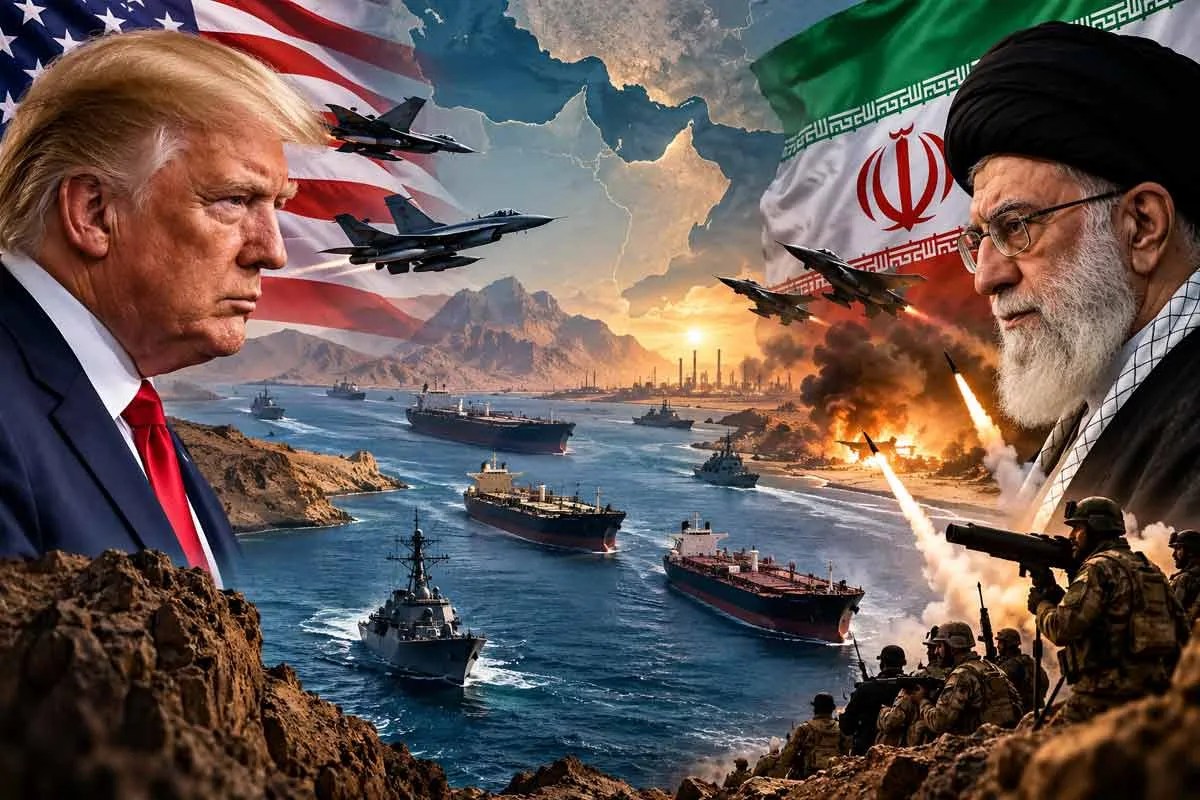
Salt crusts on the steel rail of a cargo deck before dawn. Down on the bridge of a supertanker—a vessel three football fields long, riding low with millions of barrels of crude—the hum of diesel generators vibrates through the soles of the watch officer's boots. Outside, the water between Iran and Oman narrows to a throat roughly twenty-one miles wide at its tightest point, with shipping lanes only a couple of miles across in each direction.
Quiet.
That is the word sailors dread most when tension spikes between Washington and Tehran. Not sirens. Not explosions. Just a sudden stillness where radio channels fill with clipped warnings, commercial insurers start rewriting war-risk clauses overnight, and diplomats in distant capitals read hardened demands across a table that has stopped moving.
When headlines report that the Strait of Hormuz is shut, talks between Iran and the United States have hit a wall, and Tehran has laid down stiff conditions before stepping back, it is easy to treat the story like weather on a screen. Another geopolitical storm. Another exchange of red lines. Yet this waterway is not an abstract line on a map. Roughly a fifth of global petroleum liquids consumption—around twenty million barrels a day in normal times, alongside massive volumes of liquefied natural gas—passes through this funnel connecting the Persian Gulf to the Gulf of Oman and the open ocean.
I have stood on coastal docks in warm port cities watching tankers queue offshore while harbor masters waited on clearances, smelled the sharp metallic tang of bunker fuel drifting across a harbor, and seen how fast a delay on water turns into a price tag at a corner gas station thousands of miles away. Even when you know the economics cold, standing beside a vessel that cannot move makes the fragility of modern life feel personal.
A Hypothetical Morning on a Stalled Bridge
To see how a diplomatic stalemate turns into human pressure, consider a hypothetical scenario set during a tense standoff in the Persian Gulf.
Hypothetical character: Captain Tariq Al-Mansoor, a seasoned mariner commanding a crude carrier waiting outside the shipping lane, and Priya Nair, a supply-chain planner in Mumbai tracking incoming feedstock for a regional refinery.
At 04:10 local time, Tariq checks his bridge display. Vessel traffic ahead has thinned to a trickle. Patrol craft sit on radar near the narrowest choke point, and encrypted advisories warn that transit through the strait carries severe operational and legal risk. Tariq is not looking for heroism; he is looking at a crew of twenty-two people—cooks, engineers, deckhands from half a dozen countries—who have families waiting on remittances and who rely on clear maritime corridors to get home on schedule. If he pushes through against explicit warnings, insurance coverage can evaporate mid-voyage and a minor miscalculation can turn into a catastrophe. If he holds position, daily charter costs climb into the tens of thousands of dollars while fuel tanks slowly draw down.
Three thousand miles east, Priya stares at two screens in an office cooled by humming air conditioners. Her refinery relies on steady deliveries of Persian Gulf grades blended with cargoes from West Africa and the Americas. A single delayed tanker does not shut down a plant on hour one; refineries hold buffer inventories. The real trouble starts when three weeks of shipments bunch up or get rerouted around longer sea paths, forcing buyers into spot markets where every barrel costs more and freight rates jump with maritime risk premiums.
Nothing has blown up in Priya's building. Nobody in her office has heard a gunshot. Yet the math of her week has already changed.
Why Deadlocked Talks Matter More Than Speeches
Diplomatic breakdowns between Washington and Tehran rarely happen in a vacuum. When negotiations stall and Iran sets steep preconditions—whether tied to sanctions relief, regional security guarantees, military posture, or frozen assets—each side is usually trying to avoid looking weak at home while testing the other's pain threshold.
From the outside, hard conditions look like posturing. Inside negotiations, every demand is a lever. If Tehran insists on sweeping concessions before easing pressure on shipping or reopening broader talks, and Washington refuses to reward brinkmanship with unilateral relief, both sides risk misreading where the other's true red line sits.
History shows how dangerous that gap can be. During the Tanker War of the 1980s, escalations in and around the Persian Gulf raised maritime risks, drove up insurance and freight costs, and pulled naval forces deeper into escort operations. Later flashpoints—from seizure of vessels to drone and missile incidents—repeatedly demonstrated the same pattern: a localized squeeze in the strait ripples outward almost immediately into oil futures, shipping rates, and political anxiety in capitals far from the Gulf.
If you are wondering whether Iran can physically seal every inch of the strait forever, the honest answer is nuanced. Naval geography gives coastal forces real asymmetric advantages—mines, anti-ship missiles, fast attack craft, drones—to make passage perilous and expensive. At the same time, closing a vital international waterway invites overwhelming military retaliation, alienates major trading partners that buy Gulf energy, and hurts Iran's own ability to export and import goods. Often, the threat of closure or selective disruption exerts leverage long before a total, sustained blockade occurs.
The Invisible Chain From Choke Point to Kitchen Table
Think of the global energy system like a long irrigation canal feeding hundreds of farms. The Persian Gulf is a rich reservoir, and the Strait of Hormuz is a narrow stone gate at the head of the main channel.
Metaphor check: That canal comparison is a metaphor meant to clarify bottlenecks; real global energy markets also rely on pipelines, strategic reserves, alternative suppliers, and financial clearing systems that a simple irrigation ditch lacks.
Even with those buffers, energy is the quiet thread woven through almost everything we buy. Diesel moves freight trains and harvest combines. Jet fuel lifts travelers and air cargo. Petrochemicals become packaging, fertilizers, and industrial inputs. When crude prices jump because traders price in a disruption at Hormuz, the shock does not stay neatly inside an energy trading floor.
Consider what happens next:
Higher crude prices push up refinery margins and retail fuel costs. Trucking and shipping firms pass part of that fuel surcharge onto groceries, building materials, and retail goods. Central banks watching inflation already lean cautious when energy spikes threaten to keep consumer prices sticky, which can delay interest rate cuts or keep borrowing costs higher for families carrying mortgages and auto loans.
Meanwhile, countries with thin foreign exchange reserves or heavy reliance on imported oil feel the squeeze first. A five- or ten-dollar jump in a barrel of crude might look modest on a chart, yet multiplied across millions of barrels a day, it transfers billions of dollars in wealth and strain across borders in weeks.
What People Ask When Tension Spikes
Whenever news breaks that Hormuz is closed or negotiations have frozen, the same urgent questions surface around dinner tables and trading desks alike.
Will gas prices shoot up overnight? Usually not in a single straight line at the pump, because retail stations sell fuel refined from crude bought weeks earlier and hedged in advance. Sharp spikes in crude futures can still move wholesale and retail prices quickly if traders expect a prolonged bottleneck, especially if refinery runs or shipping lanes are actually curtailed rather than merely threatened.
Can pipelines bypass the Strait of Hormuz? Partially, not completely. Saudi Arabia and the United Arab Emirates operate overland pipelines—such as Saudi Arabia's East-West pipeline toward the Red Sea and the UAE's pipeline to Fujairah on the Gulf of Oman—that can carry several million barrels a day around the strait. Still, those routes cannot replace the full volume of oil and liquefied natural gas that normally transits Hormuz, and rerouting takes time and spare capacity.
Why do talks keep breaking down if neither side wants a runaway war? Because states often manage conflict through controlled pressure rather than neat compromise. One side may believe squeezing maritime trade or holding firm on tough terms forces concessions; the other may fear that yielding under pressure invites bigger demands tomorrow. Miscommunication thrives in those moments, especially when domestic politics rewards toughness over flexibility.
Living With Uncertainty Without Losing Your Bearings
I am not going to pretend this is simple or tidy. Geopolitics at this level is messy, opaque, and unsettling. When headlines warn of closed straits, frozen talks, and stiff ultimatums, it is completely natural to feel a knot in your stomach—especially if your household budget is already stretched or your business depends on steady shipping and predictable costs.
At the same time, panic is rarely a useful compass. Markets often price in worst-case scenarios fast and then swing sharply if backchannel diplomacy reopens, alternative supply steps in, or naval deterrence holds escalation below full-scale war. Watching how events actually unfold—distinguishing verified disruptions to tanker transit and port loading from heated rhetoric—matters far more than reacting to every alarmist headline.
For everyday households and small business owners, resilience comes from practical habits rather than fortune-telling. Keeping a modest cash buffer, avoiding overextended variable debt where possible, planning around fuel and freight volatility if you ship goods, and staying informed from sober sources help you stay grounded while diplomats test their limits.
The Quiet After the Warning
Out on the water, dawn eventually breaks even on days when nobody knows what the afternoon will bring. On the bridge of our hypothetical tanker, Captain Al-Mansoor watches the horizon lighten from slate gray to pale gold. Somewhere beyond the horizon, envoys are trading harsh conditions, commanders are tracking radar returns, and millions of ordinary people are waking up to alarms, making coffee, and stepping into routines that depend on waters they will never see.
A narrow ribbon of sea, a locked door in a negotiation room, and the fragile pulse of a connected world—all holding their breath at once.


