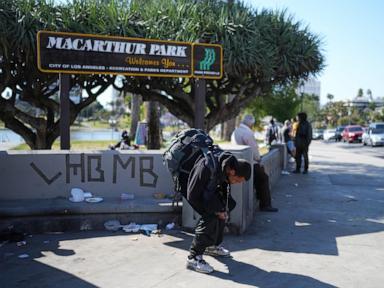
Federal intervention in municipal narcotics corridors functions as a lagging indicator of systemic local enforcement failure. When a federal drug raid occurs near a metropolitan core—specifically in high-density urban zones like downtown Los Angeles—it signals that the local "containment" model has transitioned from a managed nuisance to a threat against federal jurisdictional interests or interstate commerce. The timing of such interventions during a mayoral election cycle creates a political feedback loop, but the underlying mechanics are driven by the breakdown of three specific urban stability pillars: public space exclusivity, predictable regulatory environments, and the integrity of transit hubs.
The Tri-Node Failure of Urban Containment
The persistence of open-air drug markets in downtown Los Angeles is not a random occurrence of poverty but a logical outcome of administrative policy. The city’s "Containment Policy," an unofficial but operational framework dating back decades, concentrated social services and law enforcement leniency in a specific geographic radius. This created a centralized marketplace for illicit goods. The failure of this model occurs when the marketplace exceeds its geographic boundaries, impacting high-value real estate and municipal infrastructure.
- Enforcement Vacuum and Market Maturation: When local law enforcement is restricted by budget reallocations or shifting prosecutorial guidelines, the risk-reward ratio for narcotics distribution shifts. Lower risk leads to higher market saturation. Federal agencies (DEA, FBI) step in only when the scale of distribution involves transnational criminal organizations or when the violence associated with market share disputes reaches a threshold that threatens broader economic stability.
- Infrastructure Degradation as a Cost Multiplier: Public safety concerns are often framed as emotional or social issues, but they are more accurately analyzed as cost multipliers. A drug raid near a transit hub or a developing business district signals that the cost of maintaining that infrastructure has surpassed the city's operational capacity. The presence of high-level federal task forces indicates that the local government can no longer provide a "safe" environment for the $30 billion in planned or existing capital investment in the downtown core.
- The Political Utility of Federal Intervention: In a mayoral race, federal raids serve as an external audit of the incumbent's security strategy. If the federal government must execute a raid to secure a city street, it provides a data-backed indictment of the local executive's failure to maintain the municipal social contract.
The Economic Mechanics of the Fentanyl-Methamphetamine Pipeline
The shift from organic narcotics (heroin) to synthetic analogs (fentanyl, methamphetamine) has fundamentally altered the geography of urban drug raids. Synthetic drugs remove the seasonal and agricultural constraints of traditional narcotics, allowing for a hyper-efficient, high-margin supply chain that requires minimal physical space for storage but high-frequency distribution networks.
Supply Chain Velocity
The proximity of the Los Angeles garment district and Skid Row to the downtown core provides a unique logisitical advantage for distribution. The high volume of foot traffic and commercial vehicle movement masks the "last mile" delivery of synthetics. Federal raids often target "wholesale" nodes—locations that serve as the primary distribution point for mid-level dealers. By taking out a wholesale node near a downtown center, the DEA is attempting to disrupt the velocity of the supply chain, though the efficacy of this tactic is limited by the "Hydra Effect": the decentralization of supply leads to the immediate emergence of secondary nodes.
Price Elasticity and Demand
The demand for synthetics in urban centers is highly inelastic. Arresting a set of distributors does not reduce the consumer base; it merely creates a temporary supply bottleneck. This bottleneck often leads to a spike in localized violence as rival factions compete for the vacated market share. This is the primary logical flaw in reactive policing: without a simultaneous reduction in the demand-side "sink" (social services and rehabilitation), the raid acts as a market reset rather than a market dissolution.
Public Safety as a Metric of Municipal Competitiveness
In the context of a mayoral race, the debate over public safety is a debate over the city's "competitive rating." Global cities compete for human capital and corporate headquarters. A downtown area characterized by federal drug raids and visible decay represents a high-risk environment for institutional investors.
- The Tourism Tax: Los Angeles relies heavily on its $20 billion+ tourism industry. Narcotics markets in the downtown core create a "safety tax" on visitors, manifesting as increased security costs for hotels and decreased foot traffic for local businesses.
- The Residential Churn: The success of "New Urbanism" depends on retaining high-income residents in downtown cores. When federal law enforcement becomes a recurring presence, it signals a transition from "urban grit" to "systemic instability," triggering a flight of the tax base to peripheral or suburban markets.
The Logic of Federal vs. Local Jurisdictional Priorities
Federal raids are distinct from local "sweeps." Local police focus on order maintenance—minimizing the visibility of crime. Federal agencies focus on network disruption—dismantling the financial and logistical architecture of the trade.
The conflict arises when local political goals (reducing the incarcerated population, decriminalizing low-level offenses) clash with federal mandates to combat the national fentanyl crisis. A federal raid in a city with "progressive" prosecution policies is often a strategic override. The federal government uses its "Mandatory Minimum" sentencing power to bypass local judicial leniency, effectively removing high-volume traffickers from the ecosystem for decades rather than months.
Mapping the Causality of Post-Raid Urban Shift
A raid does not occur in a vacuum; it triggers a predictable sequence of events that local leaders must navigate.
- Displacement and Diffusion: Immediately following a federal intervention, the narcotics market does not vanish. It diffuses into adjacent neighborhoods. This creates a "Balloon Effect"—squeezing the market in the downtown core simply pushes it into Westlake, Boyle Heights, or the peripheral industrial zones.
- The Security Theater Phase: Local politicians typically follow a federal raid with a surge of uniformed local police. This is a temporary measures designed to project "control" to the electorate. However, this is rarely sustainable due to the high burn rate of overtime pay and the lack of long-term funding for permanent stationing.
- Real Estate Revaluation: For developers, a federal raid is a double-edged sword. It confirms the severity of the problem (downward pressure on value) but also promises a temporary cleanup (upward opportunity). The long-term valuation of downtown LA assets is currently tied to whether these raids are a precursor to a permanent change in zoning and enforcement or merely a pre-election performance.
Strategic Reconfiguration of the Municipal Safety Model
To move beyond the cycle of federal intervention and local decay, the municipal strategy must shift from "containment" to "disruption and integration."
- Data-Driven Hotspotting: Utilizing real-time crime mapping to identify the formation of new distribution nodes within 48 hours of their emergence.
- Physical Environment Design (CPTED): Modifying the downtown architecture—lighting, sidewalk access, and public space visibility—to eliminate the "blind spots" that allow open-air markets to thrive.
- The Integration of Social and Penal Systems: Recognizing that the narcotics market is fueled by a specific demographic of unhoused individuals with severe substance use disorders. A security strategy that does not include a compulsory treatment component for the consumer base is mathematically destined to fail.
The current reliance on federal raids to maintain urban order is a high-cost, low-yield strategy. It addresses the symptoms of a broken municipal enforcement framework without correcting the underlying policy failures that allowed the market to mature in the first place. The next mayoral administration will be judged not by the number of raids conducted, but by the reduction in the frequency of the conditions that make those raids necessary. The objective is to render the downtown core an "unprofitable environment" for illicit activity through a combination of high-friction physical space and high-certainty local legal consequences.