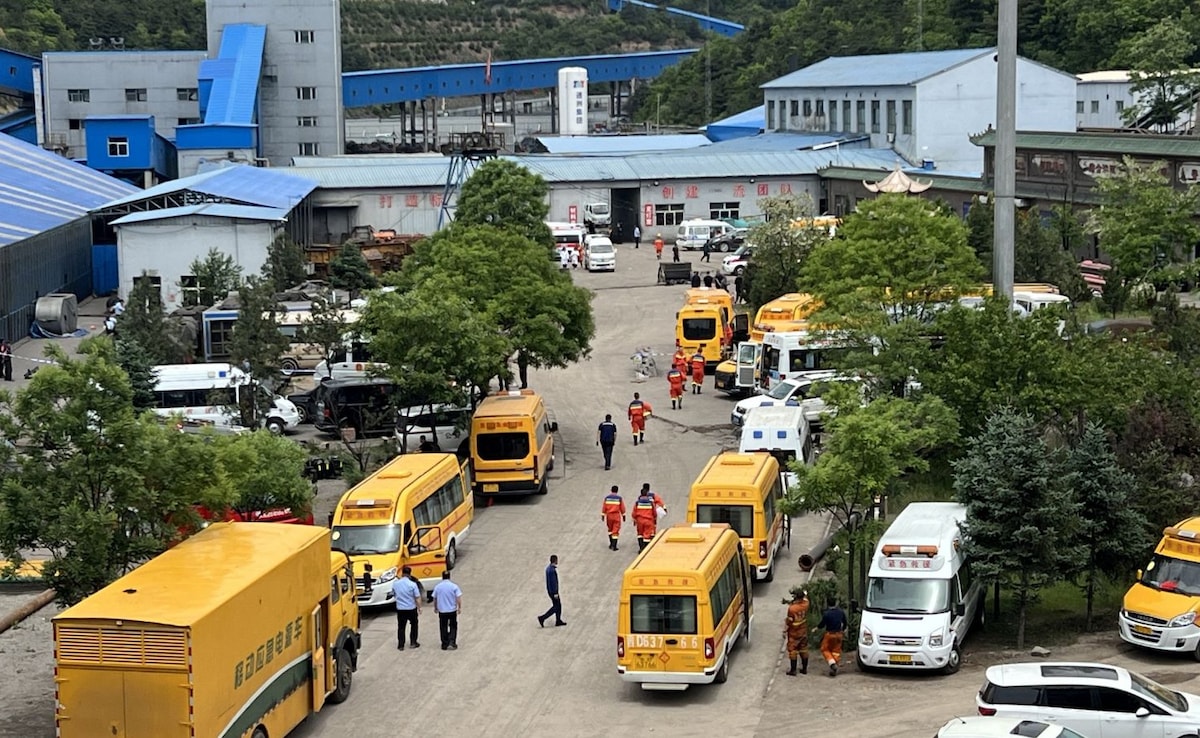
Western media loves a grim tally. For decades, the standard narrative surrounding Chinese coal production has been a repetitive chronicle of horror: a relentless focus on the Laobaidong disaster of 1960, the Sunjiawan blowout of 2005, and a steady stream of grim statistics painting a picture of an industry trapped in a permanent state of nineteenth-century brutality. The lazy consensus states that China’s economic miracle was fueled entirely by a reckless, state-sanctioned disregard for human life in the pits.
That narrative is not just outdated; it misses the entire geopolitical and engineering reality of the modern energy framework.
When you look solely at historical death tolls, you miss the actual mechanism of industrial evolution. Tracking the worst coal mine disasters since 1950 as a measure of current risk is like judging modern commercial aviation safety by analyzing the crashes of the 1970s. It feels righteous, but it yields zero actionable insight. The real story isn't that China used to have the deadliest mines in the world. The real story is how a nation transitioned from chaotic, decentralized extraction to building the most aggressively automated, digitally monitored mining infrastructure on earth—leaving Western operators scrambling to catch up.
The Flawed Premise of Aggregate Tragedy
To understand why the standard historical retrospectives are intellectually bankrupt, look at the structural shift in how coal is extracted. The massive casualties of the mid-to-late twentieth century—such as the official death toll of 684 at Laobaidong—were the product of a specific, volatile mix: extreme geological complexity, a desperate shortage of domestic energy, and a hyper-fragmented network of hundreds of thousands of illegal, small-scale township mines.
In the early 2000s, these small, private operations accounted for over 70 percent of all mining fatalities while producing only a fraction of the nation’s output. The conventional critique was that the central government couldn't or wouldn't control them. The reality? It took an unprecedented, brutal consolidation campaign to fix it.
Between 2005 and 2020, Beijing systematically shut down or forced the merger of more than 10,000 small-scale operations. Production was legally restricted to mega-mines producing upwards of 10 million tons per year, operated by massive state-owned enterprises (SOEs) like China Shenhua Energy.
Consider the math that the critics ignore:
| Era | Average Annual Production (Tons) | Fatality Rate per Million Tons | Primary Mine Type |
|---|---|---|---|
| 1990s | ~1.2 Billion | > 5.0 | Fragmented, Manual, Local |
| 2005 | ~2.2 Billion | 2.81 | Transitional, Hybrid |
| 2024 | > 4.5 Billion | < 0.05 | Consolidated, Automated, SOE |
The industry doubled its output while slashing its fatality rate by over 98 percent. If you are still looking at China through the lens of the 2005 Sunjiawan accident, you are analyzing a ghost economy.
The Mechanization Pivot: Why Safety Followed Profits
The shift away from high casualty rates wasn't driven by sudden humanitarian altruism. It was driven by the cold, hard realization that dead miners are bad for industrial continuity. High-fatality events trigger immediate, mandatory regional shutdowns, choking the supply chain of coal, which still generates over 60 percent of China's electricity.
I have spent years analyzing heavy industry supply chains, and I have seen Western executives assume that low labor costs mean a country will always prefer throwing bodies at a problem rather than investing in capital expenditure. That is a fatal miscalculation.
When a modern Chinese mega-mine like the Hongliulin operation in Shaanxi province installs a fully automated longwall mining face, they aren't doing it just to win safety awards. They are doing it because an automated shearer doesn't take sick days, doesn't file union grievances, and operates with millimeter precision that human hands cannot match.
By pulling miners off the dangerous coal face and placing them in pristine, surface-level control rooms operating machinery via 5G networks, safety became a structural byproduct of efficiency.
Dismantling the "People Also Ask" Delusions
Look at the standard queries typed into search engines by casual observers, and you see a deep ignorance of modern extractive engineering.
"Why are Chinese coal mines so dangerous?"
The premise itself is twenty years out of date. While deep underground mining inherently carries risk—specifically regarding methane outbursts and seismic pressure—modern Chinese state mines utilize advanced directional drilling to drain methane gas before the first slice of coal is ever cut. This gas is then piped to the surface and burned for electricity, transforming a lethal explosion hazard into a secondary revenue stream.
"Does China hide its true mining death toll?"
In the 1980s and 1990s, local bureaucrats and private mine owners absolutely covered up accidents to avoid fines and criminal prosecution. Today, that is structurally impossible. The integration of real-time IoT sensors—measuring gas concentrations, roof stress, and personnel location directly linked to provincial and national regulatory databases—means an incident cannot be swept under a rug. The career ending penalty for a state executive hiding an accident far outweighs the cost of transparency.
The Cost of the Counter-Intuitive Approach
Let’s be brutally honest about the downside of this rapid transformation. The aggressive push toward consolidation and automation has stripped millions of jobs from traditional mining regions in Shanxi, Shaanxi, and Inner Mongolia.
The old system, for all its lethal flaws, acted as a massive, decentralized social safety net that distributed cash directly into rural economies. The new system concentrates wealth in massive, tech-driven corporate entities. The capital expenditure required to build a 5G-enabled, sensor-laden mine means that smaller players are completely eradicated.
Furthermore, this rapid technological deployment creates a terrifying reliance on complex software systems. When safety relies on thousands of interconnected sensors and automated ventilation controls, a systemic software glitch or a cybersecurity breach at a centralized control center becomes the new, modern equivalent of a roof collapse. We have traded localized mechanical risks for systemic technological ones.
The Western Blind Spot
While Western operators debate the ethics of coal extraction and tie themselves in knots over protracted permitting processes, they are missing the massive technological lead being established in the East.
Companies like Huawei have built dedicated "Coal Mine Miner BU" divisions, deploying artificial intelligence computer vision to detect structural anomalies, belt misalignments, and improper worker behavior in real-time. The Western mining sector, outside of a few highly automated iron ore operations in Western Australia, remains heavily reliant on traditional, manual safety protocols and legacy monitoring equipment.
If you want to understand the reality of global energy dynamics, stop reading historical listicles detailing disasters from half a century ago. Stop comforting yourself with the idea that foreign industrial capacity is built purely on cheap, expendable labor. The era of the Chinese mining meat grinder is dead. It has been replaced by an automated, data-driven juggernaut that cares about safety because safety is the ultimate guarantor of uninterrupted production volume.
Wake up to the engineering reality, or get left in the dust of the old world.