Elon Musk is not suing OpenAI to save humanity. Sam Altman is not defending OpenAI to democratize intelligence. The legal battle currently consuming the tech world is being dressed up as a philosophical war over "existential risk," but that is a convenient fiction.
The media loves the narrative of a rogue creator trying to stop his monster. It sells ads. It fits the Hollywood arc. But if you look at the filings through the lens of venture capital and compute-arbitrage rather than science fiction, the "looming risks to humanity" argument evaporates. This trial is a knife fight over a balance sheet, disguised as a crusade for the soul of digital sentience.
The Existential Risk Smoke Screen
Every time a tech executive talks about AI ending the world, they are usually trying to do one of two things: regulatory capture or marketing. By framing AI as a potential world-ending god, they achieve a massive valuation bump. You don't value a world-ending god at a 10x multiple; you value it at infinity.
The "risk" narrative serves the incumbent. If AI is truly as dangerous as a nuclear weapon, then only the biggest, most "responsible" corporations should be allowed to build it. This effectively pulls the ladder up behind them, ensuring that no two-person startup in a garage can disrupt the giants. Musk knows this. Altman knows this. The trial is the theater where they fight over who gets to hold the remote control.
The "lazy consensus" suggests that the shift from a non-profit to a capped-profit entity was a betrayal of a "mission to save humanity." In reality, it was a pivot to survive the brutal physics of hardware. You cannot build AGI on bake-sale money. Training runs now cost hundreds of millions of dollars. The transition wasn't a moral failing; it was a mathematical necessity that Musk—who understands capital intensity better than anyone—is now using as a legal crowbar because he didn't get to steer the ship.
The Myth of the Open Source Savior
The central tension of the lawsuit rests on the idea that "Open" was a promise to the public. But let’s be honest about what open-sourcing a frontier model actually does in 2026.
If OpenAI released the full weights, architecture, and training data for GPT-5 tomorrow, the average person wouldn't be "empowered." They wouldn't even be able to run the file. To execute a model of that scale, you need a server farm the size of a shopping mall and a direct line to a power plant.
Open-sourcing frontier AI doesn't hand power to the people; it hands a blueprint to state actors and the few billionaires who can afford the electricity bill. Musk’s demand for "openness" isn't about transparency for the masses. It is about access for xAI. It is a strategic move to close the gap between his own AI efforts and the industry leader by using the court to force a proprietary advantage into the public domain.
Compute is the Only Currency That Matters
We talk about algorithms as if they are magic spells. They aren't. They are math applied to massive datasets using staggering amounts of electricity.
In my years watching these cycles, the pattern is always the same:
- Idealists start a project.
- The project hits a hardware wall.
- The project sells its soul to a provider (Microsoft, Google, Amazon) to get the chips.
The "humanity" at risk here isn't the species; it's the shareholders. The trial focuses on whether OpenAI deviated from its "Non-Profit Agreement." This is a technicality. The real story is the vertical integration of intelligence. When Microsoft traded compute for equity, they didn't just buy a seat at the table. They bought the table. Musk is suing because he’s standing in the hallway.
The False Dichotomy of Safety vs Progress
The competitor pieces on this trial suggest we have to choose: do we move fast and risk "extinction," or do we slow down and "stay safe"?
This is a false choice designed to keep you from asking a better question: Who benefits from the delay?
If we "slow down" for safety, the only people who actually stop are the ones following the law. The bad actors, the sovereign states with no oversight, and the black-budget projects do not hit the pause button. A "pause" on AI development is effectively a transfer of power to the least ethical players on the global stage.
Safety in AI is not a dial you can turn down. It is an engineering challenge that is solved through more iteration, not less. You don't make a plane safer by keeping it on the ground forever; you fly it, find the failure points, and iterate. The Musk-OpenAI trial uses "safety" as a legal buzzword to justify interference in a competitor’s product cycle.
The Boardroom Coup was a Stress Test
Remember the five days in November when Sam Altman was fired and rehired? The media framed it as a "safety-conscious" board trying to stop a "commercial-hungry" CEO.
Look at the aftermath. The board didn't produce evidence of a "dangerous discovery." They didn't show a model that had gone rogue. They showed a total lack of understanding of how to manage a multi-billion dollar asset. The "safety" argument was the only shield they had to justify a clumsy power grab.
Musk’s lawsuit is the second act of that same play. It relies on the assumption that OpenAI has reached some secret "AGI" milestone that they are hiding from the public to maximize profit.
Imagine a scenario where a company actually achieves AGI. Do you think they keep it secret to sell more $20-a-month subscriptions? No. If you have a machine that can solve any problem, you don't hide it; you use it to rewrite the global economy. The fact that OpenAI is still grinding for enterprise contracts and API users is the strongest evidence we have that "The Singularity" is not sitting in a basement in San Francisco.
The Legal Reality of Fiduciary Duty
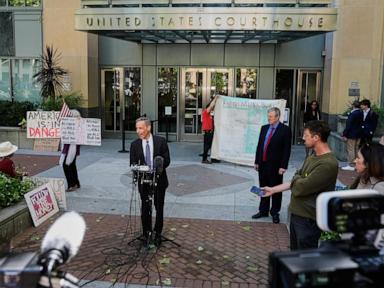
The courts are not equipped to define "Humanity" or "Intelligence." They are equipped to define "Contracts" and "Fiduciary Duty."
OpenAI’s defense is simple: the non-profit still exists, and the profit-generating arm is a vehicle to fund the non-profit's goals. It’s a convoluted structure, yes. It’s a "tapestry" of legal loopholes? Maybe. But it is legal.
Musk’s legal team has to prove that OpenAI’s current models—specifically the GPT-4 family—constitute AGI. Because if they are AGI, they fall outside the Microsoft licensing agreement.
This leads to a hilarious courtroom absurdity:
- Musk's Team: "This AI is so brilliant, so human-like, and so advanced that it counts as AGI and therefore OpenAI is breaking its contract!"
- OpenAI's Team: "Our AI is actually quite stupid. It hallucinates, it fails at basic logic, and it’s nowhere near AGI. We’re just a regular software company."
The very people who market these tools as the "most powerful technology in history" are now legally incentivized to argue that their products are mediocre. It is a race to the bottom of expectations.
Stop Asking if AI is Dangerous
The question "Is AI a risk to humanity?" is a distraction. It's a high-level philosophical debate that requires no data and produces no solutions.
The real questions are:
- Who owns the weights?
- Who owns the hardware?
- Who is liable when the model makes a billion-dollar mistake?
By focusing on "existential risk," we ignore the immediate, boring risks: algorithmic bias in lending, the erosion of the creative economy, and the massive centralization of power. Musk and Altman are fighting over the crown of a new kingdom, and they’ve convinced the public to worry about the dragons in the mountains instead of the taxes being levied at the gate.
The Outcome Won't Change Your Life
Whatever the judge decides, the trajectory of AI does not change. If Musk wins, OpenAI might be forced to restructure or release older models. If OpenAI wins, they continue their march toward a trillion-dollar IPO.
In neither scenario does the "risk to humanity" decrease. In neither scenario does the technology become "public property."
This trial is a divorce settlement between two of the wealthiest men on earth over an asset they both helped create. Musk feels he was cheated out of his share of the glory; Altman is protecting his empire. Everything else—the talk of AGI, the warnings of extinction, the "mission" for the public good—is just branding.
The "looming risks" aren't coming from the code. They are coming from the fact that we are letting a legal battle between two billionaires dictate the narrative of our collective technological future.
Stop looking at the courtroom and start looking at the data centers. That is where the power is being consolidated, and no verdict from a judge in California is going to decentralize it.
Buy the chips or build the models. Everything else is just noise.