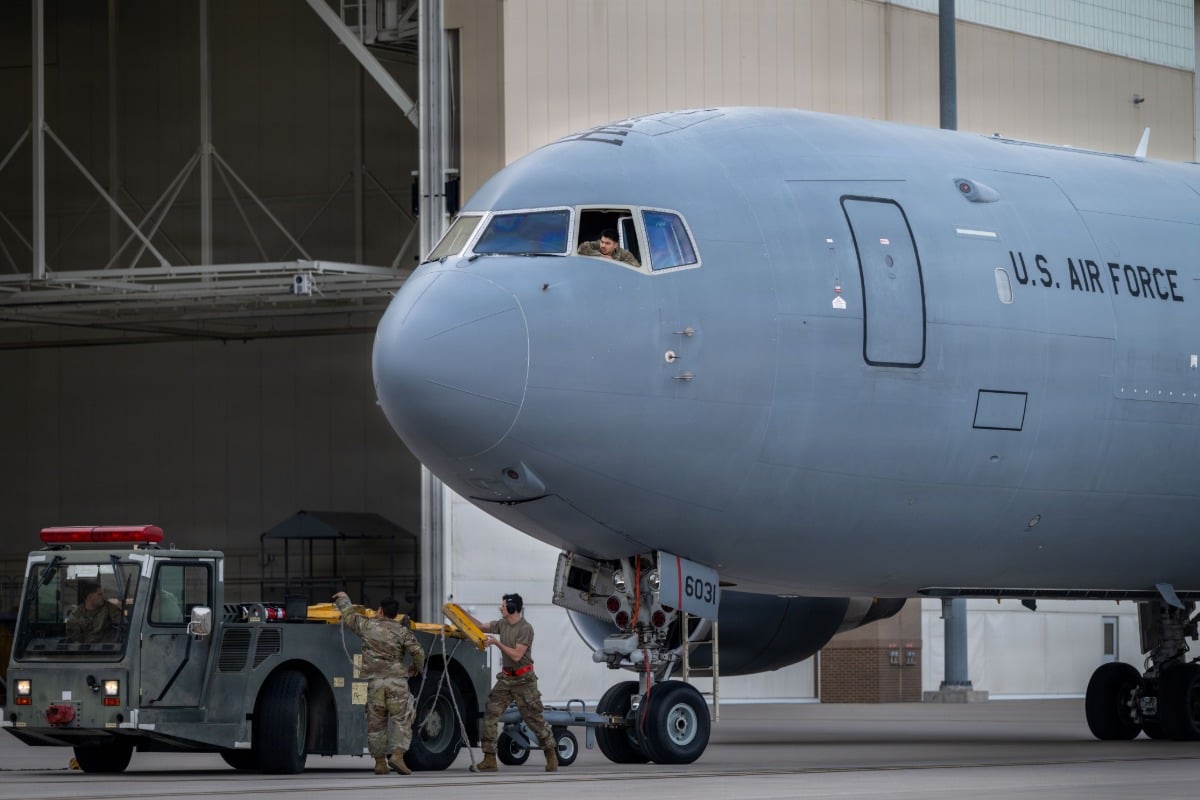
The U.S. Air Force recently committed $471 million to resolve a persistent parts supply problem crippling its tanker fleet. This massive financial injection aims to stabilize the supply chain for critical aerial refueling platforms, primarily the KC-135 Stratotanker and the newer KC-46 Pegasus. While the Pentagon frames this contract as a decisive logistical fix, the reality is far more troubling. Throwing nearly half a billion dollars at parts shortages does not fix the underlying systemic failures of defense procurement. It merely buys time for an aging, overburdened fleet.
Aerial refueling is the backbone of American power projection. Without tankers, fighter jets cannot cross oceans and bombers cannot reach distant targets. Yet, the aircraft tasked with this mission are pushing past their operational limits.
The Hidden Cost of Sustaining Ancient Iron
The bulk of the current refueling mission still rests on the shoulders of the KC-135, an aircraft that entered service during the Eisenhower administration. Maintaining a fleet where the average airframe is over sixty years old introduces unprecedented maintenance headaches.
When a component fails on a KC-135, the Air Force cannot simply order a replacement from a digital catalog. In many cases, the original manufacturers went out of business decades ago. Blueprints are sometimes lost, or they rely on manufacturing techniques that no longer exist in modern industrial facilities.
This forces the military into a costly game of bespoke fabrication. Defense contractors must reverse-engineer parts or set up specialized, low-volume production lines to manufacture a handful of components. The $471 million contract is largely swallowed by these inefficient, small-batch manufacturing setups, driving the per-part cost to astronomical heights.
The New Fleet is Not Saving Us
Logic dictates that transitioning to the newer KC-46 Pegasus would alleviate these supply chain pressures. It has done the opposite. The KC-46 program has been plagued by design flaws, technical delays, and contractual disputes from its inception.
Boeing, the prime contractor for the KC-46, has faced stiff penalties and fixed-price contract overruns due to issues ranging from faulty remote vision systems to fuel system leaks. Because the aircraft is still working through these technical deficiencies, its own supply chain is unstable. The Air Force finds itself trapped in a dual logistical nightmare, funding custom parts for a vintage fleet while simultaneously paying to re-engineer flawed components for its brand-new aircraft.
The Broken Incentives of Defense Intellectual Property
To understand why a parts shortage costs half a billion dollars to address, one must examine the corporate stranglehold on military intellectual property.
In recent decades, the Department of Defense shifted toward commercial-off-the-shelf procurement strategies. While this was intended to save money, it resulted in the military relinquishing the proprietary data rights for the aircraft they buy.
When a private defense contractor owns the technical data rights for a critical component, they hold a monopoly on its sustainment. The Air Force cannot take those blueprints to a cheaper, faster manufacturer. They are legally locked into buying from the original contractor, who can dictate pricing and lead times. This lack of competition is a primary driver of the spiraling costs seen in the latest $471 million contract.
The Fragility of Just-In-Time Logistics
The military adopted corporate "just-in-time" inventory models in an effort to reduce warehousing costs and streamline operations. This model works beautifully in a peaceful, highly predictable commercial market. It fails miserably in military logistics.
The defense industrial base has consolidated significantly since the end of the Cold War. Where dozens of independent aerospace firms once competed, only a handful of massive conglomerates remain. Beneath these prime contractors sits a fragile web of tier-two and tier-three suppliers.
If a single specialized machine shop in Ohio suffers a labor shortage or a fire, the entire production line for a critical tanker part grinds to a halt. The Air Force does not maintain deep stockpiles of spare parts to cushion these disruptions. Consequently, a minor supply chain hiccup escalates into a fleet-wide readiness crisis, requiring emergency funding infusions to resolve.
A Systemic Failure Hidden in the Budget
The half-billion-dollar contract is not an isolated incident of bad luck. It is a predictable symptom of a procurement strategy that prioritizes buying shiny new platforms over funding the unglamorous infrastructure required to keep them flying.
Congress routinely allocates billions for the acquisition of new aircraft because new production lines mean jobs in congressional districts. Maintenance, logistics, and spare parts acquisition are frequently gutted during budget negotiations to free up cash for these high-profile acquisition programs.
This creates a structural deficit in readiness. The Air Force consistently finds itself with highly sophisticated aircraft sitting on the tarmac, unable to fly because they are waiting on a single specialized seal or microchip.
The Operational Toll on Aircrews
The strategic consequence of these parts shortages is measured in mission capability rates. When tankers are grounded waiting for components, the operational tempo for the remaining active aircraft intensifies.
Aircrews are forced to fly longer hours on older airframes, accelerating the wear and tear on the remaining fleet. This creates a compounding cycle of maintenance failure. Increased usage leads to more frequent parts breakages, which further drains the depleted supply inventory, leading to more grounded planes.
The $471 million injection acts as a temporary pressure release valve. It will clear the immediate backlog of back-ordered parts, but it does nothing to fix the structural fragility of the defense industrial base or the intellectual property monopolies that caused the backlog in the first place.
The Air Force must fundamentally alter how it contracts for military hardware, demanding full data rights for every component and rebuilding domestic manufacturing redundancies. Until the Pentagon stops treating supply chain resilience as an afterthought, the American taxpayer will continue to foot the bill for multimillion-dollar emergency fixes every time a vintage tanker needs a spare part.