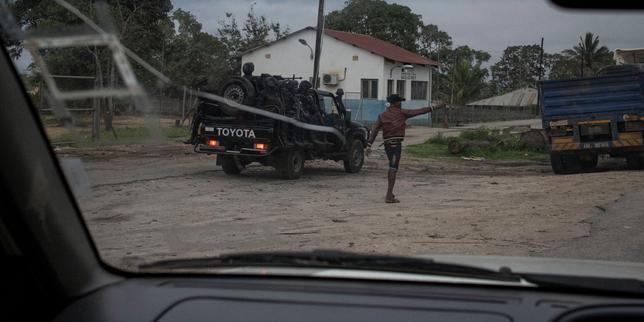
The mainstream media loves a predictable narrative. When the story broke about "Team Musul"—a group of young French citizens arrested for allegedly trying to join an Islamic State affiliate in Mozambique—the press immediately defaulted to its favorite, well-worn script. They painted a picture of naive, disaffected youths hypnotized by sophisticated digital propaganda, drifting toward a remote African conflict zone out of blind ideological zeal.
It is a comfortable explanation. It is also entirely wrong.
The lazy consensus among counter-terrorism pundits is that this case represents a terrifying new geographic expansion of jihadi recruitment. They treat Mozambique’s Cabo Delgado province as the new Syria, and TikTok as the new radical assembly line.
They are missing the entire mechanics of the shift. This isn’t a story about African geopolitics or religious fervor. It is a story about the gamification of extremism, digital nomadism, and the utter failure of Western surveillance apparatuses to understand modern subcultures.
The Syria Analogy is Dead
During the peak of the Syrian conflict, mobilization followed a distinct, predictable pattern. Material infrastructure existed. There were established pipelines through Turkey, physical safe houses, and a functioning proto-state at the destination offering a perverted sense of civic duty. Going to Syria was a collective, bureaucratic migration.
Mozambique offers none of that.
Cabo Delgado is an active, chaotic insurgency zone characterized by brutal, hyper-local grievances. It lacks the institutionalized recruitment infrastructure that defined the Levant a decade ago. The idea that a handful of teenagers from the French suburbs can seamlessly integrate into a localized, linguistically isolated insurgency in Southeast Africa via a few encrypted group chats is a logistical fantasy.
I have spent years analyzing digital extremist networks and tracking how fringe groups bypass state surveillance. When you look under the hood of these modern networks, you don't find a disciplined vanguard of militants. You find a highly fragmented, online subculture where the primary currency isn't theological purity—it is clout.
To treat "Team Musul" as a serious vanguard of a new foreign fighter wave is to misunderstand the nature of modern online radicalization. It is looking at the world through a 2015 lens.
The Gamification of the Jihadist Aesthetic
The modern radicalization pipeline looks less like a cult recruitment seminar and more like an aggressive Discord server or a niche gaming community. The ideological content is secondary to the aesthetic.
- Irony as a Shield: Modern recruits operate in layers of post-irony, memes, and digital bravado. Distinguishing between a teenager clout-chasing in an encrypted chat and a committed operative is increasingly difficult, even for the participants themselves.
- The Geography of Convenience: Why Mozambique? Not because of a deep theological alignment with Ansar al-Sunna. It became a trend in specific digital corners because it was perceived as a blind spot in Western intelligence tracking, which remains heavily focused on the Middle East and the Sahel.
- Algorithmic Drift: Algorithms do not radicalize people; they optimize for engagement. The "Team Musul" phenomenon is the result of digital drift, where individuals seeking community are funneled into increasingly edgy micro-cultures by platforms designed to maximize screen time.
We are witnessing the emergence of the "Open-Source Insurgent"—individuals who crowd-source their radical identity from a menu of global conflicts, completely detached from the physical reality on the ground.
The Intelligence Blind Spot
Governments are pouring millions into algorithmic surveillance, keyword scanning, and AI-driven threat detection. Yet, they keep getting blindsided. Why? Because state intelligence agencies are fundamentally unequipped to decode the shifting semiotics of youth subcultures.
When an agency flags a specific keyword or a known flag, the subculture has already moved on to a new meme, a different encrypted platform, or a completely localized piece of slang. The bureaucratic apparatus is too slow, too rigid, and too reliant on outdated typologies.
Traditional Radicalization:
Ideological Indoctrination -> Physical Network -> Travel Pipeline -> Conflict Zone

Modern Digital Drift:
Aesthetic Consumption -> Algorithmic Echo Chamber -> Clout-Chasing Bravado -> Fragmented Action
The data shows a stark reality. While the volume of extremist material online has exploded, the conversion rate from digital participant to actual operational asset has plummeted. The barrier to entry for digital extremism is zero, which inflates the perceived threat matrix while diluting the actual capability of the actors involved.
The Real Danger Nobody Admits
The true risk of cases like "Team Musul" is not that they will successfully build a bridge between European suburbs and African insurgencies. The infrastructure simply isn’t there to support it.
The danger lies in the unpredictable, low-tech blowback.
When these fragmented, online groups realize the logistical impossibility of their international ambitions, the energy doesn't dissipate. It refracts inward. Frustrated ambition, combined with a radicalized aesthetic and a total lack of centralized command, creates highly volatile, isolated actors who strike at home with no warning and no organizational backing.
By focusing on the exotic allure of a "Mozambique connection," intelligence services are chasing ghosts in East Africa while ignoring the decoupling of radical intent from organizational capability right in front of them.
Stop looking for the new ISIS central command. Stop waiting for a mastermind to issue orders from a cave or a desert compound. The new threat architecture is flat, decentralized, and entirely self-referential. It lives in the comments section, and it doesn't need a passport to be dangerous.