The air in the rehearsal hall usually smells of floor wax and sweat. It is a space defined by gravity, where bodies fight against the earth to create something that looks like flying. Mo Li knew that friction well. He was a man who lived in the air, a dancer whose entire identity was anchored in the precision of his limbs and the explosive power of a leap.
Then came the screen.
The heavy, four-by-four-meter LED display that crashed down during a Mirror concert in July 2022 didn't just break bones. It severed a life. It turned a world defined by motion into a world defined by a neck brace and a hospital ceiling. For over eighteen months, the narrative surrounding Mo Li was one of stillness. It was a story told in medical bulletins, prayer circles, and the grim silence of a C4 spinal cord injury.
But stillness is not the same as surrender.
The First Six Inches of Freedom
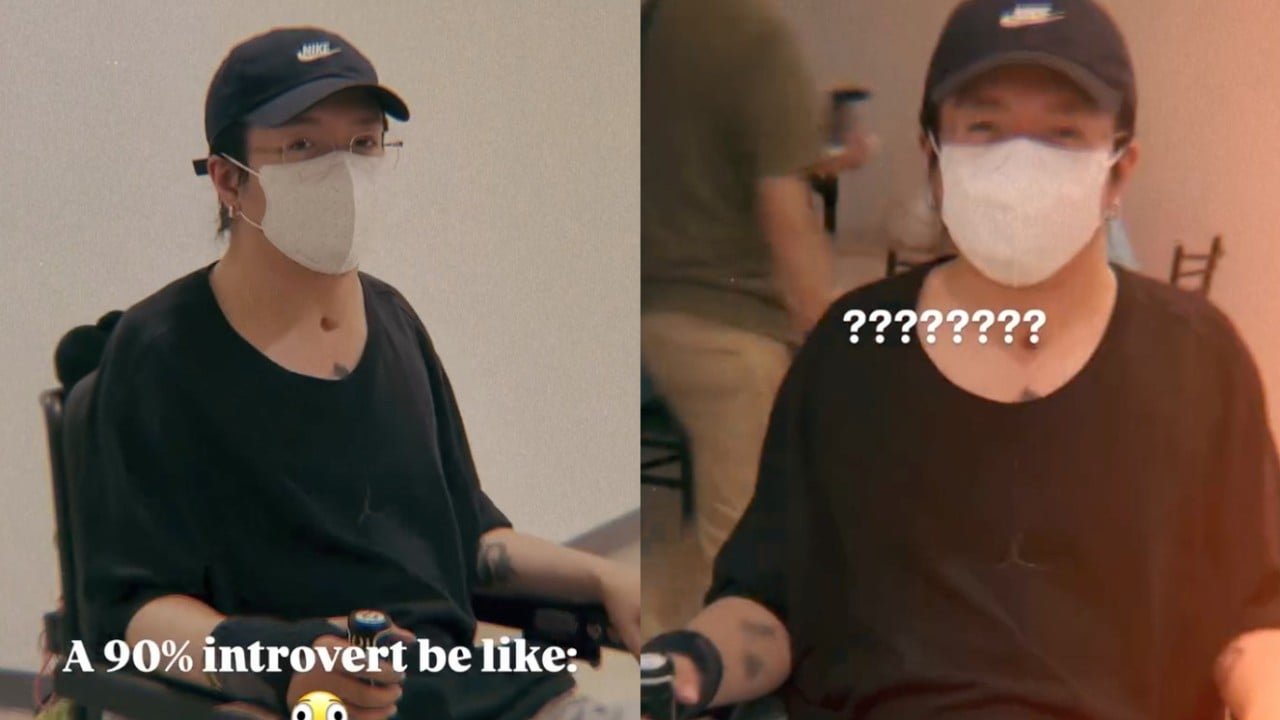
In a video recently shared by Mo Li’s father, Reverend Derek Li, we don't see the soaring choreography of a pop idol’s backup dancer. We see something much more difficult. We see a man in a motorized wheelchair.
His head is tilted. His eyes are focused with an intensity that would make a marathon runner look casual. He isn't dancing, not yet. He is steering. Using a specialized mouth-controlled joystick or perhaps a subtle chin-toggle—the mechanics matter less than the intent—Mo Li navigates his chair across a room.
It looks simple. It is anything but.
Imagine trying to navigate a ship through a needle’s eye using only your breath. To a person with a complete spinal cord injury at the cervical level, the body becomes a foreign country. The nervous system is a bridge that has been washed away in a storm. Messages from the brain say go, but the legs remain silent. The arms do not answer the call.
In this context, the ability to move a wheelchair independently is not a "medical update." It is a reclamation of the self.
The Architecture of a Miracle
Recovery from a catastrophic spinal injury is rarely a straight line. It is a jagged, exhausting staircase where every step takes months of agonizing repetition.
Mo Li’s journey has been supported by an exoskeleton—a robotic frame that allows him to mimic the gait of walking—and intensive electrical stimulation. These are the "hard" technologies of modern medicine. They provide the framework. However, the "soft" technology, the psychological grit required to keep trying when the progress is measured in millimeters, is what defines this latest milestone.
Control.
That is the keyword. When you are paralyzed, the world happens to you. Nurses move you. Therapists stretch you. Family members feed you. You are a passenger in your own skin. By mastering the controls of his power chair, Mo Li has transitioned from passenger back to pilot. He is once again deciding his own trajectory, even if that trajectory is only across a linoleum floor.
The Invisible Stakes of Public Hope
There is a weight to being a symbol. Because the accident happened on a stage in front of thousands, Mo Li’s recovery has become a public property. Every update from his father acts as a bellwether for a city that felt the collective trauma of that falling screen.
But behind the viral videos and the headlines lies the mundane reality of the "long game."
Consider the sensory deprivation. For a dancer, the tactile feedback of the floor against the foot is a constant conversation. When that conversation is cut off, the brain must find new ways to map the world. The video shows Mo Li navigating a narrow path, avoiding obstacles. This requires a recalibration of spatial awareness. He is learning to "feel" the boundaries of the wheelchair as if they were his own hips and shoulders.
It is a new kind of choreography.
He is learning the rhythm of the motors, the lag of the joystick, and the momentum of the heavy base. He is calculating angles. He is managing breath. Most importantly, he is managing his own expectations.
Beyond the Robotic Frame
The medical community often speaks of "functional independence." It’s a clinical term that strips away the emotion of the human experience. What they mean is the ability to perform tasks without help. What Mo Li is demonstrating is something deeper: the refusal to be a ghost in the machine.
His father’s letters often mention "the miracle of life." While the term feels religious, it has a secular, biological truth here. The human brain is remarkably plastic. When one pathway is blocked, it desperately tries to forge another. Through sheer repetition, Mo Li is forcing his brain to recognize this new way of moving as a legitimate form of "walking."
The journey remains long. A C4 injury is a formidable opponent. Most patients with this level of trauma face a lifetime of total dependence. But the video of Mo Li steering his chair serves as a rejection of that finality. It suggests that while the "old" Mo Li—the one who flipped and spun under the bright lights—might be in the past, the "new" Mo Li is a pioneer.
The Weight of the Next Step
Progress in spinal cord rehabilitation is often invisible to the naked eye. It happens in the microscopic reconnection of nerves or the slight strengthening of a diaphragm. This wheelchair milestone is different because it is visible. It is a tangible proof of life.
It also serves as a quiet rebuke to the idea that a person’s value is tied to their physical utility. Mo Li is no longer "the dancer who was hit by a screen." He is an individual navigating a complex, restricted reality with a dignity that is, frankly, exhausting to contemplate.
There are no more "easy" days. Every morning is a confrontation with a body that refuses to obey. Every evening is a tally of small victories and massive frustrations. Yet, in the footage, there is no sign of the victim. There is only the pilot.
He turns the chair. He pauses. He corrects.
The room he is in is small, but the implications are vast. He is moving under his own power. In a life that was momentarily paused by a freak accident of steel and cable, the "play" button has been pressed again.
Mo Li is moving. And for now, that is enough to shake the world.
He reaches the end of the room and stops. The camera cuts away, but the image remains: a man, a machine, and a path forward that he chose for himself.