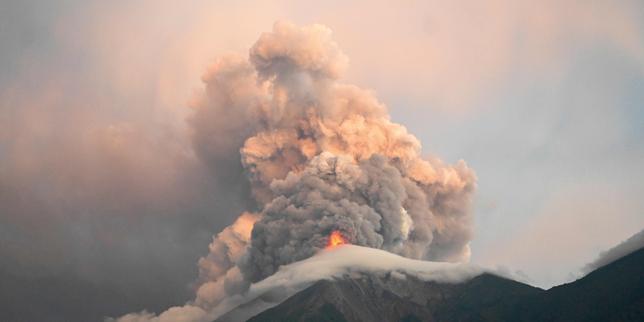
Ash does not fall like snow. Snow melts against your skin, a cold and gentle kiss from the sky. Ash settles with the heavy, calculated malice of a stolen secret. It coats your tongue in copper and sulfur. It clogs the lungs. It turns the midday sun into a sickly, bruised orange eye watching from behind a veil of charcoal.
Stand in Alotenango, just miles from the slopes of the Volcán de Fuego, and you understand that the earth is not a static floor beneath your feet. It is a living, restless organism.
For centuries, the indigenous communities flanking the giant have lived a delicate, terrifying choreography. They farm the ultra-fertile volcanic soil, rich with minerals that coax out sweet corn and vibrant coffee beans, paying a rent collected in sudden terror. Fuego does not merely erupt. It roars. It clears its throat with a concussive boom that rattles corrugated tin roofs and vibrates straight through the soles of your shoes.
Imagine waking up to the sky turning black at two in the afternoon.
That is not poetry. That is the baseline reality recorded across recent explosive phases of the volcano, where towering columns of gas and ash billowed more than six thousand meters above sea level. Pyroclastic flows—superheated avalanches of gas, ash, and jagged rock racing down mountain channels at hurricane speeds—do not offer negotiation. They incinerate everything in seconds.
Yet, generations remain. Why?
To an outsider, the choice looks like madness. Why stay in the crosshairs of a geological loaded gun? Walk through these villages during a quiet dawn, however, and the answer shifts. This soil is ancestry. It is survival. Moving means abandoning the only language your grandmother spoke, the specific microclimate that yields your livelihood, the communal roots buried deep in the shadow of the peaks.
Scientists track the seismic signatures with digital seismographs and satellite thermal imaging. They measure sulfur dioxide fluxes and tiltmeters swelling by fractions of a millimeter. They issue evacuation alerts with professional urgency. But science speaks in numbers, and the mountain speaks in raw, kinetic fury.
Consider what happens when the sirens finally wail.
The air grows dense with urgency. Families grab birth certificates, a favorite blanket, perhaps a caged bird, spilling onto twisting roads choked with gray sediment. The Volcán de Fuego demands respect, a stark reminder that human dominion over nature is a comforting fiction we tell ourselves until the ground splits open.
When the latest satellite images capture those plumes of incandescent rock rolling down the ravences of Santa Teresa and Seca, they look majestic from the safety of a computer screen thousands of miles away. They look like art. But art does not burn your eyes. Art does not force mothers to tie wet cloths around the faces of coughing toddlers.
The true story of Fuego is not found in the height of the ash column or the volume of tephra ejected across the departments of Chimaltenango, Sacatepéquez, and Escuintla. It is found in the resilience of those who sweep the gray dust from their porches every single morning, knowing the mountain might fill the courtyard again by nightfall.
Silence returns after the roar. The air clears, slowly, grudgingly. A farmer steps out into a field dusted in white, touches the warm earth, and looks back up toward the summit, where a thin, defiant plume still curls against the blue.