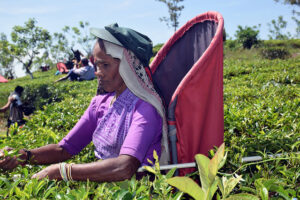
The tea in your mug feels like a permanent fixture of daily life. You boil the water, drop in a bag or a spoonful of loose leaves, and expect the exact same comforting flavor profile every single time. It's a routine built on a massive assumption of stability. But behind that predictable taste is an incredibly volatile global supply chain that's currently resting on the fracturing shoulders of smallholder farmers.
Right now, global tea production looks spectacular on paper. The world churned out roughly 7.3 million tonnes of tea last year. People are drinking more of it than ever. Yet, this massive commercial empire has a structural flaw. More than 60 percent of that tea comes from small, family-run plots in countries like Kenya, Sri Lanka, India, and Uganda. These aren't massive corporate plantations with deep pockets and industrial irrigation systems. They're smallholders who get up before sunrise to pluck leaves by hand. If these families can't make a living or cope with wild shifts in weather, the global tea engine simply stops running. You might also find this connected story useful: The Anatomy of Industrial Paralysis Cargo Strikes and Economic Decay.
The False Economy of the Cheap Cuppa
We've become accustomed to buying tea for pennies. Supermarket shelves are packed with boxes that cost less than a fancy coffee, masking the harsh economic realities at the origin. The way the tea value chain is built means the people taking the biggest risks get the smallest slice of the financial pie.
Smallholders are facing a brutal double squeeze. On one side, production costs are soaring. The price of basic inputs like fertilizer and fuel has skyrocketed over the last few years. On the other side, the prices farmers receive don't track with retail inflation. When prices do tick upward in global auctions, that extra cash rarely trickles down to the farm level in a meaningful way. As extensively documented in recent coverage by Harvard Business Review, the implications are widespread.
This creates an environment of intense income volatility. When a family can't predict what they'll earn from month to month, they can't invest back into their land. They can't replace aging, low-yield tea bushes. They can't buy better tools or build defenses against shifting weather patterns. Larger corporate estates have the financial reserves to absorb a bad season or fund tech upgrades. A smallholder doesn't. For them, a couple of bad harvests means total financial ruin, forcing them to abandon tea farming entirely.
Climate Chaos is Redrawing the Tea Map
Tea plants are remarkably fussy. Camellia sinensis thrives within a narrow temperature sweet spot between 13°C and 30°C, requiring a highly specific rhythm of rain and sunshine. Centuries of inherited farming knowledge are anchored to these predictable regional microclimates. Today, that predictability is gone.
A landmark study published in Environmental and Sustainability Indicators delivered a sobering forecast for the industry. By 2050, more than half of the world's top 20 tea-producing nations will face a severe decline in land suitable for high-quality tea.
- Kenya, a powerhouse for global black tea exports, is projected to lose up to 26.2% of its optimal growing zones.
- Sri Lanka, famed for Ceylon tea, faces a 14% drop by mid-century, which could degrade to a 30% loss by 2070.
This isn't just a future headache; it's happening right now. Farmers in places like Kericho County, Kenya, note that dry spells last far longer than they used to, and rains arrive with chaotic timing. The immediate casualty of this weather disruption isn't just the quantity of the harvest—it's the chemical composition of the leaf itself.
How Rising Temperatures Mess with Flavor
The distinctive depth, sweetness, and aroma of tea come from a precise balance of chemical compounds within the leaf:
$${\text{Total Flavor Profile}} = \text{Catechins} + \text{Amino Acids} + \text{Polyphenols}$$
When temperatures spike or drought stresses the plant, this balance breaks down. High heat forces the bush to produce more astringent, defensive compounds while cutting down on amino acids. The result? A much more bitter, less complex brew. When rains finally do come, they often arrive as torrential downpours that waterlog the soil and dilute the compounds that give tea its character. The uniform flavor profile that global brands rely on is getting harder and more expensive to maintain.
What Action Actually Looks Like
Fixing this isn't about corporate charity or putting a pretty certification stamp on a box. It requires a fundamental shift in how the industry funds adaptation and structures its business relationships.
Organizations like the Ethical Tea Partnership (ETP) are shifting focus toward systemic adjustments rather than just simple field audits. One of the most effective strategies on the ground is the proliferation of Farmer Field Schools. Instead of corporate executives dictating how a farm should run, these schools use a train-the-trainer model. Local lead farmers learn climate-smart agronomy and share that practical knowledge directly with their neighbors.
Real adaptation requires concrete, resource-intensive changes at the farm level:
- Agroforestry: Planting native shade trees throughout tea fields cools the microclimate, keeps soil moisture from evaporating, and shields sensitive tea leaves from intense sun.
- Genetic Resilience: Researchers are analyzing 200-year-old preserved tea specimens at the Royal Botanic Gardens, Kew, comparing historical genetics with modern varieties to identify ancient, drought-tolerant traits that can handle less water.
- Income Diversification: Relying solely on tea leaves smallholders exposed to market and climate shocks. Introducing secondary crops or small-scale livestock provides a vital financial buffer.
Moving Past the Status Quo
If the tea industry wants a stable supply chain in twenty or thirty years, the financial burden of climate adaptation cannot fall solely on the poorest people in the chain. Expecting a smallholder earning a fluctuating, baseline income to fund long-term infrastructure upgrades is completely unrealistic.
True sustainability requires a mixture of targeted adaptation finance and realistic, transparent pricing models that reflect the true cost of production. It means ensuring that international funds reach women farmers, who make up a massive portion of the labor force but routinely face the worst barriers to credit, land ownership, and technical training.
The equation is simple. If tea farming stops being a viable, dignified livelihood, the next generation of farming families will walk away from the fields for good. When that happens, no amount of blending expertise or clever marketing will save your morning brew.
To explore how communities are fighting to keep these traditional landscapes viable, check out this look at How 200-year-old tea leaves could help breed climate-resilient tea. This short piece details how scientists and researchers are digging into historical plant genetics to give modern smallholders the tools they need to survive escalating droughts.