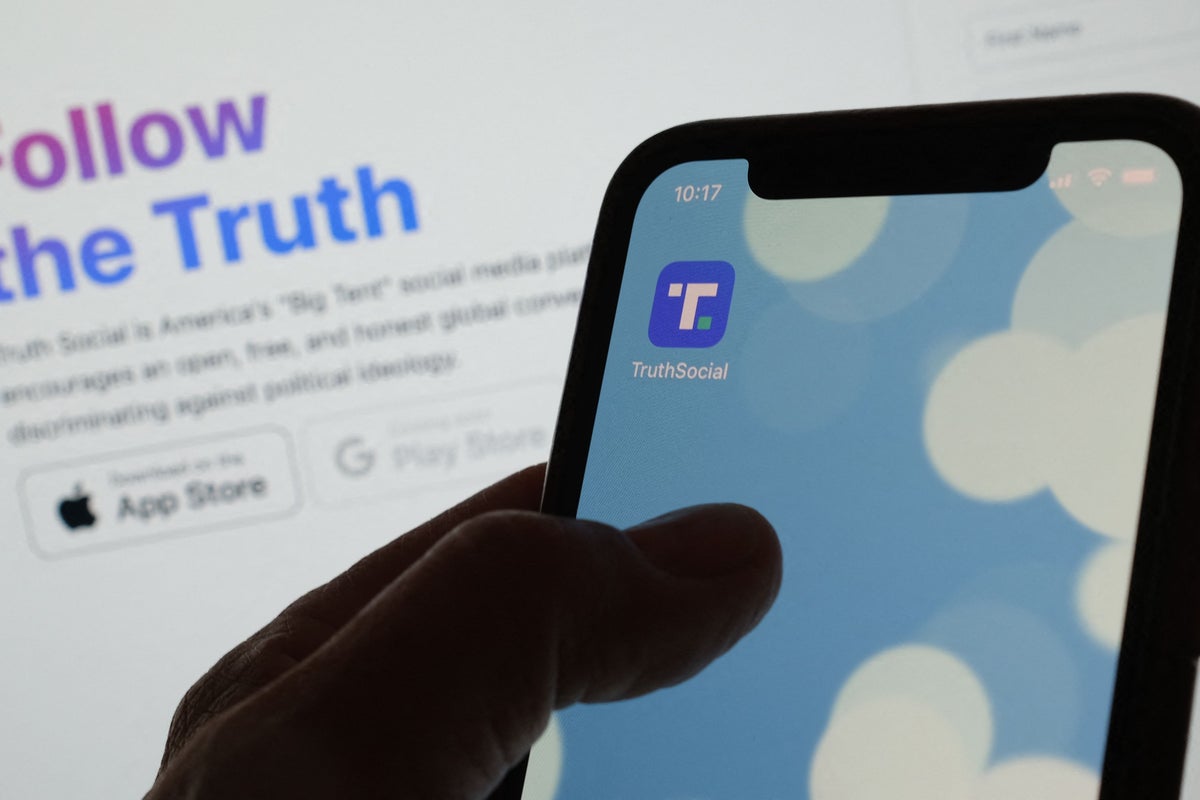
On August 1, 2026, Trump Media & Technology Group (TMTG) will transition from a speculative digital media company to an active participant in the high-frequency trading (HFT) infrastructure ecosystem. By launching the Truth Application Programming Interface (API)—internally known as Truth PSI (Private Source Integration)—the parent company of Truth Social intends to sell direct, millisecond-level data feeds of its most influential accounts to institutional Wall Street desks.
This is not a standard social media monetization playbook. While platforms like X (formerly Twitter) and Meta have long commercialized their firehoses for sentiment analysis, the structural mechanics of Truth Social create a fundamentally different economic dynamic. The platform's primary asset is not a diffuse network of retail creators, but rather a hyper-concentrated source of sovereign geopolitical and economic policy announcements: the President of the United States and his cabinet officials.
To evaluate this strategy, we must unpack the financial microstructure, the arbitrage mechanisms, the structural bottlenecks, and the ultimate systemic risks of commercializing state-level communication.
The Microstructure of Presidential Arbitrage
To understand why a millisecond-level advantage on Truth Social posts is valuable, one must map the sequence of programmatic execution in modern financial markets.
When a policy-making figure posts about tariffs, energy sanctions, or central bank policies, the transmission of that text to an executable trade occurs across three distinct phases:
[Post Published]
       │
       ▼
[Phase 1: Ingestion & Parsing] ──► Algorithmic extraction of semantic meaning (NLP)
       │
       ▼
[Phase 2: Signal Generation]    ──► Mapping sentiment to targeted asset classes (e.g., Crude, Treasuries)
       │
       ▼
[Phase 3: Order Routing]        ──► Matching order flow to exchange matching engines (e.g., Chicago, New Jersey)
In standard market conditions, scraping scripts attempt to query front-end web interfaces or public mobile APIs to detect updates. This process introduces latency jitter—unpredictable delays ranging from several hundred milliseconds to multiple seconds—caused by rate-limiting, content delivery network (CDN) caching layers, and anti-scraping countermeasures.
By establishing a direct API gateway (Truth PSI), TMTG bypasses these public layers entirely. Subscribers receive a raw, structured JSON payload directly from Truth Social’s internal database servers immediately after the "Publish" action database commit is executed.
The Time-Value Curve of Geopolitical Information
In quantitative finance, the decay of alpha (the excess return on an investment relative to a benchmark) follows a steep power-law curve.
For highly liquid instruments like front-month West Texas Intermediate (WTI) crude futures or the E-mini S&P 500 futures, the price adjustment window following a structural policy shock is measured in milliseconds.
- Sub-10 Milliseconds (The Algorithmic Domain): Ultra-low-latency HFT firms ingest the raw text, run natural language processing (NLP) models to identify key terms (e.g., "tariffs," "Iran," "sanctions"), and execute directional trades in interest rate or commodity futures.
- 10 to 500 Milliseconds (The Proprietary Domain): Tier-1 investment bank desks and quantitative hedge funds process the structural context of the announcement, executing cross-asset arbitrage and adjusting risk-management books.
- 500+ Milliseconds (The Retail Domain): The broader market digests the headline via news terminals (e.g., Bloomberg, Reuters), at which point the price discovery process is largely complete and the bid-ask spread has widened to reflect the new risk level.
By charging for millisecond-level access, TMTG is selling the right to occupy the sub-10-millisecond domain. This creates an artificial informational tiering where the public, reading the post on the standard mobile app, acts as the liquidity counterparties for the high-frequency algorithms that bought or sold the same news milliseconds earlier.
The Economics of High-Margin Proprietary Data Feeds
For TMTG, which has seen its market capitalization decline significantly since the presidential inauguration, the launch of Truth PSI represents an attempt to diversify away from ad-supported revenue. Ad-supported models require scale, high daily active user (DAU) density, and brand safety—metrics where Truth Social has structurally underperformed legacy platforms.
In contrast, a B2B proprietary data feed operates on a vastly superior economic model:
1. Zero-Marginal-Cost Scaling
Once the dedicated API gateway infrastructure is built, the marginal cost of serving an additional enterprise subscriber is near zero. TMTG does not need to attract millions of new retail users to generate revenue; it only needs to secure a core cohort of highly capitalized institutional subscribers.
2. Inelastic Enterprise Pricing
Because the value of the feed is tied directly to latency arbitrage, the pricing power of TMTG is exceptionally high. If a firm’s competitor has the feed and they do not, the firm is structurally disadvantaged on every geopolitical headline. This dynamic allows TMTG to charge premium enterprise tier rates, transforming the platform into a high-margin recurring revenue stream.
3. Monetization of Structural Volatility
Standard social networks suffer during macroeconomic downturns as advertising budgets shrink. Truth PSI, however, thrives on volatility. The more erratic the policy environment and the more frequent the market-moving announcements, the more indispensable the high-speed feed becomes to Wall Street risk managers.
Legal, Ethical, and Systemic Bottlenecks
While the business case for Truth PSI is clear, the implementation introduces unprecedented structural conflicts of interest and regulatory gray zones.
The Exclusionary Loop of Presidential Policy
Normally, federal conflict-of-interest statutes prohibit government officials from utilizing their public office to enrich personal business interests. However, the president and vice president are structurally exempt from these specific conflict provisions.
TMTG is leveraging this exemption to build a direct monetization loop:
[President Formulates Policy]
       │
       ▼
[Decision Published via Truth Social]
       │
       ▼
[TMTG Charges Wall Street for High-Speed API Access]
       │
       ▼
[Subscription Revenue Flows to TMTG (Trump is Major Shareholder)]
The ethical and legal concern lies in the timing of the release. If a public official intentionally delays public broadcast channels to ensure that paying subscribers of a private entity receive the data first, the state-sponsored communication channel effectively becomes a paywalled utility.
Algorithmic Exploitation and "Ghost Signals"
The commercialization of this feed introduces a unique operational vulnerability for high-frequency trading desks: the threat of algorithmic manipulation or "spoofing" via official communication channels.
Because HFT algorithms are programmed to execute instantly upon receiving raw text, they are highly sensitive to false signals, compromised accounts, or poorly phrased statements. For example, if a high-ranking account on the "top 10" list is compromised and posts a fabricated national security threat, automated algorithms connected to Truth PSI will ingest and execute on that text within milliseconds. By the time human risk managers can intervene, billions of dollars of market cap across index futures, foreign exchange, and commodities could be wiped out.
Furthermore, the concentration of market-moving power within a small group of accounts—including family members and close political allies who are not subject to the same strict communication protocols as civil servants—creates a fertile environment for front-running and asymmetric information leakage before a post is ever committed to the database.
The Strategic Play: Operational Reality for Quant Desks
For quantitative trading firms, hedge funds, and investment banks, ignoring the launch of Truth PSI is not an option. The risk of being on the wrong side of a millisecond-level price gap outweighs the ethical or reputational concerns of subscribing to the platform.
The immediate tactical deployment for trading desks requires a three-pronged integration strategy:
- Redundant Pipeline Integration: Firms must ingest both the direct Truth PSI feed and a secondary, low-latency web-scraping pipeline. Relying solely on a single proprietary API leaves the desk vulnerable if the platform's infrastructure experiences downtime during a major geopolitical crisis.
- Context-Aware NLP Filtering: Given the colloquial nature of the posting style on Truth Social, algorithms must be calibrated with advanced context-parsing parameters. Simple keyword matching (e.g., "tariffs") is insufficient and will lead to catastrophic false-positive executions. NLP models must distinguish between idle musings, historical references, and actionable policy mandates.
- Circuit Breaker Logic: To mitigate the systemic risk of compromised accounts or erratic posting behavior, firms must implement tight, automated risk limits. If a Truth PSI signal triggers an order size that exceeds pre-defined liquidity thresholds in a highly volatile asset class, the system must automatically route the order to a human-in-the-loop validation queue, sacrificing milliseconds to preserve capital.
TMTG's foray into low-latency financial infrastructure proves that attention, when backed by sovereign power, is the ultimate financial asset. However, by turning the presidency into a high-speed data commodity, the platform guarantees that every policy announcement will be met with immediate, algorithmic-driven market volatility—leaving public retail investors to pay the spread.